Overview:
The worlds greatest open-air Museum – the city of Luxor is not just a storied reflection of the great Egyptian Empire, but as the ancient empires one time capital it is home to some of the grandest and most important temples, tombs and monuments that make the unique city of Luxor not just a place of unparralled global splendor and influence, but a true wonder of the world.
Built on or around the ancient Greek city of ‘Thebes,’ Luxor was believed to be home to the great God Amun and was constructed in its glory years by a series of Egyptian Pharaohs – including Tutankhamen – to once stand as Ancient Egypt’s centre for political, military and religion for over 2 centuries with its many temples, notorious kings and Queens and history still influcing modern life today.
With the word Luxor coming from the Arabic word for “palaces” – it’s fitting that Luxor, which sits on the banks of the splendid river Nile is host to an incomparable number of wonders, which includely the Luxor Temple (the proper one), the ancient valley of the kings and queens which hosts the tombs of some of the empire’s greatest rulers, and the stunning and unique 3500 year old temple of Karnak – which served as the main place of worship and sacrifice and which now stands as a historic and towering monument of the Egyptian empire makes Luxor and the ancient Egyptian world that it inhibits and represents a true wonder of the world.
Where:
Luxor is considered in Upper (southern) Egypt and sits conveniently along the Nile River. Unlike most Egyptian towns, Luxor is actually divided into multiple regions and two separate banks, with the Town of Luxor and the Temple of Karnak and the train station considered in the East Bank and valley of the Kings being in the west bank over the River Nile that divides the two banks of the city.
Getting there:
Given that the river Nile runs along and through the town of Luxor, most people and trips will visit Luxor as a 2–3 day stop off on a Nile Cruise – or as an adventure trip down the river, with passengers dropped off right in the heart of Luxor town.
For those who might get a bit seasick or don’t fancy a cruise, it’s possible to fly into Luxor international airport and grab a cab into the city centre or grab a train from cairo – with the Overnight deluxe sleeper the best option for backpackers costing $50 usd – just be sure to book a compartment and don‘t buy food on the train, chances are it won’t pass food and healthy tests !
Best time to Visit:
Given Egypt’s climate, we’d advise avoiding the summer months of may to September – while you can visit here it just gets too hot at times and can really impact your enjoyment.
Instead we’d suggest heading to Luxor in the months of October to November – when things will be cooler and it’ll be the off seasons – so not only will crowds be at a minimum but you should also be able to bag a couple of great travel deals.
Explore:
While the whole of Luxor is a reflection of the beauty of the Egyptian empire, there are 5 key sights that stand out that make the city a true wonder of the world:
The Luxor Temple:
Constructed during the New Kingdom era around 1400 BC, the Luxor Temple was officially dedicated to the Theban Triad (the Egyptian gods Amun, his consort Mut, and their son Khonsu ) and with the two over size statues of Ramesses II and the remains of the once metre long avenue of Sphinxes that greet visitors, combined with soaring columns, the great halls of Hypostyle, and the awe inspiring sanctuary of Amun which hosts some of the world’s greatest and most famous hieroglyphics , the Luxor Temple is a truly magnificent piece of Egyptian heritage.
While construction was begun under the great pharaoh Amenhotep III in approximately 1390, and then built and expanded upon by Tutankhamun, and then later Ramses the Second, the temple has been and is still used to this day as an important religious centre, with it hosting churches and mosques and even being used as a fort by the Romans.
Today a visit to temple is a must see when exploring ancient Egypt, and while the heat can be tough in the summer months the $12 usd entry price and its position on the banks of the river nile make the Temple affordable and accessible – just be sure to experience it during the day and the night, and keep your eyes on your items while you’re here.
The Valley of the Kings:
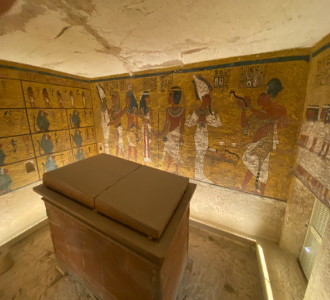
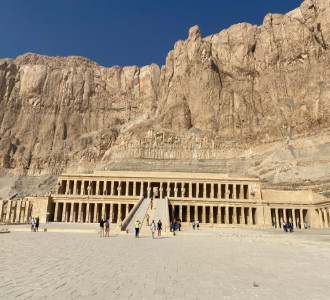
Found on the west side of the River Nile and a 30 min trip from Luxor lies the Burial place of Egyptians greatest kings, in the aptly named valley of the Kings. Here you can stroll around the exquisite tombs of some of the world’s greatest Egyptian Pharaohs from the period of 1550–1069 BC, who have all opted to be entombed to carry them safely to the afterlife in coffins that tell their colourfully tell their life story through a range of pictures and hieroglyphics.
While there are 63 kings tombs that have so far been discovered – the most famous and must see, alongside the many Ramses Pharaohs, is the tomb of Tutankhamun, who ruled from the tender age of 9 and according to legend died in a chariot crash, who was discovered in 1922 in one of the most intact tombs ever discovered.
While it can again be hot visiting the valley of the Kings, if you arrive early (before 10am when bus loads of tourist arrive), stand close to the many fans and bring a flashlight for the dark corners, the $11 entrance fee is money well spent to explore these unique historical resting places of some of the worlds greatest pharaohs.

The Valley of the Queens:
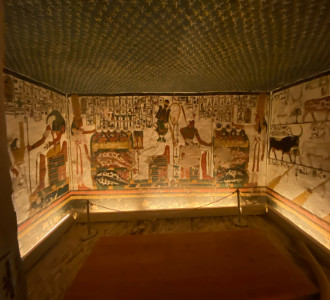
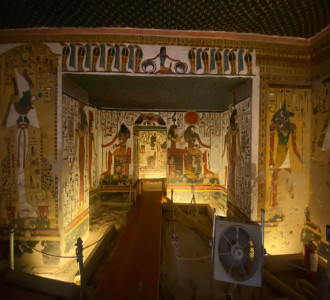
As with the valley of the kings, the Valley of the Queens, found a short distance south from the Valley of the Kings, houses the Pharaohs families and their wives, who likewise are embalmed and buried in colourful coffins to help ensure safe passage to the afterlife and ensure that the many treasures and beauty items buried with them would accompany them to the next stage of life.
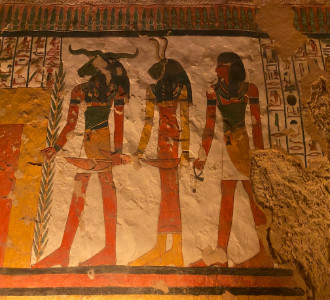
While there are more than 90 tombs in the valley of the queens, only a small number are actually viewable, which is compensated for by the reduced $6 entry fee, yet of those viewable they date back to 1075 bc and the most famous is of course that of Queen Nefertari, the first wife of the Great king Ramesses and the beauty of his wife is found not only in the direct translation of Nefertari means ‘beautiful companion’ but also in the many colourful and glorious paintings that line the Tomb of Queen Nefertari telling of her great life and love for the King.
The Colossi of Menmon:
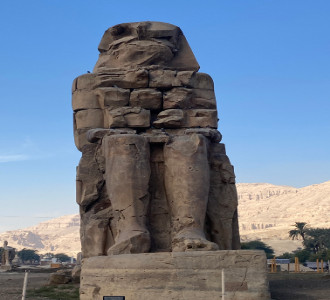
The Memnon Statues are found on the west bank on the pathway to the Temple of Karnak the Colossi of Memnon are two huge faceless stone statues of the great Pharaoh Amenhotep III and stand as iconic pieces of Egyptian construction that reflect the glory of a Pharaoh who is believed to not only have been instrumental in directing the construction of the stones, but who was perceived as a God on Earth during his reign.
Built during the dynasty of Amenhotep III in 1350BC, the two statues originally guarded the Kings final resting place and now sit in front of a lesser known temple, with the 60 foot statues (spare a though for the slaves who constructed them) being one of the first things that will be seen when you begin exploring the west banks of Luxor and stand as a powerful reminder of the glory of one of Ancient Egypt’s most revered Pharaohs and the architectural accomplishments in the monuments to him that survive to this day.
The Temple of Karnak:
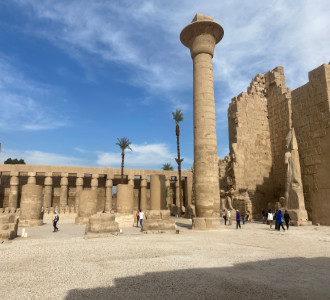
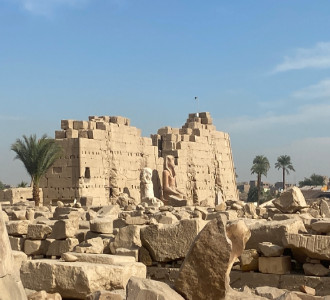
Unquestionably the greatest still standing monument that reflects the power of Ancient Egypt, the Temple of Karnak which lies on the Northern east side of the Nile in Luxor, the Karnak Temple was developed between the 12th and 20th Dynasties and at its height was the biggest and most important religious, economic, and political structure in Ancient Egypt.
First documented as being constructed by the Pharaoh Senusret I, the Temple is a vast complex and today hosts many temples, sanctuaries, halls, Pylons and Obelisks all dedicated to the ancient Theban Triad of Amun and his children and consorts. While a ticket in will set you back $9 the temple has to be viewed both during the day and at night, the top 3 historical sights not to be missed are:
Temple of Amun-Ra:
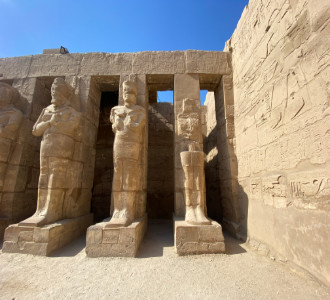
the main temple building of Karnak, the temple of Amun-Ra has been constantly upgraded by various Pharos and now stands as a true wonder of the world, with the Temple featuring 9 exquisite pylons (Stone like fort structures) that depict how the ancient Egyptians live, two halls o records full of hieroglyphics which track Egyptian history and of course the courtyard of Amun Ra where Ancient Egyptian history has and continues to unfold and be discovered.
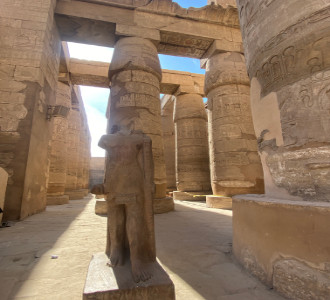
The temple of Amun-Ra is also home to the great Hypostyle Hall which fills some 5,000 square meters and hosts more than a hundred giant and wide columns full of ancient hieroglyphics and paintings which support numerous roof like structure and tell the story of Egyptian legends, in what is truly one of the most awe inspiring remaining structures of ancient Egypt.

Avenue of Sphinxes:
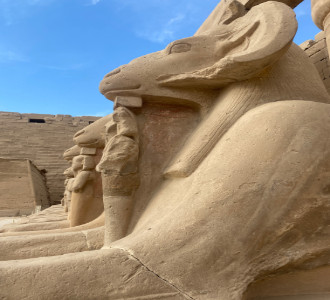
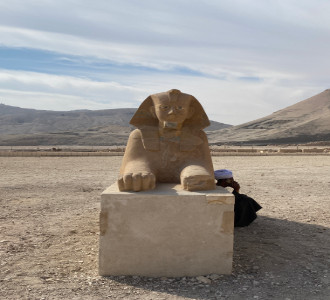
Like the Luxor Temple, the Temple of Karnak also had an avenue of Sphinxes, that would greet you as you enter the temple – however the Karnak Spinxes that contain heads of sheep in some sections are much are much well-kept and visible – giving you a sense of the power and glory that visitors in ancient Egyptian time would feel when they came to meet with the Pharaoh.
The sacred Lake:
As its name suggests, the sacred lake is a great lake, thought to be composed of salt, which at one time was believed to be a source of life for the temple, alongside the Nile and the Red Sea. What’s incredibly special about the lake is its position alongside the Temple of Amuns walls, suggesting it dates back centuries and given the preserved steps that lead to the lake from the Amun Temple it is believed that sacrificial and religious ceremonies have been held here in the height of the Egyptian Dynasties.
Alongside these three main highlights, a trip to the sadly badly disintegrated Temple oF Ramses the Second, with its own unique Hypostyle hall cannot be missed, as can a trip to the temples of Temple of Met, Ptah and Osiris and Opet which all show not only the unique construction of Egyptian architecture and Temples but contain exquisite and hand carved hieroglyphics telling the history of their construction.
For those that have a bit more time after exploring these 5 wonders, we’d also suggest checking out the Luxor Museum and for those who aren’t squeamish the Mummification museum which are slap bang in the centre of town and which themselves host Egyptian artifacts and provide a fascinating overview of what was once the greatest civilisation in the world and how it was created.
How long to stay:
Given Luxor’s unique location on the banks of the river Nile and with its own airport, we’d recommend spending at least 3 days – as this will give you enough time to take in all 5 of the unique sights with some early starts and account for the intense heat, whilst also giving you a chance to experience the wonders and the unique city of Luxor at night.
Top Tip:
Unfortunately, you need to be on you guard in Egypt, so watch out for pickpockets and people that claim to be tour guides – who will then expect sums of money. Also be prepared to bargain hard if picking up any souvenirs and watch what you eat the day before you head to the sights, as going on an upset stomach is not fun.
Cost:
The most expensive parts of a trip round Luxor will likely be both getting there (budget at least $100 usd) and getting around (budget $15 Usd) per taxi ride, with access to the 5 unique wonders coming in at $10 apiece and less ($6) for the valley of the queens.
Best photo spot:
The entrance at the Karnak temple at both sunrise and Sunset (to avoid crowds) is unquestionably the place to grab the best spot of one of wonders of thew world and capture the essence of ancient Egypt.