Bagan
Overview:
The land of thousands of Pagodas, the magical golden city of Bagan stands as one of the most mysterious, historical and simply beautiful ancient cities on the planet, with this deeply religious and spiritual complex being home to not only 3822 Buddhist temples, pagodas, and monasteries which date back to the 9th Century, but also being home to some of the planet’s most breath-taking and awe-inspiring sunrises and sunsets, as explorers watch the ancient city come to life in blinding light for one of the most increidble earthly experiences at this unique wonder of the world.
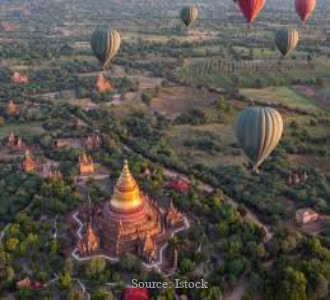
Blessed with thousands of golden pagodas, Bagan has earned a reputation as one of the world’s most premier sunrise hot-air balloon destinations, as explorers take to the early morning skies to soak in the sea of temples below them and gaze at this incredible open-air museum. Yet alongside this thrilling experience, Bagan is also rich in history and culture, with the city, which was once known as ‘pagan’ being both the former capital of present-day Myanmar and being one of the most culturally significant Buddhist sites on the planet.
History: With the first Pogodas within Bagan believed to have been constructed in the 9th century and over the following 4 centuries a further 10,000 Pagodas and temples believed to have been added across the Bagan plains under the direction of the first Burmese King Anawrahta, Bagan was once a truly mesmerizing golden paradise, that served as a culturally and intellectual paradise, and thanks to its close proximity near the river Ayeyarwady (Irrawaddy) River sustained life serving as the first main civilisation of the pagan people that we know today as modern-day Myanmar.
Yet despite surviving attempted pillaging towards the end of the 12th century, the city of Bagan was ransacked and fell to Mongolian invaders in 1287 which slowly led to the abandonment and neglect of the city and combined with a series of natural disasters – including the 1975 earthquake – the people of Bagan abandoned the city and almost 70% of the golden temples and Padogas fell to ruin.
Since its rediscovery towards the start of the 20th century – and helped in no small part by the opening up of Myanmar to tourism in 2010 and a restoration effort by the Myanmar government the 26 square miles of plains of the ancient city of Bagan are explorable and appreciable once again, with travellers able to step back in history and wander in awe at the 2,200 golden temples and pagodas that still remain on this historical site.
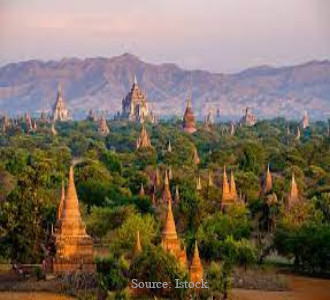

Explore: Officially the largest and grouped collection of Buddhist temples on the planet, exploring Bagan is a true thrill and the plains of Bagan lend themselves to exploration – with the jewels of this ancient city lending itself to not only discovery from the air, but also by bike, on foot and even by horse drawn carriage — with there being no shortage of access and routes to the great city of Bagan.
A site that is appreciated as a collective and for its historical and cultural significance, the still standing Pagodas and Temples of Bagan are grouped within the Archaeological Zone of Bagan, and it’s here that you’ll find the incredible archaeological wonders of this ancient city, including the pagoda of Shwezigon – whose construction began in 1086 AD and is believed to be one of the first temples erected at Bagan, the golden temple of Htilominlo – which stands as the biggest temple in Bagan and serves as a tribute to King Htilominlo whose reign began after he was chosen by an umbrella falling in his direction and the Sulamani Temple – considered the jewel of Bagan with distinct and truly beautiful architecture that makes it stand as one of the most unique and explorable temples across Bagan.
Couple these incredible temples and pagodas with the grand cathedral temple of Ananda, the massive temple of Dhammayangyi – known as the bad karma temple after the ruler Narathu – who killed his father to seize power and the golden Manuha temple – known as the hall of sadness after the king who commissioned it was forced into exile and never for to see his creation – and Bagan is awash with a series of simply stunning and grand temples whose historical and cultural significance lend not only to a full exploration but make this incredible stie a true wonder of the world.
Yet the beauty of Bagan is seen not only in re-discovering and exploring the ancient stupas and temples – but also in two of the most stunning natural phenomena’s, with the sunsets and sunrises across this ancient site being otherworldly and truly inspirational – as you watch as the entire complex lights up in a golden mystical light accompanied by hundreds of hot air balloons taking travelers across the city to explore it from the air.
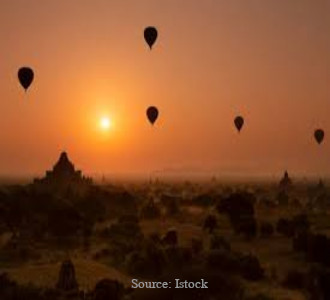
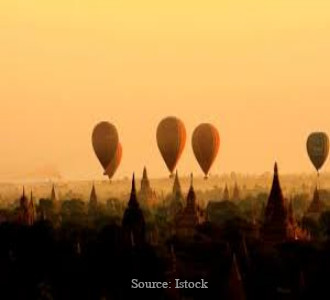
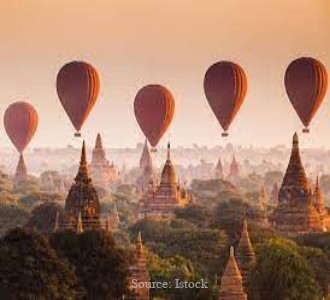
The quintessential image of Bagan, sunrise is when you’ll find Bagan at its beautiful best – with the rising sun casting a spiritual yellow and orange glow over the thousands of temples and Pogodas for a site unlike any other on the planet. Best seen firstly from the air – where you can get a true appreciation of the scale and beauty of Bagan from a hot air balloon and get to admire jewels and history of this ancient city from a bird’s eye viewpoint accompanied by the incredible sunrise.
Alongside this and to capture the quintessential image of a Bagan you’ll need to head to the top of a temple – with there being a series of temples within the Archaeological Zone that allow explorers to climb to their summit and capture the golden sunrise – with the image of this incredible sunrise over the thousands of temples of Bagan while hot air balloons slowly ascend being one of the most recognisable images of not just Bagan but of any sunrise on the planet – and one that encapsulates the true beauty of this stunning wonder of the world.
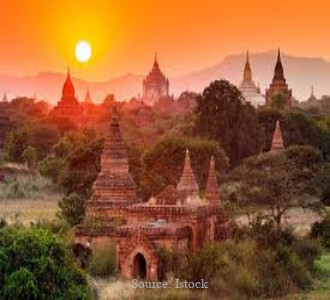
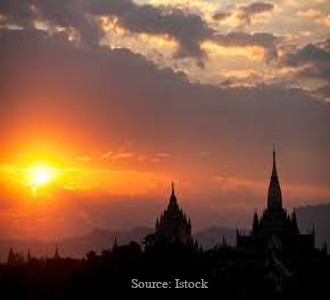
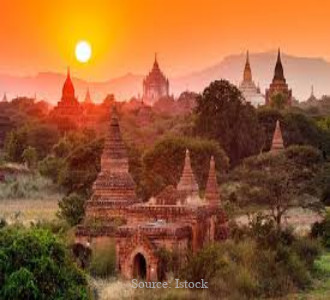
Not to be outdone, sunsets at Bagan are equally as impressive – with the descending sun casting a golden blanket over the Pogodas of Bagan and illuminating their golden beauty for a spectacular show. Based seen from a top a stupa – and in particular the Shwesandaw Stupa – affectionately nicknamed the sunset stupa for its stunning views – watching the sunset on this ancient city is a truly peaceful experience and one that allows explorers to take in a truly magical display that represents a fitting finale for a day exploring Bagan.
Home also to one of the world’s great festivals – the Bagan January full moon Ananda festival – where you’ll see pilgrims making offerings at the temple, and some of the best food in Asia – with traditional Chinese, Indian and Thai food are mixed with local flavours to create tantalising dishes – there is always something for everyone at this great ancient city.
A wonder that has only recently become open to the public following decades of tourism restrictions, the ancient city of Bagan and Myanmar as a whole are still relatively off the beaten track and offers explorers a chance to step into the unknown. As you explore the thousands of stunning golden pagodas and temples on foot, bicycle and by air on a journey through Buddhist and Myanmar history, culture and spiritualty taking in some of the greatest sunrises and sunsets on the planet, at this true jewel of Asia that is not only a stunning ancient paradise, but a true wonder of the world.

Where:
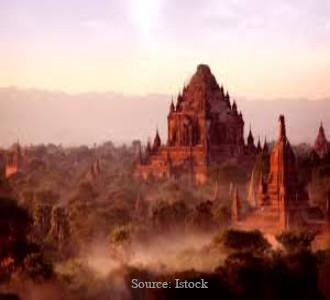
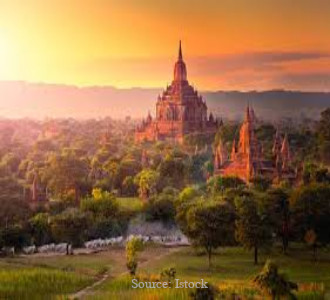
The jewel of Myanmar, the ancient city of Bagan and its thousands of gold temples are found in the Mandalay region, with the plains of Bagan lying on the banks of the spectacular Ayeyarwady River, whose reflective waters bring to life both the distant mountains of Bagan but also the many temples, pagodas and true beauty of this incredible city.
Found almost in the centre of the country – and believed to have selected as the base for the creation of the Pagodas between the 9th and 13th centuries thanks to the incredibly smooth and flat – Bagan has a special place within the history of Myanmar – having once been known as ‘Pagan’ and served as the first capital of the Pagan Kingdom which would later become the kingdom of Myanmar as we know it today.
As well as being essential to Myanmar’s tourism industry, Bagan still serves as a place of Buddhist pilgrimage and worship, with the remaining 3822 of the original 10,000 golden temples, pagodas and stupas that are found across the plains of Bagan being an incredibly spiritual site for Buddhist pilgrims – and also being home to the January Ananda festival – an important spiritual event across Myanmar.
Offering a chance to step back through cultural and religious history a visit to the ancient city of Bagan is a truly magical experience with a chance to marvel at the increidble stupas and temples and take in one of the worlds most incredible sunsets and sunrises truly making Bagan an immense wonder, and you’ll find getting to this stunning historical paradise easier than expected.
Getting There:
Found in the centre of Myanmar, it has only been within the last decades that the beauty of Myanmar has featured on explorers’ trails, with this once closed off country – and the wonders within it – slowly becoming a mainstream travel destination.
Undoubtedly the highlight to any trip to Myanmar will be a trip to the ancient city and true wonder of the world of Bagan – with a chance to wonder among the thousands of golden stupas and temples, soar in a hot air balloon during a glowing sunrise and marvel and reflect and reflect at the history, culture and spirituality contained within this stunning city.
To being your exploration of the wonder of Bagan you’ll need to get yourself to Myanmar itself – and the capital of Yangon which lies some 250 miles south of Bagan makes for the perfect launch pad to get to the ancient city. So – and on the basis you won’t find yourself already based within Myanmar – the easiest and only option will be to fly into the Yangon international airport.
By Plane: Flights into Yangon are now – thankfully – both regular and somewhat affordable – and for those coming from North or South America you’ll need to hop on a flight into an Asian travel hub – such as Singapore, South Korea or Hong Kong – often by the middle east and then take a direct flight into Yangon to begin your journey up to Bagan.
For those travelling from Europe or Africa the easiest option is a similar route, with flights into the Middle East regularly available – especially Dubai and Qatar – and from there making you way directly into Yangon on the way to Bagan.
Those travellers based in Asia will have the easiest way of reaching Yangon – with there being a series of flights from almost all Asian countries directly into Yangon and flights known for being only a couple of hours long at most and cheaply and readily affordable – making Yangon and Bagan a great place to take a quick week long break from the bustle of life in Asia.
To Bagan: Once you’ve got yourself into Yangon and Myanmar the next step will be to get from Yangon to the ancient city of Bagan and noting that driving within Myanmar or getting a taxi isn’t a realistic option you’ve for four main options to get to Bagan, Bus, Train, Ferry and Plane.
By Bus: Starting with our recommendation – and for those travellers who’ve arrived in Yangon – the easiest, cheapest and most comfortable way to get from Yangon to Bagan is undoubtedly by Bus. With there being both a daytime bus and an overnight bus which depart from across Myanmar – including the Myanmar main bus terminal – and head for the Bagan Shwe Pyi bus terminal – which lies a couple of kilometres away from the main area of Bagan.
Served by a number of bus companies such as, Apex Express and JJ Express – and with tickets bookable online – heading from Yangon to Bagan by bus is undoubtedly the most cost-effective and comfortable option, as the buses are all incredibly modern and clean and for those on the VIP buses you’ll find yourself with televisions, blankets and even reclinable seats – which is perfect for the overnight bus – ensuring you arrive in Bagan nice and refreshed to begin your exploration of this ancient city.
By Train: For a second overland option there’s a series of trains that run from Yangon and the northern town of Mandalay to Bagan. The trains from each town are known to be long in their duration – around 17hours from Yangon and 6 from Mandalay – but do have two distinct advantages for travellers over the bus; firstly thanks to their longer time, for those taking an overnight train — they arrive later in the morning than the bus – meaning you will reach Bagan at a more civilised time in the morning (around 10am) making checking into hotels and hostels around Bagan a more convenient experience and potentially giving you a more enjoyable experience around Bagan.
Secondly they offer more room for reclining than the bus. While you’ll have to get lucky and get two unoccupied seats together when it comes to relaxing and getting a good nights sleep – the train can certainly be a more comfortable option – and will see your journey into Bagan be a few hours long than the bus and see you arrive at a more civilised time for a potentially better travelling experience.
By plane: An option for those who are short on time and more flexible with their budget, there is also the option to fly into Bagan airport (Nyaung‑U Airport) – which can see you arrive during the afternoon and significantly cut down on your travel times. An option which can come in at around $100 Usd – compared to $2 — $5 Usd for the bus, flying by plane significantly cuts down on the time taken to reach Bagan – and can see you arrive fully refreshed – particularly when compared to the overnight train or bus – and for those who have the cost of a flight available in their budget – this represents a fantastic and efficient way to reach Bagan.
By Ferry: Finally for an option for those approaching Bagan from the North and in the area of Mandalay – you’ll find daily ferries that cruise down the Ayeyarwady river and get you into the city of Bagan – dropping you off into the thousands of stunning temples.
A fantastic option to experience the beauty of Bagan from the river – and give you a completely different perspective and view of the thousands of Pagodas, Boats leave from Mandalay early in the morning – at 5:30am – and, while they may take longer than a bus, cruising down the river and witnessing a stunning sunrise over Bagan as you slowly make your way towards this stunning wonder of the world is undoubtedly one of the best ways to arrive at the incredible ancient city of Bagan.
Getting Around Bagan – By bicycle, car and in the air.
Having got yourself into the city of Bagan – which is divided into three sperate areas – Old Bagan – where you’ll find the incredible temples, New Bagan – which contains a more modern are of the city – and Nyaung U – which acts as the transport hub where the buses and flights will arrive – you’ll then need to consider the best to get around Bagan and in particularly move from temple to temple across the plains of Bagaan – which given there are more than 3822 temples still standing across Bagan can be daunting.
While exploring the temples on foot is an option – given the fast size of the plains, Bagan really lends itself to self-bicycle tours, with a range of bikes and e‑bikes available for hire from across Bagan and at the entrance of the ancient city itself.
Offering not just good cardio, but a fast way to hop from temple to temple – hiring a bike / e‑bike in Bagan is a fantastic option to get around Bagan – as you can quickly and easily move between temples at your own pace and on your own schedule — and its also very cost effective – so it something we’d really recommend to get the best out of this incredible city !
For those who aren’t able to cycle – or arrive outside of October – March when the weather can be unpredictable including torrential downpours and scorching heat, then it might be worth considering hiring a car. While this is an expensive option – expect to pay up to $50 Usd a day – it does guarantee you an air-conditioned and dry way of getting around Bagan – which under the circumstances may well be worth it.
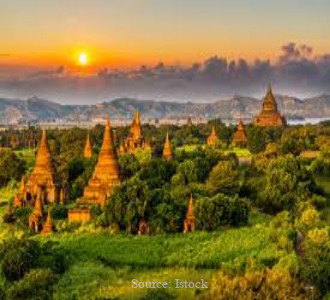
Finally, the sunrises and sunset are a truly spiritual and beautiful experience at Bagan – with the sky turning an arrange of bright yellow and gold and bringing the thousands of golden Pagodas before you to life in an incredible blinding display – that is unlike anything on earth.
While the best spots from the ground for vieweing sunrise and sunsets in our opinion are from atop one of the five climbable Pagodas (Shwesandaw, Thitsa Wadi, South and North Guni, and Pyathatgyi) – from where you will undoubtedly get incredible panoramic views, one of the ultimate experiences at Bagan is to hover over the incredible temples at sunrise in a hot air balloon – where you will get to witness the incredible rising sun light up the beautiful temples from above – getting a true view of the scale and beauty of the great city of Bagan.
A must do experience at this incredible wonder of the world – a hot air balloon experience is well worth stretching your budget for in Bagan, and as your soar out over this incredible ancient city, with the rising sun on your back making the history of this great city come to live, you’ll be left in little doubt of the sheer beauty of the wonder of the world that is the city of Bagan.
Best time to Visit:
Bagan – and Myanmar as a whole – have two distinct seasons; wet and dry, with temperatures across the whole of the country ranging between 25 – 40 degrees across the year, meaning that a trip to Bagan and to see it as its absolute best is utterly dependent on the time of year you choose to visit.
As a starting point – and if ‑possible we’d rule visiting in the wet and rainy season between the months of June to September where, despite Bagan officially being in the dry zone of Myanmar, rain falls are frequent and unpredictable – which cannot only see you get soaked during the day – but also can provide overcast conditions for hot air ballooning in the morning and see frequent clouds – which really takes the edge off the sunrise and sunsets at Bagan – which is an undoubted highlight of visiting this wonder.
Similarly, you’ll find the months between March and May an uncomfortable time to visit, as while the rain season is yet to kick in temperatures soar across Bagan – sometimes reaching as high as 40 degrees – which while great for topping up the tan – makes for an uncomfortable experience spending time out in the exposed plains and can lead to heat exhaustion – so we’d advise avoiding these months.
This means that the best time to visit Bagan is between the months of October to March – where you’ll find the temperatures warm – between 20 – 30 degrees – and the chance of rain and cloud minimal – giving you incredible weather to not only explore the thousands of temples of Bagan on foot – but also take to the skies at either the top of a Pagoda or in a hot air balloon and witness the incredible sunrise and sunsets of Bagan – which are truly magical.
For those who want an extra special and unique experience – we’d advise timing your trip for the month of January – when the biggest festival across Bagan takes place – the Ananda Temple Festival. Timed to coincide with the Burmese Pyatho month’s full moon – and the ending of the harvest season – you’ll find Bagan transformed into a carnival atmosphere with pilgrims trekking to the golden Ananda temple with offerings, the streets awash with people providing donations to the needy and street food and gift shops lining the streets.
A special time to visit and one where’ll you need to book accommodation in advance – we’d advise visiting the ancient city of Bagan between the months of October to March to see this incredible wonder at its absolute best – with a trip during the Ananda festival undoubtedly representing a special time to visit.
How long to stay:
Given that so much of the experience of exploring this incredible wonder is found in watching golden sun light up the thousands of golden temples stretching across the plains of Bagan at sunrise and sunset, and in consideration of the thousands of temples, pagodas and stupas to explore, as well as the time it takes to travel to Bagan from Yangon – we’d recommend putting aside 4 days and 3 nights to explore all that this incredible wonder has to offer.
Accounting firstly for what will be a full days travel from Yangon to Bagan by bus, and then a night spent in the town of Bagan itself, your journey around this ancient wonder will likely begin with an incredible sunrise hot air balloon tour on day two – where you will sail over the thousands of golden Pagodas as they light up in shades of orange and deep yellow – giving you a truly birds eye view over this wonder and a full appreciation of the sheer scale of Bagan – for what will be a truly magical experience.
From there we’d recommend exploring some of the individual pagodas themselves during the day, before a quick rest and then heading to the top of the Shwesandaw stupa to watch the incredible sunset over Bagan – to conclude what will be an incredible day exploring this stunning wonder.
We’d then recommend getting up early again on day 3 to watch the sunrise – this time taking in the view from one of the five climable temples of Bagan (Shwesandaw, Thitsa Wadi, South and North Guni, and Pyathatgyi) and from which the summit of one of these temples you can get an incredible view and photograph of not only the glowing sunrise brining Bagan to life – but capture it from an elevated view as tens of hot air balloon soar into the golden sky – for a stunning view.
With more time of the third day to leisurely explore the remaining pagodas and temples – as well as indulge in some of the tasty Bagan food, we’d then recommend making your way to the pure gold temple of Lawkananda which sits perched on the banks of the Ayerwaddy river to watch a final sunset over the thousands of golden temples against a backdrop of not just the Bagan plains but also the mountains and rivers of Bagan.
Having covered all of the wonder of Bagan in what will be a truly special 2 days, we’d then advise travelling on to explore the rest of Bagan – with our recommendation being to budget 2 full days at Bagan and 4 days and 3 nights overall when accounting for travel time – to give you the absolute best experience at this incredible wonder of the world.
Top Tip:
A truly fascinating ancient city – that allows explorers to step back through history to the ancient city of Pagan and the first beginning of the Kingdom of Myanmar as we know it today, exploring the thousands of gold temples, stupas and pagodas that await you at Bagan is not only a thrill, but an experience for which you need to come prepared for multiple potential pitfalls, including the potential soaring heat, the threat of rain, knowing how to navigate the ancient city and ensuring you don’t fall foul of any cultural or religious practices.
Couple this with having to get up early and navigate Bagan in the dark to witness the stunning sunrise — which is a must do at the ancient city and it’s very easy for a trip to Bagan to get overwhelming. So, to make sure any trip to Bagan is as enjoyable as possible – and gives you the chance to explore all that this incredible ancient city and its thousands of temples have to offer, we’ve rounded out our top tip when visiting the incredible wonder of the world that is Bagan:
Cultural Awareness & Pagoda Closures:
First up, it’s essential that anyone visiting Bagan is fully aware of the cultural sensitivities and fully respects not just the deep history and culture within this site, but observes and respects the city of Bagan and its Pagodas from a religious perspective – nothing that the city is still a place of worship and pilgrimage site for Buddhists.
With this in mind, the first thing any explorer should be aware of is the dress code, noting for exploring Bagan and its temples, ensuring that shoulders and knees are fully covered – and all socks and shoes are removed before entering any temple – with it being considered an incredibly disrespectful act to disobey these rules – with our advise being to explore Bagan wearing light trainers or even flip flops to explore the temples, and brining wet wipes to ensure your feet stay clean.
Also bear in mind – that despite what you may be told by people when you get there – only give pagodas are currently climbable — the pagodas of Shwesandaw, Thitsa Wadi, South and North Guni, and Pyathatgyi – and you should always check beforehand before setting off on a temple climb. While we’d strongly encourage a temple climb – if its allowed – to catch the sunrise of sunset – do make sure you only climb those which are open, and bear in mind that temples are closed at the direction of the government on random days. If you find yourself arriving at Bagan and the temples are closed – we’d advise heading for the hills of Nyaung Laphat hill & Sulamani hill instead to watch the sunrise or set.
Be prepared for the weather:
Alongside ensuring that you respect the cultural and religious significance of Bagan, it’s essential that you come prepared for the weather across Myanmar – with the temperatures, which are compounded by humidity, never dropping below 25 degrees – and rising as high as 40 in dry season between March and May.
While you can make life a lot easier for yourself by arriving between October – March, where temperatures are at there coolest, regardless of the time you visit you should take great care to ensure you do not get dehydrated – taking plenty of water with you around Bagan and coming prepared with a good hat and plenty of sunblock.
Alongside this for those arriving during the rainy season between June to September, note that rainstorms and quick showers are frequent, so we’d advise coming with a poncho and an umbrella and making sure you give yourself a bit more time when visiting Bagan, as while the city if truly beautiful exploring it in the rain – particularly if you’re in a hot air balloon – can really dampen your experience at this wonder of the world.
What to Bring:
Alongside ensuring you come prepared for the Bagan heat – and ensure you come with appropriate clothing, it’s also worth taking a little bit of time before your trip to ensure you come prepared for exploring Bagan and Myanmar, bring appropriate clothes, electronic and currency.
As a starter we’d advise brining comfortable sports trainers or sandals to Bagan – as you’ll be spending a lot of time not only on your feet exploring temples, but they’ll be a need to quickly slip your shoes (and socks) off every time you enter a temple – so wearing free fitting and loose shoes is always a good idea.
On top of this as well as brining some warm clothes for the cool mornings and chilly nights, including a thin jacket, we’d advise brining a flashlight or torch – which can be essential not just for navigating Bagan at night but also in the early mornings as you climb atop a Pagoda to witness the incredible sunrise.
We’d also advise, as well as bringing some loose fitting but respectful t‑shirts, to come with the essential electronics, including a wide angle camera – which is perfect for those arial and early morning sunrise shots, and a fully charged power bank – noting that electricity can be choppy – and for those spending a full day at Bagan not freely available.
Finally be sure to come with plenty of US dollars, which is freely accepted around Bagan and remember to keep your entrance ticket to hand – as you’ll find that random inspections are done both across the site and in temples – which can lead to sticky situations if you’ve misplaced yours !.
Safety & Be aware of Touts:
While Bagan is incredibly safe and you’ll find the people of Myanmar incredibly friendly and generous – do come to Bagan prepared to be approached often by salespeople, who unless you walk away from will continue to push their products – and often provide false information about Bagan to you.
While the people themselves are attempting to make a living, it can get a little bit uncomfortable and annoying at times, particularly given the volume of enquiries you may have from touts during the high season. So do be sure to come prepared ready for respectfully and politely turning down any approaches from touts and take their approach and advice with a pinch of salt before continuing across your journey inside Bagan.
Rent a bike
Alongside coming prepared for the heat and keeping your eyes out for touts, one of our top tips for Bagan is to explore the ancient city on a bike. While Bagan is truly beautiful, given its sheer size and the thousands of temples to explore- and of course the heat, it doesn’t lend itself to walking across the ancient city – and hiring a driver and a car can set you back at least $50 Usd – which can really hit your budget, particularly if you’re taking on a hot air balloon ride.
So for this reason, Bagan really lends itself to be explored on a bike, which can let you quickly cover ground, whilst exploring the many temples and pagodas and undertaking and understanding Bagan at your own pace. With there being no shortage of bike rental shops across Bagan and at the entrance to the complex to help you discover this incredible ancient city on two wheels, which for our recommendation is undoubtedly the best way to explore Bagan.
Sunrise in a hot air balloon:
Finally watching the sunrise over Bagan is undoubtedly one of the greatest experiences at this ancient city and one of the best ways to experience the beauty of Bagan – as you soar over the thousands of stunning golden pagodas below you lit up by the rising sun in what is truly an awe-inspiring experience.
To make this experience as special as possible, be sure to book your hot air balloon a few days in advance with a reputable hot-air balloon company with a strong safety record – and come prepared for the experience, with hot air balloons typically lasting around an hour and requiring you to get up early (4am) so you’ll need to come with a strong sweater or hoodie and a flashlight to navigate your way to the launch pad.
But if you follow the safety advice in the balloon, and come prepared for the potential bumpy landing and cold weather soaring above the thousands of temples and pagodas below you, lit up by the incredible rising sun, is undoubtedly one of the most incredible experiences on the planet and will truly bring to life the sheer scale and beauty of the wonder of the world that is Bagan.
Cost:
Despite standing as one of the most incredibly well preserved and awe-inspiring sites on the planet – with the thousand of golden Pagodas and temples making for a truly stunning site – a visit to Bagan is incredibly affordable, with this ancient city lending itself as one of the cost-effective wonder on the planet.
Getting there: In fact, alongside a hot air balloon tour, your main expense may well come from the cost of getting to Myanmar itself, with international flights from across Europe and North America – which often transit through the Middle East – likely to cost around $700 Usd return – although we’d encourage you to combine your trip to Myanmar with some of the other wonders within Asia.
For those travelling from Australasia or Asia itself, you can lower your budget when it comes to getting to Myanmar, with round trip flights available for as little as $100 Usd – if you book in advance and are prepared to go with one of the budget airlines.
Having got yourself to Myanmar and the capital of Yangon, it’ll then be time to head North to the centre of the country and to Bagan itself, and this is where for the budget conscious traveller, things get a little bit easier – with train and bus tickets coming in at a friendly $2.50 – although you’ll need to budget an extra $2.50 for a taxi to your hotel.
For those travelling south from Mandalay and taking the boat along the Ayeyarwady river, you can budget $5 Usd for a boat ticket, with the early morning boat – which leaves at 5:30am giving you spectacular views of the river and the pagodas as you slowly sail into the heart of Bagan.
For those short on time, but with a generous budget, it might also be worth considering getting a flight between Yangon and Bagan – which will come in at around $100 Usd, which is expensive but can certainly be worth it for those short on time.
Temple Access: Having got yourself to Bagan, the first thing you’ll need to budget for is access to the Temple Plain where the main Pagodas are. The tickets officially cost $15 Usd and can be bought at the gate or at your hotel. Do note though that it is possible to enter the plains without paying the ticket if you get lucky – so for those on a strict budget it is worth trying your luck entering the plains without a ticket and see if you can get away with it – although this is certainly not a move we endorse !
Getting Around: For getting around Bagan, undoubtedly the easiest and best option is to hire a bike for a day, and you’ll find many bike rental shops across the city, with a full day bike rental for a day coming in at $1.50 Usd and for those who fancy an electronic bike you can budget around $5 Usd a day for rental, with the electronic bike being a great option for those not used to the high temperatures of Bagan.
For those who don’t fancy exploring Bagan by themselves, or who would like to comfort of an air conditioned vehicle and a guide, we’d advise booking your trip in advance and online – and you can expect to pay between $50 — $100 Usd for a guided tour, which should ensure you get to the best spots in Bagan, you are provided with plenty of water and stay out of the heat – which can make for an incredible way to explore the stunning plains of Bagan.
Hot Air Balloon: We’d also strongly advise making room in your budget for a sunrise hot air balloon flight over Bagan – which is one of the must do experiences at Bagan and gives you a unique opportunity to sore over this incredible wonder of the world looking down at the thousands of golden Pagodas lit up below you by the glowing rising sun – with a ticket on a hot air balloon costing $350 Usd, which while pricey for backpackers is undoubtedly worth the money.
Noting that cash is still king in Bagan, although cards are becoming more accepted in restaurants and hotels and making sure you bring USD – which is accepted across the country as well as Myanmar Kyat – allowing for $10 Usd to cover your food budget in Bagan and an extra $10 for a nice souvenir, we’d recommend putting aside $500 Usd for a trip to Bagan for those travelling from Asia – which includes accommodation, food and a hot air balloon trip – and around $1250 Usd for those travelling from Europe and North America – which makes Bagan one of the most affordable wonders of the world on the planet and a true bargain to visit.
Fun Fact:
As well as being home to the largest – and most compact – collection of Buddhist Pagodas, Temples and Stupas on the planet – Bagan is rich in history, culture and religion, having once been known as the city of Pagan – the first official capital of the country we now know as Myanmar from the 9th to 13th centuries.
It was during these 4 centuries that Bagan truly came to life, with almost all of the 10,000 Supas being erected during this period, to create what was once a sea of temples and a golden city all of which was dedicated to the Buddha and his teachings.
While only 3822 of these temples remain today, Bagan still remains its incredible charm, with the city not only being one of the greatest places on the planet to take a sunrise hot air balloon and offering a truly incredible sunrise, but also internationally renowned for the incredible Bagan cuisine – which combines the best of Chinese, Indian and Thai – with a little Bagan spice to create tantalising dishes.
A magical place that is bought to life with incredible golden architecture, a trip to the ancient city of Bagan feels truly off the beaten track, and exploring these ancient stupas and pondering on their history and spirituality, before snacking on incredible food and watching a stunning sunrise – as civilisations have done centuries before you – only adds to the incredible wonder of the great city of Bagan.
Top Sighs & Best photo spot:
The land not only of a thousand pagodas and temples, but thanks to the golden colourings of these shrines, the rich historical and cultural of the plains, the shimmering reflective Ayeyarwady River and the golden hours of sunrise and sunset, Bagan is undoubtedly a land of incredible photography opportunities.
Offering glowing landscapes unlike anywhere else on the planet, combined with a series of stunning land and air viewpoints and vantage points, you’ll find no shortage of incredible shots across the lands of Bagan, with an exploration and photo journey inside this ancient city offering you not online incredible shots, but giving you a chance to step back through history and walk amongst towering, imposing and beautiful pagodas as you capture the absolute best of Bagan.
A wonder that lends itself to easy photography and guaranteed awe-inspiring shots, Bagan features a series of climbable pagodas, photography hills and daily hot air balloons, all of which afford stunning shots for novices to experts seeking to capture this great wonder. So, to help you make the best of this stunning wonder and true photographers paradise, we’ve rounded out our top places to shoot and must have shots within the wonder of the golden city of Bagan:
The Temples of Bagan:
The heart of Bagan, roaming and exploring the thousands of golden Pagodas in Bagan is not just a chance to explore the history and rich Buddhist culture enshrined in this ancient city, but is an opportunity to photograph the golden palaces that make up this ancient site both individually and collectively, ensuring that you manage to capture and revisit this barely believable stunning unique wonder through photography.
With each Pagoda and temple being unique in its creation, height, history and religious symbolism – and given the thousands of stupas available at Bagan to snap – ensuring you visit the right and most photogenic and meaningful parts of Bagan can be a challenge. So, in no particular order we’ve rounded out our top photogenic temples at Bagan that no explorer should go without photographing:
Shwezigon Temple
Beginning at the start — the Shwezigon temple is considered the first temple constructed across Bagan, with its origins dating back as far as 1086 AD and serving as the golden inspiration for the thousands of temples that would be erected across the plains of Bagan. A truly golden of the Shwezigon temple may have faded but it’s incredible structure – composed of its rectangular multiple bases and cylinder middle reaching to its summit of spire still remains – and encompasses the incredible history and religious spirituality of the wonder of Bagan – making for stunning photos.
With the Shwezigon pagodas temple design and construction ordered by the first king of began – Anawrahta – and then completed after his death by his successor Kyansittha. The Shwezigon Pagoda was originally reserved for kings, and also served as the inspiration for the golden centerpiece of the area of Yangon – the Shwedagon Pagoda – with the inspiration of the design of this icon of Myanmar pulled from the original and truly photogenic temple of Bagan’s Shwezigon temple.
Ananda Temple
The photogenic temple of Ananda truly earns its reputation as the one perfect temple, with this grand cathedral inspired temple being one of the grandest and most stunning temples across Bagan. Incredibly well preserved and still maintaining its original golden spire, the Ananda temple was conceived by King Kyansittha in the 12th century and originally served as a place of buddhist worship – with the combination of its white walls, golden spire and sheer size making it one of the top temples to photograph.
Clocking in at more than 170 feet – the Ananda temple is hard to miss, and we’d advise making sure that you grab a photo of the temple from just inside its entrance, where – if you get your angles right – you can capture the beauty of the temple in sync with four huge Buddha statues – making for a particularly special shot at this incredible temple.

Dhammayangyi Temple
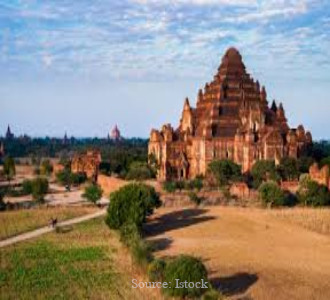
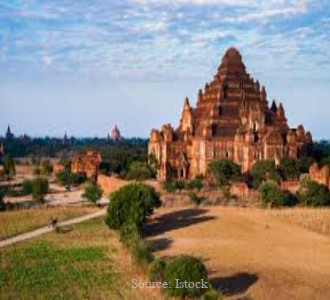
The bad Karma Temple – the Dhammayangyi is not only the grandest temple across Bagan, but one of the most unique, with its square base that makes it appear almost pyramid in shape being a true feat of architectural design and wonder, which combined with its golden brown coating and its incredibly well preserved status – makes it one the most photographable temples across the whole of Bagan.
A particularly special temple to capture against the background of sunrise or sunset, Dhammayangyi earns its bad karma reputation following its construction by the King Narathu – who seized power by murdering his own father in the late 12th Century, with this temple being his attempt avoid the consequences for his action in the next life. While it’s unclear whether he found redemption, there’s no doubt that his creation stands as one of the most unique and special temples across Bagan, and a temple that no explorer should leave without capturing.
Htilominlo Temple:
Known as the Umbrella Temple – nicknamed not just because of its unique umbrella like design – but also after the King Htilominlo (after whom the temple takes its official name) – but also because King Htilominlo was supposedly selected to rule as king after his fathers umbrella selected to him to rule after a ceremony.
Regardless of how the temple came to be, it is undeniably stunning – with the 150 foot Htilominlo temple perched on the edge of the Bagan plains and looking out over the beautiful countryside, with each of its four corners symmetrical in design – creating a perfect shot. Special also thanks to a nearby lake – from where you can snap incredible reflective photos, Htilominlo also comes complete with a bustling courtyard full of souvenir sellers – who are only too happy to ablige (for a fee) a photo of yourself in front of this magnificent temple.
Manuha Temple: The Hall of Sadness
Named the temple of sadness – after the exiled king Mon who imagined the temple and ordered its construction, but sadly never saw it came to be, the Manuha temples exterior sadly not as well preserved as its neighbouring temples. Yet its inside where this temple – and incredible photographs come to life, with the halls inside the temple blessed with four incredible images of Buddha – which make for unique snaps of the religious significane of Bagan.
Three of these images are found in one section of the hall in a somewhat cramped area – so be prepared to wait to view them – and all stand higher than 40 feet facing east – representing the hope and symbolism of the Buddhist religion, while one single Buddha image – which features Buddha reclining facing west with his head facing north – found at the back of the temple and stretches more than 90 feet in length.
A moving and unique temple, the spiritualy and history of the Manuha temple is truly felt and it’s one of the most unique places across the whole of Bagan to snap photos and truly understand the special religious nature of this wonder of the world.
Lemyethna the White Pagoda
One of the most unique Pagodas across Bagan, the Lemyethna remains in regular use for prayer, with this bright white 13th century Pagoda standing in stark contrast to the gold and brown temples of Pagoda, making it not only truly special, but against the background of the plains of Bagan and the thousands of neighbouring Pagodas making it a special spot to grab a unique photo of this incredible white Pagoda.
Particularly special when photographed just after sunrise – when the rising sun colours light up the Lemyethna temple making it truly illuminous, we’d also advise capturing this special temple from a ground shot – where you can snap a great golden spire before the temple – that makes for a truly wonderful photo.
Lawkananda Pagoda
Made out of pure gold – and standing as a bell shaped tower – the Lawkananda Pagoda is a stunning pagoda in its own right, but given its unique position perched on the banks of the Ayerwaddy river – you’ll find this Pagoda one of the most special places across Bagan to snap photos of the incredible sunset – with not only the river and moutnains of Bagan laid out before you but the Lawkananda Pagoda itself all lighting up against the deep orange and reflective glow of the sunset for a truly special photo.
A spot that’s also a great place to capture timelapse photos, the Lawkananda Pagoda also benefits from a series of comfortable benches spread across the riverbank – that can make for a great place to settle down for the evening and watch as the incredible sun descends over Bagan for a picture perfect photo.
Shwe Gu Gyi & Bulethi Temples
The twin temples of Shwe Gu Gyi & Bulethi lie inconspicuously in the middle of Bagan, yet these two temples offer one of the most stunning and unique photos across the whole of Bagan to capture panoramic photos. Not our pick for sunrise or sunset (see below) but thanks to the multiple temples around these twin temples – and the fact that view spots are available from each of the four corners of both temples – it’s truly worth making the climb to at least one of their summits to snap great panoramic photos out over Bagan.
A relativley easy climb – at least in comparison to other temples across Bagan, both Shwe Gu Gyi & Bulethi temples remain off the beaten track for panoramic photos, so you’ll find that the summits of both temples are largely unoccupied during the day – which can be incredibly handy for those who want to take their time and snap a truly memorable photo out over the thousands of temples of the wonder of Bagan.
Nyaung Laphat hill & Sulamani hill
Finally, in order to give explorers that extra special photo – the conservators of Bagan have very helpfully constructed two manmade hills on the edge of the plains from Bagan – where explorers can ascend and look out over the thousands of temples for panoramic shots.
Both hills can be challenging to climb, so be sure to make use of the handrails on your ascent – and you’ll find that as well as offering panoramic photos out over Bagan, and being a popular spot for proposals, both hills are advertised as being the premium sunrise and sunset photography location of Bagan.
While this wouldn’t be our recommendation (see below) we’d certainly recommend making the ascent up to the top of either the Nyaung Laphat hill or Sulamani hill during the day, and taking a moment to gaze out and snap incredible panoramic photos of the thousands of beautiful Pagodas before you that make up the stunning wonder of the world of Bagan.
Sunrise in a Hot Air Balloon
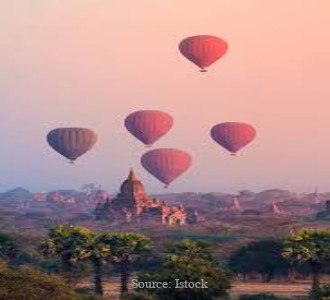
One of the greatest experiences on the planet, a sunrise hot air balloon ride over the golden city of Bagan not only magical but affords explorers stunning photos of this increidble wonder of the world – as you fly over the thousands of pagodas and temples and gaze down as they light up with the rising sun and truly come alive – creating one of the most stunning photographs over Bagan.
Giving you a birds eye view of fellow hot air balloons against Bagan and affording panoramic photos that let you capture unique views only available from the air, a hot air balloon will not only be costly (expect to pay $300 Usd) – but will see you have to get up early in the morning – yet both these inconveniences are well worth it for the great photos they afford. Best undertaken on a clear day (so be sure to check the weather in advance) and between the months of October to Mid-April, watching the sunrise over the wonder of Bagan is awe-inspiring, the photos you snap on this hot air balloon journey are undoubtedly the best way to capture the full beauty of this increidble wonder of the world.
Sunrise from a Pagoda:
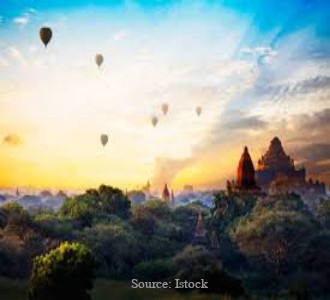
While soaring above the ancient city of Bagan and its thousands of Pagodas in a hot air balloon is a thrilling experience and one that affords incredible photos – for the iconic and quintessential photo and experience of watching the golden sun light up the city – with a series of hot air balloons in shot, captured against the glowing illuminating sun – then the best place to be and to snap that photo is atop one of Bagan’s Pagodas – from where you can look out and capture this incredible and beautiful photo.
A shot that will require to get up early and be in position for the air balloon ascending time of half an hour before sunrise, we’d advise skipping the official advice of heading to a hill and heading to one of the open temples that is climbable at sunrise to capture this photo. With any of the five temples of Shwesandaw, Thitsa Wadi, South and North Guni, and Pyathatgyi being open for climbing and offering stunning views out over the beauty of Bagan.
A truly iconic photo – and one that will stay with you, be sure to wrap up warm and bring some breakfast with you, and after an ascent to the top of the stairs of a Pagoda and a patient wait for the sun to rise, you’ll be able to capture the iconic and stunning photograph of the perfect moment where the hot air balloons align with the illuminating sun reflecting over the golden temples of Bagan – for a mesmerising and beautiful shot.
Sunset from the Shwesandaw Pagoda:
Finally, no trip to the magical city of Bagan would be complete without taking in the incredible sunset – with the descending glowing sun lighting up this golden city and making the thousands of Stupas and temples come alive before you in a reflective and illuminated display of gold for a spectacle unlike any other on the planet.
Truly sensational — and a great way to cap off any trip to Bagan, you’ll find that crowds flock to the plains of Bagan at sunset to snap these photos – such is there immense reputation – so it’s best to get there early and make sure you angle yourself facing the Ayeyarwady river, where you can snap the sunsetting and reflecting off this long and winding river – for an extra sprinkle of mafic into your shots.
So ensuring you get there early, we’d advise that if you want a truly special photo at Bagan at sunset, you skip the observation hills and find yourself an elevated spot that will allow you to capture the full panoramic shot over the thousands of Stupas – with climbing one of the Pagodas themselves being perfect for this – with the temples of Shwesandaw, Thitsa Wadi, South and North Guni, and Pyathatgyi being the only temples across Bagan that permit climbing for sunset.
Of these five our recommendation for great sunst photos is to head for the temple of Shwesandaw first, with this temple – that will require a bit of steep climbing – affording the best and most elevated views over Bagan. Be prepared to get there early and be sure to take care when climbing, as while steps and handrails are available the Shwesandaw temple suffered badly during the 1975 earthquake and you’ll find parts of the top of this temple having whittled away.
Still from its 328 foot the views out from Shwesandaw temple are truly sensational – and as you perch on its edges and stare out over the thousands of glowing gold pagodas and temples before and capture their immense beauty, history and cultural significance in one of the most awe-inspiring and stunning shots on the planet, you’ll be left in little doubt that the ancient city of Bagan is a truly immense and beautiful wonder of the world.