Borobudur
Overview:
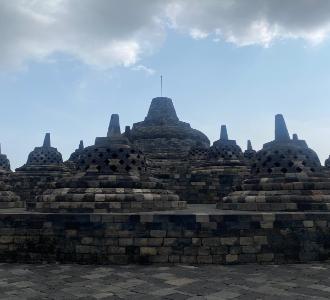
The world’s biggest Buddhist monument, the 8th century Borobudur is a stunning temple complex that charts the life and teachings of Buddha and is a sacred and spiritual place for both Buddhists and mankind alike. Constructed over three incredible levels – that represent three levels of Buddhist symbolism, Borobudur is also an architectural wonder, featuring 2,672 teaching panels and 504 Buddha statues – with the pinnacle of the complex being a giant stupa dome on the high third level that features 72 buddha statues in 72 stupas that look out over the incredible wonder of the world that is Borobudur.
Found on the Indonesian island of Java and sitting close to the in the special region of Yogyakarta, Borobudur sits on a hilltop but is easily accessible by a climb that features some steep staircases – with the stunning green scenery and dormant volcanoes in its background adding to its beauty, that is perhaps best captured against the incredible sunrise that lights up the complex each morning and is truly a wonder to be seen.
While Borobudur has seen its share of damage and depletion as a result of both time and an accidental bombing campaign, a series of major government restoration projects have helped to restore most of the temple to its former glory and make Borobudur Indonesia’s most visited site – which considering the country boasts both Bali and the Rinca islands to name but two is no mean feat – as the holy teaching and life path of Buddha which are expertly carved into both walls and reliefs of the temple, combined with the sheer size, stunning architecture, beautiful scenery and magnificent sunrise helping to make Borobudur not just a spiritually and emotionally fulling temple – but a true wonder of the world.
Where:
The wonder of Borobudur sits on the main island of Indonesia – Java, with the stunning complex being closest to the town of Yogyakarta in the special region of Yogyakarta.
Getting there:
The best advice to get to Borobudur is to base yourself on the island of Java – and get yourself to the town of Yogyakarta which serves as a base for most trips to Borobudur.
Yogyakarta is easily reached from the main transport hub of Semarang – which you can either get direct flights to or go by bus or train from the Indonesian capital of Jakarta.
For those with a self drive car and exploring the island of Java in a road trip you have the option of driving directly to Borobudur from Semarang, but we’d really recommend taking a route to Yogyakarta – as there are many fantastic temples, including a gorgeous sunset to see on the way.
From Yogyakarta you’ll find Borobudur a 90 minute journey away, although allow an extra half hour to allow for the famous Indonesian traffic conditions, and we’d really recommend setting off early to avoid both traffic and if possible witness the stunning sunrise over Borobudur.
For those without access to a self drive car, there are a range of public transport options, with the easiest being paying for a tour on a mini bus that will drop you off for you to do a self guided tour of Borobudur, although we’d recommend staying overnight at a local hotel to make sure you get to witness the sun rise.
You can also hop on a bus from Yogyakarta from the main terminal of Jombor bus direct to Borobudur – there’s no need to book an advance, and our advice is to jump on the bus and kick back for an hour as you enjoy the stunning Indonesian countryside scenery as you wind your way round to the wonder – just note that English may not be spoken on the bus, and chances are the rest of the bus will be full of locals who will be surprised to see you !
Once at Borobudur you’ll find yourself either parked or dropped off at the main car park, and from here you can head to the ticket office, pay your fare and enter the stunning wonder of the world – which is best and easily explored on foot in a one-way clockwise direction along the well-defined path but occasionally steep path.

Best time to Visit:
The best time to visit Indonesia for the coolest weather is between July – September and we’d recommend heading to Borobudur during this time, as the weather in the high months or during the monsoon season (November – January) can make a viusit to the wonder uncomfortable.
It’s also highly recommended to visit to witness the incredible sunrise when you visit and timing your visit for a weekday to avoid the crowds.
For those who aren’t fussed by large crowds or noise – a trip to Borobudur during Vesak day — the holy Buddhist holiday is most definitely worth a visit, just be prepared for heat, crowds and loud noises !
Explore:
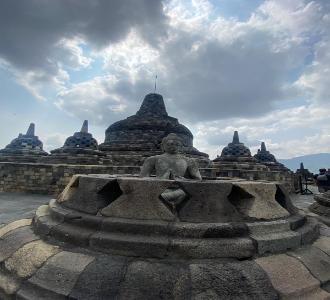
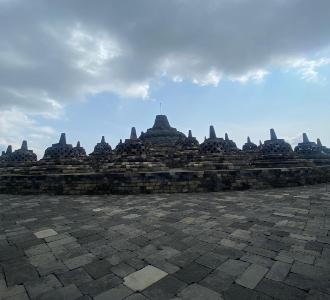
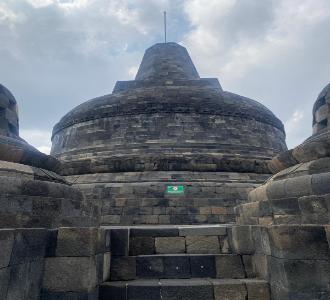
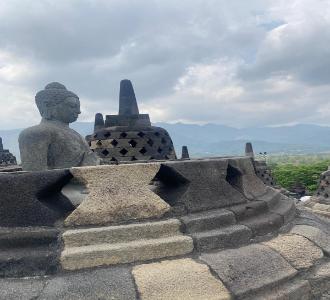
The entire site of Borobudur features more than 500 Buddha statues, 2600 stone carvings and stunning carved architecture based on the teachings of Buddha across more than 2,500 m², which is divided into three stunning circular levels with six square platforms where Buddha sits and the summit which features the incredible and iconic dome of Borobudur at the top of the complex – where you’re greeted by not just a stunning viewing platform but by 72 Buddhas which sit inside Stupas allowing for a spiritual and awe inspiring religious experience.
Unquestionably the thing to do when you get there is to explore the complex, and this is best done by taking on the pilgrims Journey which takes you all to the way to the top of the stunning Borobudur complex and to the summit of this stunning wonder of the world.
The pilgrim journey:
Alongside the stunning site of Borobudur, you’ll also notice that the complex is set high upon a hill – and while the climb can be a little steep in places it is perfectly manageable as the pathway is kindly developed to take you in a clockwise stroll through open passages, as you pass through the three levels of Buddhist Symbolism — the Kāmadhātu (desire), Rūpadhātu (Life forms) and Arūpadhātu (Life of formlessness) and ascend to the summit.
Beginning on the Kāmadhātu level and having paid your entrance fee to get in, you’ll find yourself at the base of the incredible Borobudur and soon upon four unique galleries all with incredible carvings reflecting the life and teaching of Buddha – as well as some of the incredible Buddha statues and some notable carvings which conceal ancient works on the walls – with the running theory being that these carvings cover up the depiction of desire and lust – which are not compatible with Buddhism teachings.
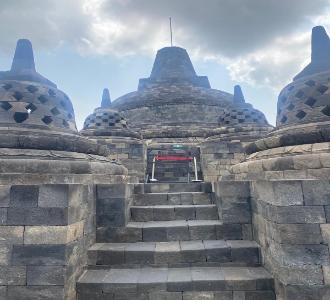
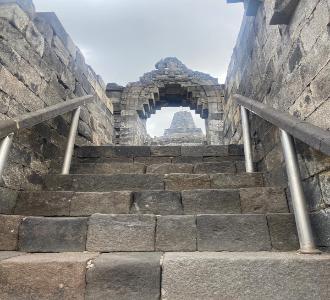
As you take time to observe the incredible carvings and the uniqueness of the Kāmadhātu level you can slowly begin to ascend up a steep staircase to the Rūpadhātu level – where you’ll find yourself on the level of the 6 square platforms and be able to see further carvings which depict the life and times of Buddha and his teachings.
Of further note in this section is the incredible andesite stone used in the construction of the whole of the Borobudur Complex – all of which was hauled there manually over the course of 75 years – making the construction of Borobudur itself an incredible feat. You’ll also begin to see more detailed reliefs and piece them tofether as you explore the complex further, noting that the more than 2,500 thousand carvings and stories tell the four key events in Buddhism; the promise of Buddha, the birth of Buddha, the law of Karma and the search for truth – all of which form the core of one of the worlds major religions.
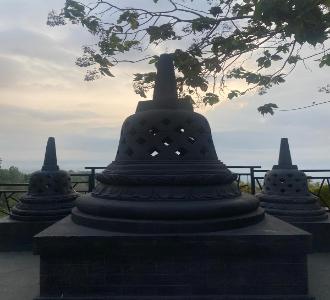
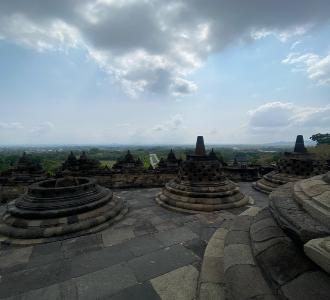
Moving past the second floor and upwards again through a steep staircase you’ll come to the pinccale of Borobudur the Arūpadhātu level and undoubtedly the most impressive – where the famous 72 buddha statues sit inside 72 Stupas (round like huts) that centre around a large central dome like stupa and from where it is belied enlightenment can be received. While there is unfortunately noticeable damange to some of the Buddha statues, the summit is still an incredible place, as you look out over not just the Borobudur complex but stand atop one of the holiest Buddha site and jhaving followed the pilgrim journey to the top moved trough the complex from the darkness to the light for an awe-inspiring and spiritual experience.
Borobudur Sunrise:
Alongside making the Pilgrims Journey to experience the magnificence of Borobudur, it’s highly recommended to wake up early – approximately 4:30am to see the sunrise over the wonder.
While Borobudur officially opens its gates at 6:30am you can find tours from either Yogyakarta or from local hotels that can get you inside the complex before sunrise so you can experience the Borobudur come to life with the shining sun absent the flock of tourists that frequent the wonder during the day.
With the sunrise best viewable from either the summit itself or from the complexes base – where you get a great view of the whole of the complex being lit up – for an absolutely incredible and unique way to experience this wonder.

Museum:
Having made the Pilgrims Journey and seen the sunrise, we’d also recommend a trip to the two museums that sit on the Borobudur Complex – the Samudraraksa Museum and the Karmawibhanga Museum.
With the Karmawibhanga Museum in particular being fantastic for hosting detailed information about the history of Borobudur, how it was constructed and even architectural findings from the site over the course of centuries – with a visit to these museums a further great experience to further your knowledge and appreciation for the wonder of Borobudur.
Self Drive Temples:
Alongside the wonder, for those of you that are self driving or find yourself on a tour, we’d also recommend stopping off at a series of temples that dot the way to Borobudur if you’re heading to Borobudur to or from Yogyakarta – with the below temples being our favourite on the road there.
Not only do these temples make incredible stop off points but the temples themselves are also fascinating and beautiful and help lend further background to how this part of stunning Indonesia looked when Borobudur was occupied.
The Mendut & Pawon Temple: Believed to have been constructed at the same time as Borobudur, these two temples are believed to have acted as a guide point towards Borobudur and features some incredible Buddha statues, carvings and architecture.
The Ngawen Temple – part of a small village (which makes an ideal place to grab a bite to eat after exploring the wonder) the Ngawen temple is a little depleted but still features some incredible architecture and small Stupas that back to the 1st century for an incredible impression as to how far back the wonder of Borobudur goes.
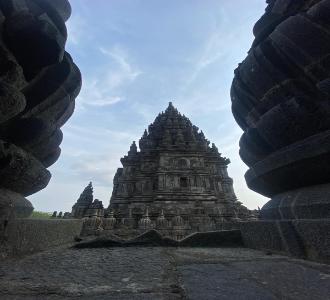
Prambanan Temple – For those self-driving and wanting a great place to stop off to see a stunning Indonesian Sunset after a long day exploring Borobudur, we’d strongly recommend making time to visit the Prambanan Temple, which can be found on the way back to Yogjakarta having seen the beauty of Borobudur in all its glory.
The Prambanan Temple is a Hindu temple that stands at more than 150 feet tall and like Borobudur features stunning architecture, carvings and sculpted walls, and makes for a truly incredible place to cap off your day while taking in an incredible temple as the sun descends on your visit to a true wonder of the world.
How long to stay:
We’d recommend one evening and then at least a half day to explore Borobudur – this will give you enough time to stay overnight at a local hotel and time to jump on a sunrise trip to see Borobudur in all its wonder and then enough time to explore the wonder in the day light and appreciate its magnificence – before flocks of tourists arrive.
Top Tip:
As Borobudur is a religious site, it’s really important to be respectful and make sure you cover your knees, shoulders and wear a sarong or hair covering – which are available for free at the entrance site – and be sure to bring plenty of water – to compensate for the heat.
As a major top tip and for an ultimate travel experience, be sure to take in a sunrise over the wonder, for an absolutely incredible and beautiful experience and amazing photos, and it’ll also be a worthwhile investment to grab a guide from the entrance or pre-book one – both so you can truly understand and appreciate the beauty of Borobudur – but also for help in getting those high quality photos of yourself at the wonder.
Unsurprisingly Borobudur is a tourist hotspot – and in a country with Bali and the wonder of the Rinca Islands, Borobudur is Indonesia’s top tourist hotspot – so it’s essential for a more enjoyable experience to get there early and importantly avoid the weekend for a time to visit as the crowds, combined with the heat can be overwhelming and really take the edge and beauty of your experience at this unique wonder.
Cost:
Expect to pay 375,000 Indonesian Rupees – roughly $25 USD for access to the temple complex and tickets can be bought on site – with guides that are recommended and required to visit usually costing around 50,000 Indonesian Rupees ($5 usd ) an available from the gates a the times of entry or from Yogyakarta as part of a tour in advance – be warned those that are picked up at the gate will normally insist on a minimum 2 hour tour time.
While the wonder opens at 6am and closes at 5PM, we’d recommend for a truly unique experience getting on one of the sunrise tours which are available from the town of Yogyakarta or from local hotels – these tours which might set you back half a million Indonesian Rupees cost ($50 Usd) are well worth it and get you into Borobudur at around 4:30 am let you watch the sunrise, either from a special viewing point where you see the sun rise over the wonder or by making the climb to the top in advance for a truly unique experience.
Overall you can expect to fork out $150 Usd to visit Borobudur – including allowing for travel there, food and a nice souvenir.
Best photo spot:
There are two absolute must have photos when visiting Borobudur, the first is the sunset rising over the temple complex- you’ll have to be there at 5:30am and get lucky with a blue sky but the sight of the sun rising over this spectacular temple complex is incredible and certainly photo worthy.
The second photo is from the top of the Temple Complex having made the pilgrimage to the top – while you can combine this with a the sunrise for a truly special photo – for those who don’t arrive in time for the sunrise, the view from the top of the hill looking down on the many Stupas and Budda statues as you’ve summited a wonder of the world is both a photo and memory that will stay with you for life.