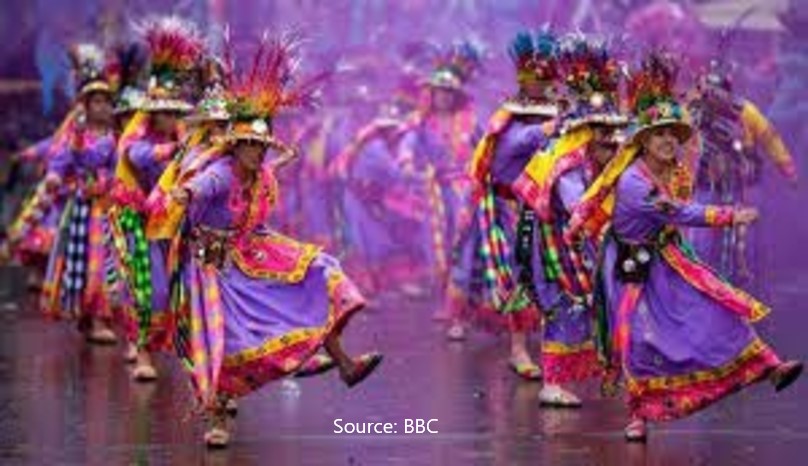
Carnival de Oruro
What: Bolivia’s own spin on the South American Carnival season sees the “Devil Dancing festival” being hosted in the mining town of Oruro – where for 10 days preceding Ash Wednesday the carnival mixes modern traditions such as processions, theatrics, music, folk dancing, water fights, food and of course alcohol with more traditional religious elements, including the commemoration of the towns patron saint, the Virgin of Socavo and also the remembrance ‘Lady of the Mineshaft’ (which can still be visited in the town’s chapel) – which is said to have miraculously appeared in the main mine shaft of Oruro in the 1756.
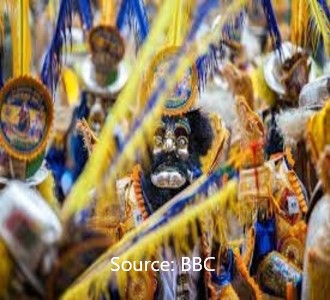
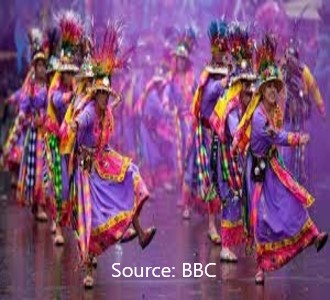
The Carnaval de Oruro is now also famous for its three day parade which features the iconic devil dancers, who march through the streets of Oruro from the main square for 4km to the main football stadium – which given Oruro is at a height of 3700 metres above sea level is no mean feat. As the devils head towards the stadium they are then accompanied by the god of the earth – Pachamama and the uncle god – Tio – where backed by tens of thousands of musicians, and in front of hundreds of thousands of onlookers – the devil dancers spend three days re-enacting the victory of good over evil (although the good side has help from the gods) – which combined with the carnival atmosphere, a mass water fight and of course the festival of lent helps to not only make this an enjoyable festival but also helps people to celebrate, and cause, a reawakening of life.
When: The Carnaval de Oruro begins 10 days prior to Ash Wednesday – with the carnival really kicking into gear on the Friday before Ash Wednesday and ending on the noon of Ash Wednesday, with the Saturday, Sunday and Monday featuring an all day parade including the devil dancers – and offering numerous chances for the religious elements of the festival – including the observing of the ‘lady of the mineshaft’ monument to be observed.
Where: The Carnival takes place in the town of Oruro, Bolivia with the devil dancing and numerous performances taking place along the Plaza 10 to the town’s main square, for the parade you can expect the route to be taken on foot from the main square to the main football stadium in Oruro – and it’s also recommended to visit the ‘Lady of the mineshaft’ which is available in the main chapel of Oruro.

Tickets: The main square and viewing of the carnival and watching of the parades is free for all – although you can expect huge crowds and expect to be doused in water if on street level in the main square or on watching the parade.
Duration: Officially beginning 10 days before Ash Wednesday period, the festival kicks off with ceremony dedicated to the Virgen del Socavon in mid-afternoon – where a combination of marching bands, dancers and locals will combine to bang any instrument in site and unleash the first of the water dosing’s to the crowd to begin the festival.
But the Carnaval de Oruro really kicks into gear on the Friday before ash Wednesday, when an all night party stretching through all the streets of the town and featuring dancing, parties and of course alcohol kicks off and lasts until dawn on the Saturday – when the carnival parade officially begins.
From the Saturday, you can then expect a three day weekend celebration – dubbed pilgrimage Saturday, fun Sunday and devil Monday – where from dawn on the Saturday to dusk on the Sunday the three day parade begins back and forth along the route, with the music, dance and fun never stopping.
Need to Know: The festival takes place in the small(ish) town of Oruro, which is some 3000 metres above sea level, so it’s advised to give yourself at least a day to acclimatise to the altitude – also as hundreds of thousands of people attend the festival – it’s advised to book accommodation early in advance and keep a close eye on your possessions – and expect to be dosed in water at some point during the festival.