Diwali
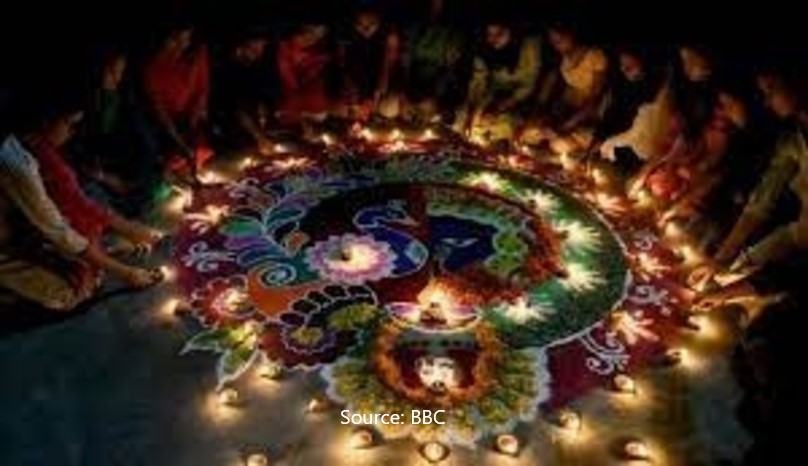
What: The five day festival of Diwali celebrates the triumph of light over darkness and is celebrated by millions of Hindus and Sikhs across the world. With the biggest and best celebrations taking place across India where billions of people light lamps in their homes, shops, building and release lanterns into the night sky which combined with the lighting of billions of candles and release of fireworks – rightfully earns Diwali’s ‘festival of light’ nickname.
Alongside the lighting of lamps and candles, Diwali is celebrated in both a raucous and reflectful manner, with the first days of the festival dedicated to visiting family, cleaning, worshipping and both purchasing and wearing one’s finest clothes, with nightfall on the third day seeing children, young adults and elders pouring into the street to exchange presents and release fireworks, firecrackers and lights – transforming the streets of India into a spectacle of lights.
When: The Dates for Diwali change each year, with the festival occurring in either October or December based on the cycle of the Hindu lunar calendar.
Where: Although celebrated all around the world, the heart of Diwali celebrations are in India, with the North of India in particularly being the best place to be for the festival, with the fireworks, lights and celebrations in both Mumbai, Agra and New Delhi all being spectacular – alternatively for a more spiritual experience the town of Varanasi offers spectacular fireworks and celebrations over the heart of the Ganges river.


Tickets: Diwali is completely free to attend and there is no immediate cost to take part – just be sure to bring your finest clothes and plenty of fireworks and lights.
Duration: Diwali is divided into five separate days;
1.) The first day is dedicated to preparing for the festival with the cleaning of houses and streets and the purchasing of best clothes, with hindu’s making frequent trips to temples in memory of Lord Vishnu, is said to bought good health and immortality to man kind on this day and also trying their luck at gambling in the hopes of prosperity.
2.) The Second day is dedicated to reflection, with a focus on hell and the battle between good and evil, with some communities burning effigies of demons in preparation for the full lunar moon.
3.) The third day is the main day of Diwali, and the main day for the festival of lights, with the lunar moon accompanied by the lighting of candles, the release of fireworks and the celebration of life.
4. & 5.) The fourth and fifth day of Diwali are focused on reflection, with hopes for the new year and a celebration of sisters taking place to close out the festival.
For each day expect reflection in the morning, and in particular on the third day, expect fireworks, noise and light ceremonies to take place from dusk to the early hours of the morning.
Need to Know: India is already heavily populated and expect prices for accommodation and flights to increase closer to Diwali as people flock to the North of the country to celebrate Diwali – so it’s advised to book well in advance.
Also be warned that when celebrating Diwali in the North of India with lights and fireworks, health and safety requirements are at a minimum, so be careful of stray fireworks and keep your distance from anyone releasing fireworks in the street.