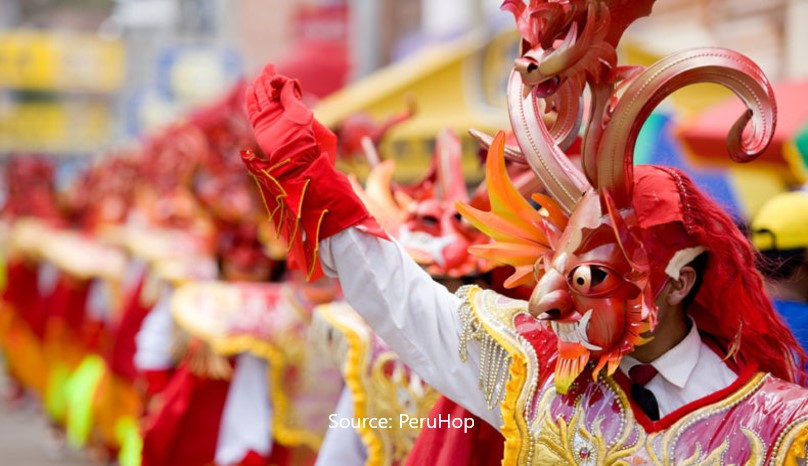
Fiesta de la Candelaria
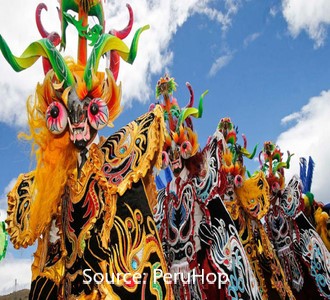
What: Celebrated on the shores of Lake Titicaca the Fiesta de la Candelaria (Virgin of Candelaria Feast) marks the end of Christmas and honours the Patron saint of Puno, the Virgin of Candelaria, with a 2 week mix of religious ceremonies including masses and ceremonies and modern festival elements including street dancing, parades, costumes, the blessing of cars, food and free-flowing beer – with a special ‘running of the bulls’ event taking place daily on the Bolivian side of the Lake.
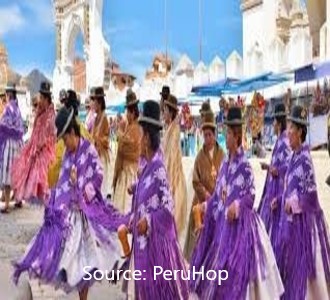
Held some 3,800 metres above sea level – which already leaves participants breathless – the carnival kicks off with a blessing before turning to a street parade where the a replica of the patron saint who is said to have delivered Jesus to Jerusalem, is paraded through the streets accompanied not only by some 50,000 dances and 10,000 musicians but also by inhabitants of the Lake, including those who emigrated and return home for the festival to make sure that the cultural and traditional element of the festival is maintained.
After the initial parade, a series of street dancing events break out, which last for 10 days, And you can expect not only daily running of the bull events – but a series of health and safety free firecracker and firework events ‑that help celebrate the end of Christmas and the Fiesta de la Candelaria with a bang !
When: The festival officially lasts for 10 days – with the main day of the Fiesta de la Candelaria being the 2nd of February – however you can expect to see dances, fireworks and masses taking place at any point in the first two weeks of February as the festival celebrates the conclusion of Christmas.
Where: The festival is celebrated all across South America (Peru, Mexico, Bolivia, Chile, Venezuela, and Uruguay), but the heart of the action lies in the border towns of Lake Titicaca – Puno, Peru and Copacabana, Bolivia – where you can expect to see never ending parade’s, bull runs and firecracker and fireworks being released in the streets.
Duration: While the festival lasts for almost two weeks, you can find a number of the highlights at the start of the month, with the festival officially kicking off on the 1st of February with a daybreak mass and an ancient purification ceremony in the afternoon.
This will then be followed by the main day – the 2nd of February where ethe procession takes place, including the lifting of the saint of Puno is carried through the streets alongside traditional music and dancing – this kicks off the wilder side of the festival with the releasing of the bulls, street dancing and as evening breaks – fireworks and crackers being set off.
For the following 10 days of the festival you can expect parades, fireworks and street dancing, all of which take place on a non-set schedule beginning from around 10am each day.
Tickets: There is no charge to attend the Fiesta de la Candelaria or witness the parades, masses or dancing – although you can expect to pay an increased price for accommodation, food, specialised alcohol and firecrackers during the festival
Need to Know: The two border towns or Puno and Copacabana are small, so accommodation is likely to be limited.
It is also recommended not to participate in the running of the bulls festival if you’ve been enjoying the free flow beer & mind yourself in the streets as firecrackers are randomly set off – and health and safety protocols are at a minimum.