

An Extraordinary Celebration of Halloween, Creativity and New York Street Culture
On Halloween night, Manhattan’s Greenwich Village becomes a moving canvas of giant puppets, handmade costumes, bands and dancers. Community participation and street theatre give this New York tradition its distinctive energy.
Watch the craft as well as the procession, or join in costume through the current official lineup.
A city street becomes a shared work of imagination.— THE TRAVEL LANTERN
Festival Guide
Discover the Village’s participatory arts tradition and plan a thoughtful night of puppets, performance and street creativity.
1Festival Overview
Explore the parade’s neighbourhood roots, giant puppets, handmade costumes and community participation.

A neighbourhood imagination takes to the streets
The Village Halloween Parade is rooted in the idea that a city street can become a place for shared invention. On Halloween, giant puppets rise above the crowd, bands carry a moving soundtrack and people bring characters they have assembled, stitched, painted or improvised. The pleasure comes from the procession as a whole: individual ideas briefly become part of a public artwork.
Its beginnings are associated with mask maker, puppeteer and theatre director Ralph Lee and the artists’ community at Westbeth. Historical accounts distinguish a small neighbourhood gathering in 1973 from an organised parade in 1974, developed with Theater for the New City. Rather than forcing those stages into a single neat origin date, understand the event as something that grew from local theatrical experiments into a recurring public celebration.
Greenwich Village as more than a backdrop
The parade belongs to a neighbourhood long associated with artistic work, performance and forms of self-expression that have not always fitted comfortably elsewhere. That context matters. The Village is not simply a collection of atmospheric buildings behind people in costume; its community and creative networks helped give a street procession the confidence to become something unusual.
Today the audience extends far beyond the neighbourhood, and the crowds can make its smaller scale difficult to see. Leave time before the procession to walk permitted streets, eat at a local business and notice the area as a place where people live. Doorways, stoops and residential entrances remain part of everyday life, even when Halloween transforms the atmosphere around them.
Theatre without a conventional stage
The early organised event used the neighbourhood itself as a theatrical setting. Lee’s work with masks and puppets encouraged a way of performing that could move between places and draw people into a shared route. The contemporary parade is more tightly managed, but that relationship between movement, environment and audience still helps explain its identity.
Street theatre works differently from a show viewed from a numbered seat. You may hear a band before seeing it, glimpse a puppet over other people’s shoulders or notice a small detail as a group passes. Accepting those partial, changing encounters can make the evening more rewarding than expecting an uninterrupted view of every performer.
Giant puppets and the people who animate them
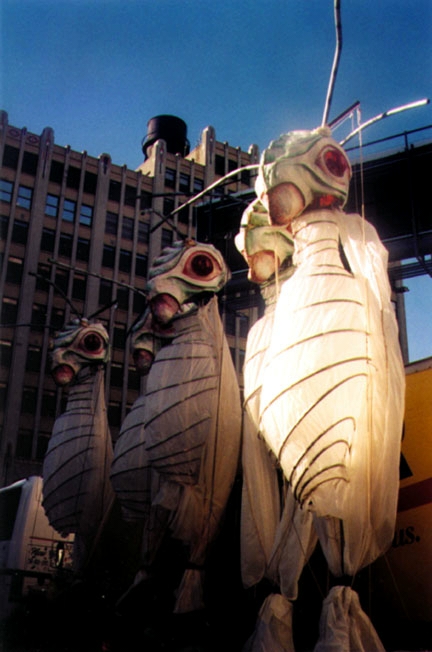
Puppets are central to the parade’s artistic language. Their scale changes the street: a figure can appear above the audience, turn with surprising delicacy or seem to float in the available light. The effect depends on people working together, carrying structures, controlling rods and responding to one another as the procession moves.
Look for that cooperation as well as the finished figure. A puppet’s movement tells you something about the making and rehearsal behind a public moment. It is easy to photograph a striking face and miss the puppeteers below it; a wider view can preserve the relationship between an imaginative object and the community effort that gives it life.
Staging and preparation areas are working spaces. A view of a puppet being adjusted is not permission to enter, touch it or ask its handlers to stop. Respect barriers and invitations. If volunteering interests you, consult the organiser’s current opportunities and commitments rather than assuming that a visitor can simply take hold of a puppet on the night.

Costume craft as a form of authorship
Handmade costumes make personal contributions visible. Some rely on elaborate construction, others on a clever visual idea, carefully chosen clothing or a performance sustained by the wearer. Their value is not limited to expense or technical complexity. An inventive character can work because of how someone moves, collaborates with friends or responds to the street around them.
Allow room for that range. The parade should not be reduced to a competition for the most shocking image or the largest prop. A quiet detail, a group whose designs connect or an amusing reference understood only gradually can be as memorable as a towering creation. Ask about the making when someone is free and willing to talk, rather than interrupting the active procession.
Music, dance and the changing rhythm
Bands, dancers and other performers make the route more than a moving costume display. Sound arrives in waves, groups travel at different paces and the audience’s attention shifts as a new rhythm reaches them. Watching a complete group pass can reveal coordination that a hurried sequence of close-up photographs would miss.
Make space for performers to work. Instruments need clearance, dancers need room and a group may have to keep moving even when spectators want a photograph. Applause and attention are useful contributions; stepping into the route or blocking a musician is not. Follow marshals’ instructions, including when they create gaps or hold a group temporarily.

Expression, queer participation and respect
The Village’s queer cultural history is part of the context in which the parade’s expressive freedom developed. Drag, theatrical transformation and playful changes of identity belong within a broader tradition of people making themselves visible in public. That history deserves respectful attention, without assuming that every participant shares the same identity or reason for appearing.
Do not turn a person’s gender expression or appearance into a novelty label. Describe the performance or the costume accurately, ask how someone wishes to be identified when it matters and never infer private identity from a photograph. A public celebration can invite interest while leaving individuals fully entitled to boundaries and personal space.
Participation and the annual theme
The organiser’s tradition welcomes costumed marchers through a designated lineup, alongside organised groups and performers. That invitation is different from unrestricted access to the road. Entry points, timing, permitted props and instructions can change, and participants wait until marshals release them into the procession. A costume is part of the participation requirement, not a pass through police barriers anywhere along the route.
Annual themes provide a shared artistic prompt without making every creation identical. Check the edition on the official site before building a plan around a theme. Older photographs show the parade’s range across time, but they do not confirm the next year’s puppet designs, participating groups or current admission arrangements.

A large spectacle with community roots
As the parade has grown, the practical demands have changed: crowds, street controls and ticketed special-access options now coexist with a participatory public tradition. It is useful to recognise both sides. Calling it purely spontaneous overlooks the artists, volunteers and organisers who make it possible; treating it only as a commercial spectacle misses the contributions people bring themselves.
The strongest experience comes from seeing those contributions in relation to one another. Watch the puppets and their handlers, appreciate a group’s shared idea, listen to a band and notice the response along the pavement. Whether you watch or join through the authorised process, patience and consideration help preserve a community arts tradition within a very busy New York night.
2When & Where
Distinguish the latest confirmed route and lineup from next-edition plans that are still to be announced.
When the Parade Happens
The parade is held on Halloween, 31 October, subject to annual arrangements. As reviewed on 6 November 2026, the official site still advertises the completed Saturday 31 October 2026 edition, starting at 7pm and ending around 11pm. A confirmed 2027 programme, theme and access plan were not available in the pages consulted. Recheck before booking or joining.
Greenwich Village
The procession is associated with Sixth Avenue, also called Avenue of the Americas, through the Village in Manhattan. Arrange food, a meeting point and an exit route away from the busiest blocks before taking a viewing position.
Parade Route
For 2026, the organiser’s spectator page described Sixth Avenue from King Street to West 15th Street. Its participant page described the Canal Street approach and northbound movement to 15th Street. These describe different parts of the operation. NYC DOT’s controlled street area extended beyond the viewing stretch for formation and dispersal. Do not treat any of these 2026 details as a confirmed next-edition route.
Participant Lineup
The published 2026 instructions required a costume and arrival at Canal Street/Sixth Avenue between 6.30pm and 9pm, approaching from the authorised east or south directions. Marchers waited for release by staff. Next-edition instructions must be checked again, including entry approaches and permitted props; do not enter from the spectator barriers.
Best Spectator Areas
The organiser identifies Bleecker Street to 14th Street as especially crowded. Other permitted sections may feel more manageable, but no pavement position is guaranteed. Choose the side of the route that suits your eventual exit and remain behind barriers. Prime views require an early arrival and patience.
Subway & Street Closures
Use MTA’s current journey planner and service alerts, plus NYC DOT’s event notices. West 4 Street–Washington Square, 14 Street/Sixth Avenue and Canal Street-area stations can be useful approaches, depending on service and controls. Entrances may become exit-only or close temporarily. Do not follow obsolete service numbers in older event-page lists.
Best Time to Arrive
Plan a late-afternoon arrival rather than a last-minute dash for a 7pm-style start. For a particular view, be prepared to arrive earlier. The usual sequence is early arrival, finding a viewing position, participant assembly, parade start, the main procession and a slow late-evening dispersal. Follow the confirmed annual schedule and police instructions.
3Festival Advice
Prepare for dense crowds, controlled crossings, changing subway access and an outdoor autumn evening.
Crowds, barriers and a realistic plan
Expect very dense crowds, long periods standing and limited ability to change position. Meet friends before approaching the route and choose an alternative meeting point in case phones fail. Keep exits in mind, remain behind police barriers and never attempt to cross through an active group. If the crowd becomes uncomfortable, follow staff directions towards a permitted less-congested exit.
Travel light and dress for movement
Wear comfortable footwear and layers suitable for a cool, possibly wet autumn evening. A costume should allow clear vision, breathing and safe walking without snagging other people. Avoid bulky elements and realistic weapons; check current parade and city rules for props. A small secure bag is easier to manage than a backpack in a packed crowd.
Phones and belongings
Charge your phone, carry a power bank and save essential travel details offline. Keep valuables zipped away and avoid displaying cash or leaving a phone exposed in a pocket. Allow for patchy connectivity where many people gather.
Children and accessibility
Noise, masks and dense nighttime crowds may not suit every child. Agree what to do if separated and consider a shorter visit or a different Halloween event if the conditions would be stressful. A stroller may be difficult to move through the audience.
No confirmed next-edition accessible viewing allocation or step-free parade plan was found in the pages consulted. Ask the organiser about viewing, companion access, toilets and drop-off options before buying special access. Check MTA lift status for your actual station and do not assume a VIP product guarantees accessibility.
Food, toilets and alcohol
Eat and use a toilet before settling in. Confirm opening hours with a business rather than assuming public facilities will be available beside your viewing position. The organiser publishes a zero-tolerance alcohol policy for the parade. Follow that rule and current city instructions; do not plan open-air drinking as part of the procession.
Photography and performers
Ask before close individual portraits where practical, including people in drag or elaborate costumes. Do not block groups, touch props or use intrusive flash at close range. A participant’s appearance is not automatic consent for a prolonged close-up.
Common Mistakes
- Arriving shortly before the start expecting a front-row view.
- Depending on one subway entrance or a taxi beside the route.
- Wearing a costume that restricts safe movement or vision.
- Carrying bulky bags or losing track of exits and companions.
- Crossing barriers or stopping performers for photographs.
- Ignoring cold, rain or a low phone battery.
- Assuming all costumed people want close portraits.
4How to Experience
Choose a spectator visit, a longer Village evening or authorised costumed participation.
Essential Halloween Parade Experience
As a spectator, arrive early, eat first and choose a permitted section of the route with an exit plan. Watch a complete sequence of puppets, musicians, dancers and community groups rather than chasing individual costumes. Accept that dense crowds may limit the view, and give other spectators room where possible.
Full Halloween Night Experience
Explore Greenwich Village before barriers and crowds build, with a booked meal or a flexible food plan away from the route. Spend part of the evening watching the procession, then leave through permitted streets that fit your onward journey. Allow generous time for station queues and do not assume rideshares can collect you nearby.
Respect residents throughout: keep building entrances clear, avoid private stoops and keep noise down when leaving residential blocks. A longer night is best when it includes pauses and a realistic return plan.
Best Creative Experience
Focus on construction and performance: how a puppet moves, how a group’s designs relate and how music changes the street. Ask about handmade work when people are free and willing to speak. Consider official volunteering opportunities if you want a deeper role, checking commitments and sign-up procedures in advance.
To march, use the current official participant process and wear an appropriate costume. Meet your group before the lineup, use only the authorised entrance and wait for marshals. The parade is strongest as a participatory community arts tradition, with each person contributing attention, imagination and consideration.
5Photo Guide
Photograph puppets, performers and nighttime streets with care for space, consent and movement.

Best Subjects
Build a varied sequence: giant puppets with handlers, costumes and details, musicians, dancers, community groups, spectators and the surrounding Village streets. Include enough context to show a public arts event rather than a collection of isolated masks.
Best Light
Use streetlights, illuminated shopfronts and other available light. Raise ISO rather than adding intrusive close-range flash. Keep bright signs from dominating the exposure and protect equipment from rain.
Best Positions
Choose a permitted position early and leave space for people to pass where possible. A moderate telephoto helps isolate details from the pavement; a wide-angle shows street scale. Never climb street furniture, trees, scaffolding, roofs or private property.
Parade Action Photography
Start around 1/250 second for walking performers, increasing it for faster movement and raising ISO as needed. Short bursts can help with a puppet turn or dance step. Do not enter the route or ask an active group to stop.
Costume & Portrait Photography
Ask before close portraits where practical and accept a refusal. Photograph the person’s creation respectfully, avoiding assumptions about identity. A quick agreed picture before or after marching is often less intrusive than leaning into someone’s path.
Puppet Photography
Leave room above tall figures and include handlers when possible. A wider frame can explain scale and cooperation. Do not touch rods, fabric or structures to improve a composition.
Night Street Photography
Combine performers with lights and architecture, taking care not to expose private interiors or block residents. Camera stabilisation helps static scenes but cannot freeze a moving dancer; shutter speed still matters.
Phone Photography
Use the main lens and tap to set focus and exposure. Night mode suits relatively static subjects; short bursts or normal video may work better for movement. Keep the phone secure and avoid holding it over other spectators’ faces.
What Not to Do
- Cross barriers or obstruct performers and emergency access.
- Climb structures, street furniture or private property.
- Use intrusive flash at close range.
- Assume costumes or gender expression remove the need for respect and consent.
- Fly a drone without all required permissions.
Practical Information
Plan your arrival and exit before the crowds build, travel light and check current parade and transit notices.
Best Time to Arrive
Arrive well before the confirmed start and leave extra time for crowded trains, barriers and walking.
How to Get There
Use the subway and a flexible walking approach; street closures make taxis and rideshares unreliable near the route.
What to Bring
Bring comfortable shoes, weather layers, a charged phone, power bank and a small secure bag.
What to Expect
Expect giant puppets, handmade costumes, bands, dancers and very dense crowds behind controlled street barriers.
Give the evening time
Arrive well before the confirmed start, with a late-afternoon approach a sensible planning choice for a 7pm-style procession. Prime views require an earlier arrival, and space is not guaranteed. Allow time for crowded trains, changed station exits and controlled walking routes.
If you are marching
Use the current official lineup hours and approach instructions. The 2026 window was 6.30–9pm, but that is not confirmation for the next edition. Meet friends away from the route and approach together; avoid last-minute cross-town travel.
Subway and walking
Use MTA’s current planner for your actual date. West 4 Street–Washington Square, the 14 Street/Sixth Avenue area and Canal Street-area stations can provide approaches depending on service and controls. Check station exits and lifts: an entrance that works by day may become restricted during the parade.
Closures and the return journey
NYC DOT and NYPD may close streets across formation, procession and dispersal areas. Buses can divert; taxis and rideshares may need a pickup well outside the perimeter. Walk only along permitted routes and leave extra time for slow dispersal and crowded platforms. Do not rely on the previous year’s closure timetable.
Pack for an outdoor evening
- Comfortable shoes, warm layers and light rain protection if needed.
- Charged phone, power bank and offline travel details.
- A small secure bag, water and minimal valuables.
- A compact camera with weather protection if you plan to photograph.
- A costume if desired; current rules require one for general costumed participation.
Check prop rules and keep vision and movement clear. Leave bulky luggage at your accommodation.
A busy community arts night
Expect giant puppets, bands, dancers, costumes and street theatre, alongside very dense crowds, barriers and crowded subway stations. Cold or rain can make a long wait feel longer.
Enjoy the creativity with care
Follow NYPD and parade staff, remain outside active groups unless officially participating, and keep exits and building entrances clear. Appreciate the making and performance behind the spectacle while respecting the people who bring it to the street.
Photo Gallery
Archival Village Halloween Parade photographs: giant puppets, costume craft, performers, floats, community groups and New York street atmosphere.


Current information and sources — reviewed 6 November 2026
Reviewed 6 November 2026. The organiser still advertises the completed 31 October 2026 edition. No confirmed 2027 route, lineup hours, theme, accessibility plan or transit restrictions were found in the official pages consulted.
Official parade site; spectator route and access; authorised participation and alcohol policy. The 2026 theme was Body & Soul; it is not presented as the next theme.
NYC DOT weekly closures distinguishes formation, route controls and dispersal; the controlled area may exceed the spectator stretch. MTA journey planning and service alerts is the reference for date-specific service and lift status. Older station lists on event pages may contain obsolete services.
History: Ralph Lee’s lecture and Village Preservation’s historical account. Accounts distinguish the 1973 neighbourhood beginnings from the organised 1974 event.
Photo credits and licences
Archival photographs show earlier editions. Local-context images are labelled separately. Images use responsive cropping. Banner supplied by the site owner.
- Sixth Avenue parade scene at West 11th Street, 2017 — Jim.henderson. CC BY-SA 4.0. Source and original.
- Tall rod puppet at the Village Halloween Parade — Photographer uncredited; permission credited to Jeanne Fleming / halloween-nyc.com on the source page. CC BY-SA 3.0. Source and original.
- Giant luna moth puppets at the 1998 Village Halloween Parade — CawaK (talk) (Uploads). Public domain. Source and original.
- Live performance at the 2016 NYC Halloween Parade — Tzim78. CC BY 4.0. Source and original.
- Float at the 2026 parade — Tzim78. CC BY 4.0. Source and original.
- Giant chicken creations at the 2026 parade — Tzim78. CC BY 4.0. Source and original.
- Village Halloween Parade on Sixth Avenue — archival procession — InSapphoWeTrust from Los Angeles, California, USA. CC BY-SA 2.0. Source and original.
- Papier-mâché faces at the Village Halloween Parade — Photographer uncredited; permission credited to Jeanne Fleming / halloween-nyc.com on the source page. CC BY-SA 3.0. Source and original.
- Phoenix puppet at the 2001 Village Halloween Parade — Photographer uncredited; permission credited to Jeanne Fleming / halloween-nyc.com on the source page. CC BY-SA 3.0. Source and original.
- A dinosaur puppet being prepared in the parade staging area — Photographer uncredited; permission credited to Jeanne Fleming / halloween-nyc.com on the source page. CC BY-SA 3.0. Source and original.
- Banana-themed costumes at the Village Halloween Parade, 1990 — Joe Shlabotnik. CC BY 2.0. Source and original.
- Village Halloween Parade, 1990 — Joe Shlabotnik. CC BY 2.0. Source and original.
- Audrey II costume on the way to the Village Halloween Parade, 2024 — NevinThompson. CC BY-SA 4.0. Source and original.
- Village Halloween Parade — archival participants — InSapphoWeTrust from Los Angeles, California, USA. CC BY-SA 2.0. Source and original.
- Village Halloween Parade — archival costume craft — InSapphoWeTrust from Los Angeles, California, USA. CC BY-SA 2.0. Source and original.
- Village Halloween Parade — archival street performance — InSapphoWeTrust from Los Angeles, California, USA. CC BY-SA 2.0. Source and original.
- Village Halloween Parade — archival nighttime gathering — InSapphoWeTrust from Los Angeles, California, USA. CC BY-SA 2.0. Source and original.
- Village Halloween Parade — archival group presentation — InSapphoWeTrust from Los Angeles, California, USA. CC BY-SA 2.0. Source and original.
- Astronaut costume at the 2026 parade — Tzim78. CC BY 4.0. Source and original.
- Parade float and street atmosphere, 2026 — Tzim78. CC BY 4.0. Source and original.
