
Hagia Sophia & The Sultan Ahmed Mosque
Overview:
Representing the storied history, religion, ideology and beauty of the past, present and no doubt future of the wonderful city of Istanbul, the twin wonders of Hagia Sophia and the Blue Mosque and both completely different and yet continuously entwined wonders that have united and divided the people of Istanbul for centuries.
Dotting the skyline of Istanbul, these now twin Mosques sit opposite each other and are recognisable as the icons of Istanbul, sitting on the banks of the Istanbul River in the majestic fountain filled Sultanahmet Park – and being recognisable for their beautiful exteriors that feature towering minarets, encompassing domes and of course the famous blue tiles of the Blue Mosque that light up Istanbul.
Representing the heritage of the great city, the Hagia Sophia was constructed first as a church in 325 and then rebuilt in 527 and since undergoing many turbulent times including conquests, fire and damage which has seen it been rebuilt and resigned and seen in moved from being a church, to a mosque to a museum and then back to a mosque in early 2020 – when this jewel of the Byzantium Empire was reclaimed by the Turkish government.
Similarly, the Blue Mosque has undergone such storied history, being first erected in the 17th century by Sultan Ahmet – who dreamed of creating a Mosque to overshadow and dwarf the majestic Hagia Sophia. Considered one of the last remaining architectural masterpieces of the Ottoman Empire the Blue Mosque features not only its mesmerising multi domes that are adorned with its famous blue tiles, but also a incredible interior with a 10,000 strong still active prayer hall which is lit up by a series of stained-glass windows and blue tiles that create a spiritual ambience within this great complex.
In constant competition and representing the heritage and history of Istanbul, the twin wonders of the Hagia Sophia and the Blue Mosque represent the unique blend of Istanbul’s religions and cultures, and while they may also reflect the bloody and storied part of this city across the centuries – the magnificent Domes and Blue tiles of the wonders which light up the Istanbul skyline – combined with their stunning interiors and courtyards of these two spiritual complexes now hopefully embody the peaceful religious, spiritual and political future of Istanbul – and stand together as two immense and beautiful wonders of the world.
Where
Representing the heritage and history of Turkey, the Blue Mosque and Hagia Sophia sit opposite each other on the top of a hill in the Sultanahmet Park in the Sultanahmet district next to the next to the gorgeous Bosporus Strait in the heart of the beautiful city of Istanbul.

Getting there:
Lying in the heart of Istanbul, the twin wonders of the Blue Mosque and Hagia Sofia are incredibly accessible – so having gotten yourself to Istanbul which is easily reached by Plane into one of the 10 airports of Istanbul – with our recommendation being to head to Istanbul New Airport which is the main and most accessible airport in Istanbul – you then have the option of grabbing a taxi, walking or jumping on public transport to reach the wonders, which stand opposite each other in the majestic Sultanahmet Park.
For those not walking or hailing a taxi, the first easiest option is to get to the wonders is to take Istanbul’s incredibly efficient and cheap subway system to Kabatas train station – which is accessible by multiple lines across Istanbul including from Taksim Square. Once at Kabatas train station you can either spend 20 minutes walking through the streets of Istanbul to the Sultanahmet Park or jump on the T1 tram that will drop you right off at Sultanahmet Park on the Sultanahmet Tram Stop – you’ll see the iconic outlines and minarets of Hagia Sophia and the Blue Mosque coming into view as you approach it – then from Sultanahmet Park it’s a simple matter of slowly walking
For those who want a more scenic view of the wonders – you have the option of viewing them on a tourist cruise across the Bosporus River in the famous Istanbul liner – which act as efficient ferry transports from Istanbul to various other parts of Turkey. While we wouldn’t recommend this route as a way to get to Hagia Sofia or the Blue Mosque – for those who want to experience stunning views of the twin wonders – particularly at sunset – or of the famed Istanbul Skyline from the shore – this is the route for you as you journey across the beautiful Istanbul River taking in these two incredible wonders of the world.
Best time to Visit:
While both the Blue Mosque and the Hagia Sofia are visitable and open all year round – we’d advise heading between March and May where you’ll find the temperatures in Istanbul much more manageable and where the two wonders are less likely to become overcrowded.
For visiting, we’d advise visiting between 9 – 12 for the Hagia Sophia and between 2–5 for the Blue Mosque as this will avoid any clashes with the call to prayer and also give you plenty of time to explore the wonders – be sure as well to avoid visiting on Fridays and to make plenty of time catch the stunning sunset over the two wonders in the evening as it’s a truly magical time when the exteriors of both wonders come alive and sparkle in the evening sun.
Explore:
Sitting opposite each other in the heart of the stunning city of Istanbul, the Hagia Sophia and the Blue Mosque are architecturally beautiful and unique structures that dot the city’s shoreline and which also represent and capture the fascinating and storied history of the country’s heritage, beliefs and past.
Towering and iconic, the two wonders are also placed in constant competition, which is no surprise given the motivation behind the construction of the Blue Mosque to eclipse the Hagia Sophia – and for centuries the two wonders have both divided and united the people of Turkey and been the sight of many political, religious, and ideological battles that still rage to this day.
However, both the competing ideological and architectural differences can take away from the sheer beauty and significance of the wonders, with the towering minarets, the stunning interiors and the famous blue and red exteriors of both complexes being uniquely beautiful and representing the absolute best of Byzantine and Ottoman architecture and beliefs.
Therefore, with a trip to both wonders being essential when visiting the beautiful city of Istanbul, the below are our guides to exploring the unique wonders of the world that are the Hagia Sophia and the Blue Mosque.
Hagia Sophia
Beginning with the oldest wonder, the Hagia Sophia which represents the best of Byzantine Architecture and contains the most storied additions of the Ottoman Empires, before being converted into a museum, the stunning Hagia Sophia with it’s iconic red walls and domes sits in the middle of the Sultanahmet Park where it has stood for thousands of years since it’s construction in 360 AD.
Originally build as a church – at the direction of Emperor Constantine who once tried to move the capital of the Roman Empire to Istanbul – Hagia Sophia was once the mightiest and biggest church on the planet and was the first to feature a giant round dome making it not only the first church of its kind but also an architectural landmark and first and forms the basis on which fellow wonders including the might St Peters Basilica were modelled on.
Hagia Sophia stood as a mighty church for almost a century – surviving a rebuild in 537 AD – until the Ottoman’s conquered Istanbul in the 15th century at which point recognising it’s immense beauty the wonder was converted into a mosque which it remains today after a controversial ruling in 2020 that declared the site was no longer a museum.
Embodying the religious and ideological struggles of Turkey that has paved the way for the modern belief system in the country, the Hagia Sofia has not only a storied history but with its high ceilings, hundreds of low flying lights and iconic domes the Hagia Sofia is a truly beautiful icon of Turkey, which can be first explored from admiring it’s stunning exterior.
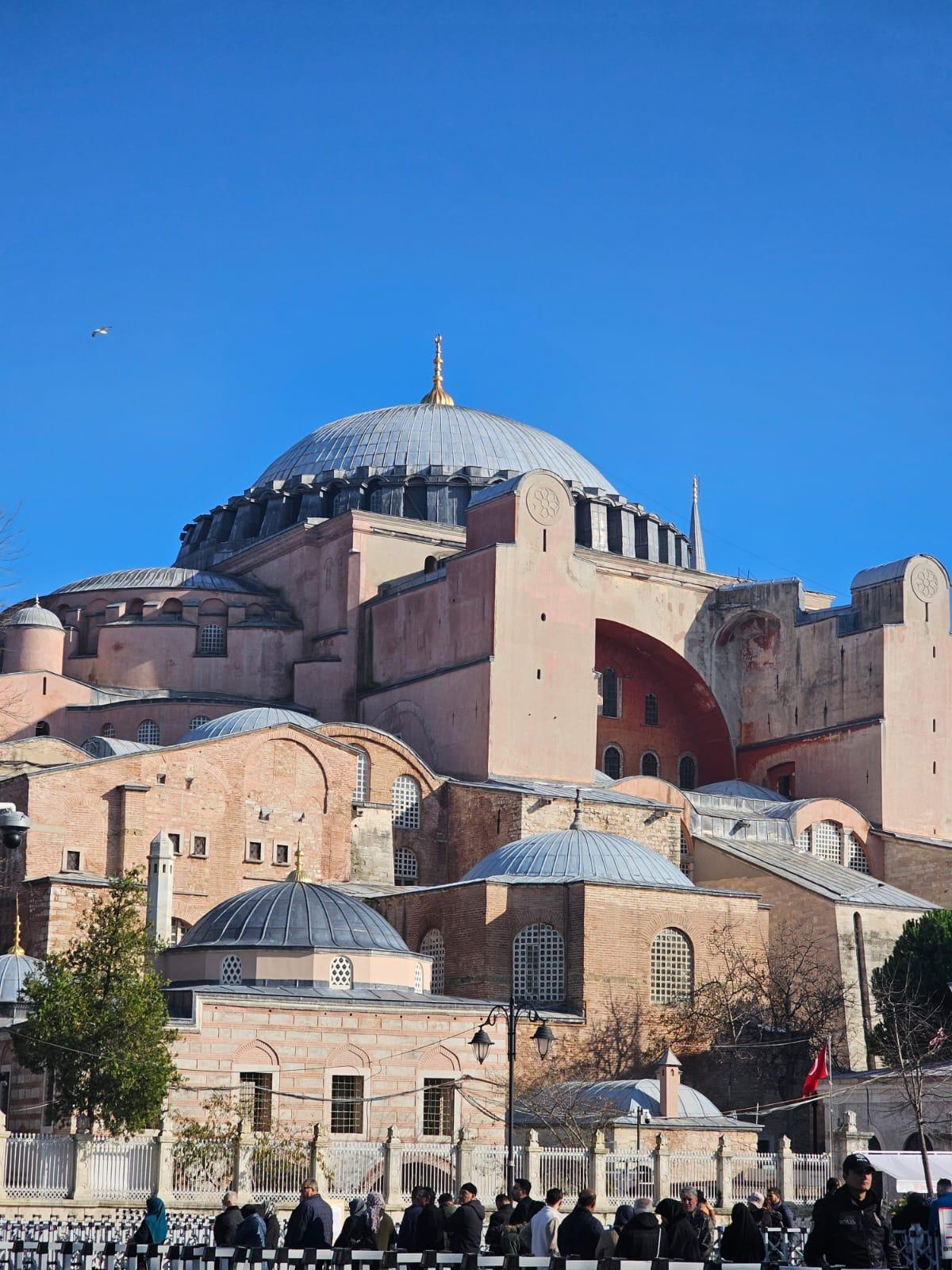
Exterior: From first approach towards Hagia Sophia from the beautiful Sultanahmet Park you’ll notice the towering and large dome surrounded by a series by four minarets and a pathway that leads you through a series of fountains to the glowing red walls of this incredible wonder.
Journeying alongside the dancing fountains and green grass of Sultanahmet Park that adds to the beauty of the wonder and which make for stunning photos of the exterior of Hagia Sophia, the glowing pale blue Dome itself is rightly revered as an architectural feat– and is believed to have been one of the first time such a dome was applied to a catholic building.
But from an aesthetical perspective the great time highlights the Hagia Sophia, sitting with a golden spire atop the complex and based upon a rectangular structure that marks the stunning cathedral like interior of Hagia Sophia.
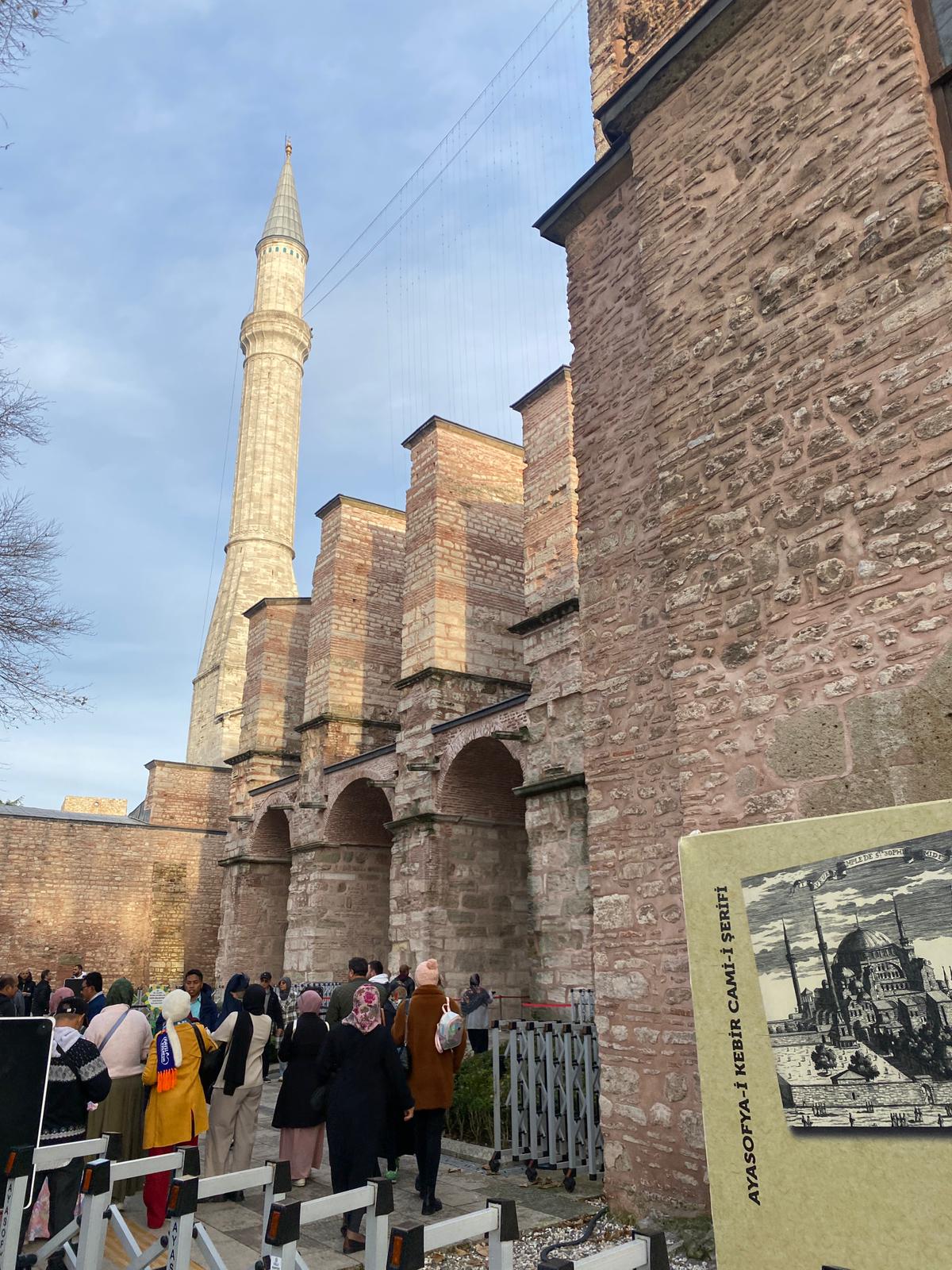
A beautiful spot and one that makes for great photos and is viewable form across the beautiful city of Istanbul, the exterior of Hagia Sophia are also supported by four minarets on each corner – which were added in the 15th century by the Ottomans in compliment to it’s original structure and which represent the unique blend and complement of architecture and religion within Hagia Sophia – with the minarets which reach some 200 feet into the Turkish Sky representing the call for prayer which still echoes around Hagia Sophia today as worshippers and tourists visit this incredible wonder and venture through the stunning courtyards of Hagia Sophia in through one of it’s incredible entrance doors to see its stunning interior.
Hagia Sophia Interior As a still active Mosque, when venturing inside you’ll need to be observant of the religious protocols for entering a mosque including covering your hair if a female and being sure to come dressed appropriately ‑with Hagia Sophia also closed to tourists during prayer time throughout the day.
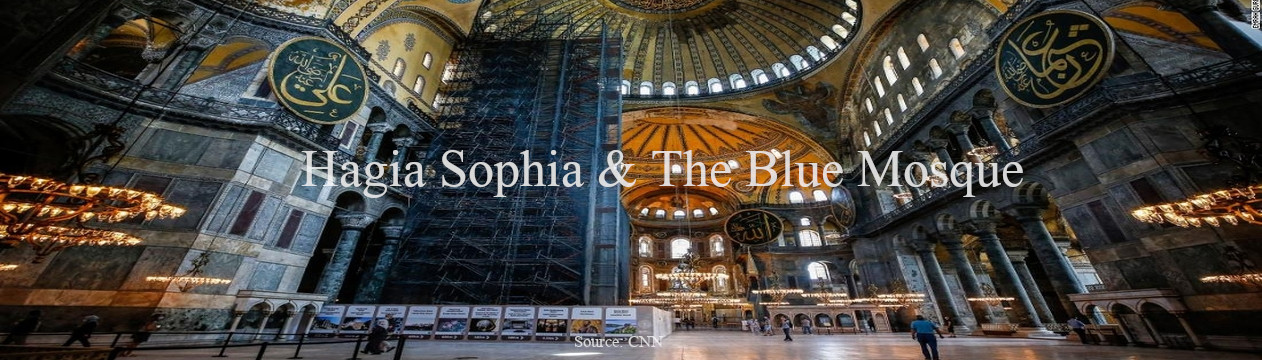
Yet when you do visit, you’ll find yourself stepping into a large open cathedral like interior with the inner walls and dome adorned in various black and gold marble that is awe-inspiring and breath-taking and which represents the best of Byzantine and Ottoman Architecture with the great black marble pillars, mosaics and Frescos all combining to make up what one was and remains one of the greatest and most beautiful buildings on the planets.
Beginning with the floor, which dates back to the 5th century you’ll notice – especially with the absence of shoes – that the floor beneath you is not only a touch cold, but also that it consist of stunning and multi-coloured marble and stones that not only adds to the sotried atmosphere inside Hagia Sophia but which itself has stood through centuries alongside the ever changing purpose of the wonder.
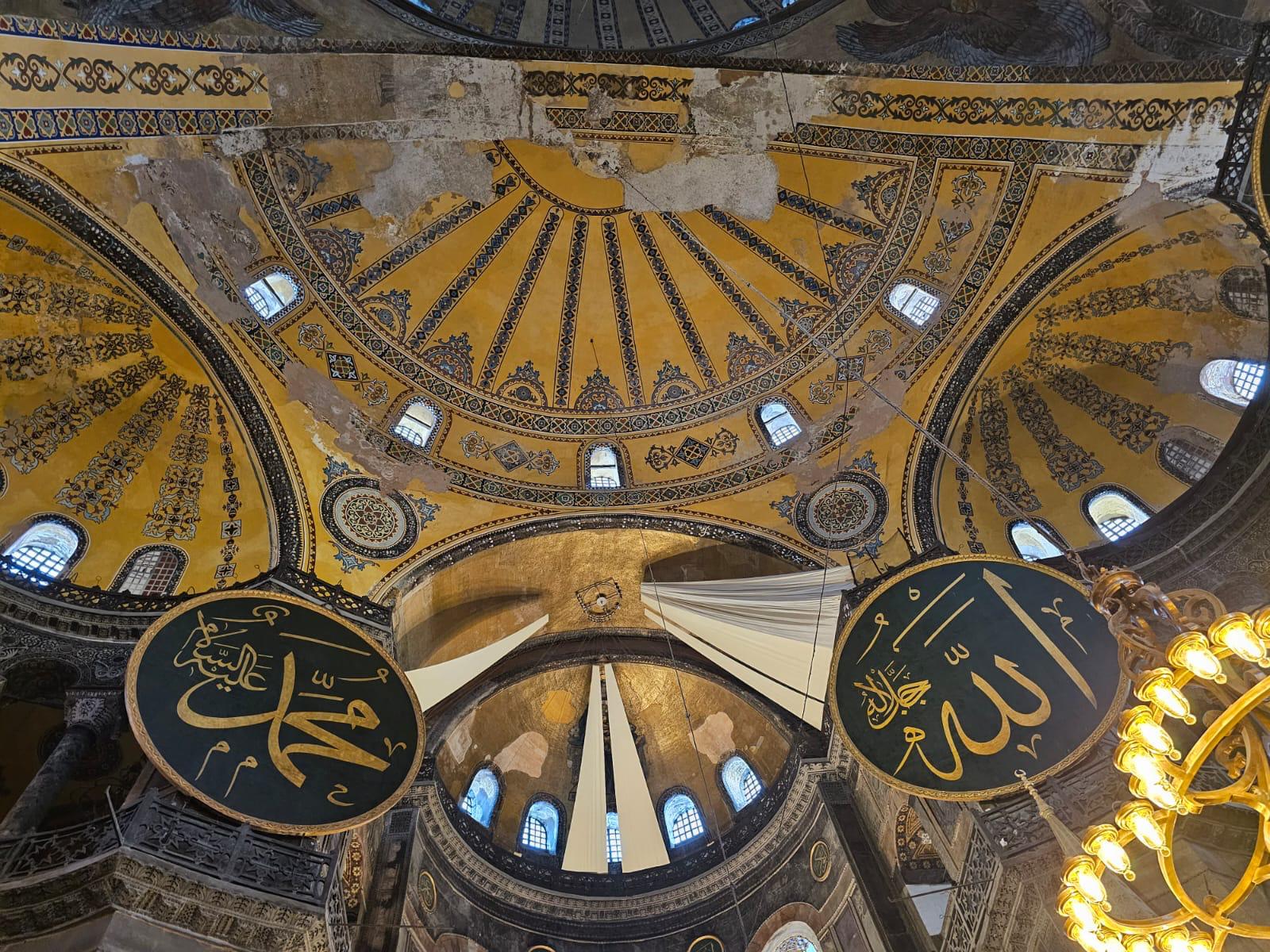
Moving into the interior itself you’ll notice the clash between Christian and Islamic religion and styles – with the mighty gold dome above giving way to a series of Islamic signs and carvings on the interior wall – with the stunning dome whose interior is gold stretching to the highest point inside Hagia Sofia at more than 180 foot.
You’ll also notice that the inside of Hagia Sofia opens up into a cathedral like style, with the walls adorned with towering arch windows, extended arched openings, Christian mosaics which date to the 10th century and colourful frescos, all of which sit between stunning tiles and Marble along the walls.
Looking closer at the arches and columns within the inside of Hagia Sophia and you’ll get a chance to appreciate both their stunning beauty and the architectural feat of their construction and their cultural and religious significance with one column in particularly always standing out – the famous wishing column that dates back to the construction of Hagia Sophia and which can – according to legend — heal illnesses when touched, with the columns unique power keeping it from ever going dry and surviving the battles and history of the Hagia Sofia.
Journeying further through the interior and taking time to gaze upon the stunning ceilings and beautiful windows within the interior of Hagia Sophia you’ll also notice two doors one large and one which looks a little out of place, these are the Nice and Imperial Doors.
The Nice door is believed to be the oldest piece of architecture within Hagia Sophia dating back to 832 construction and is adorned with not only unique and stunning carvings from this era, but also by plants from across Europe which were bought to hang on the door as a sign of respect to the beauty of Hagia Sophia. For the larger door – known as the Imperial Door – which was unsurprisingly used by Emperors to access Hagia Sophia for prayer and reflection, you’ll notice it as being not only towering in size but being constructed out of wood – with the wood itself supposedly rescued from the ark of Noah – and science confirming it dates back to the 6th century – a truly unique and storied artefact within the wonder of Hagia Sophia.
Having taken time to explore the lower level interior and the stunning marble floor, doors and gold and black interior and windows, you can also venture your way up to the upper gallery – with sections of this gallery which are available giving you an eagle eye view of the stunning interior below and allowing you to fully appreciate the beauty of Hagia Sofia from a viewing panel.
It’s on the upper level as well that you’ll find the famous and mysterious marble door – which was used by dignitaries and political figures to enter into a large hall like room from where meetings and discussions would take place that have shaped the future of both the Hagia Sophia wonder and of the world itself.

The upper floor is also a great place to view some of the stunning mosaics and frescoes that line the interior of the Hagia Sofia. All depicting catholic events – on account of the Hagia Sofia being a catholic church on its inception. While the mosaics are all stunning and unique and are deserving of your time, we’ve picked out our five favourite that most definitely should not be missed when visiting Hagia Sofia:
The Emperor Alexander Mosaic – Found atop the second floor, the Emperor Alexander mosaic is probably one of the most overlooked and difficult to find mosaics and should be the first Fresco you take in from the upper gallery – and depicts the great Emperor Alexander and was believed to have been trashed in one of the many battles of Hagia Sophia in the late 18th century before being re-discovered and restored in the 20th century – a truly stunning mosaic that gives a fascinating insight into the reverence in which Emperors considered themselves and of course being a beautiful and colourful mosaic that is well worth a view.
Imperial Gate mosaic - Found above the imperial gate, the Imperial Gate Mosaic dates back to the 9th century and depicts the emperor Leo Vi (known as Leo the wise) representing before a god like figure upon a throne and blessing the emperor. It is in our view particularly special for both the religious imagery and reverence in which Emperors were held – as well as course as the stunning colours and art work behind the mosaic.
Southwestern Mosaic — The southwestern entrance mosaic depicts the nursing of the baby Jesus by the Virgin Mary with the two religious symbols adorned by colourful stones and with an emperor believed to Justinian the first standing watching over them representing the believed connection between emperors and religious icons at the time.
The Semi Dome Mosaic – Believed to have been reconstructed in the 9th century – following vandalism during the Ottoman Conquest, the Semi Dome Mosaic sits next to the great dome of Hagia Sophia and contains multiple fresocs – the most beautiful and significant is one depicting the Virgin Mary with Baby Jesus atop a golden throne – which is believed to be one of the most beautiful and oldest Byzantium frescos and the depictions of the angels Gabriel and Michael which although only partially depicted and sadly worn away is a beautiful and storied fresco that underlines the religious important of the Hagia Sophia to Catholics.
The Empress Zoe mosaic – Finally dating back to the 11th century is the stunning Empress Zoe Mosaic that once again depicts Jesus with Past emperors. In this Mosaic Jesus if found in is found in a typical Byzantine robe (which offers a fascinating insight into life during the Byzantine era) with the two emperors Constantine the fourth and the Empress Zoe standing on either side of Christ and receiving his blessing and approval. Aside from the religious imagery the Empress Zoe mosaic is both beautiful and historic and offers an incredible view once again into both the reverence of Emperors and the art and beliefs of the Byzantine culture.
…
Therefore having journeyed your way through the incredible courtyards and taking in the stunning dome and minarets from the exterior you will have a unique chance to explore the breath-taking interior of the wonder of Hagia Sofia.
With the incredible marble floors and spiritual columns of the interior, alongside the magical black and gold adorned walls which combined with the mosaics, windows and legendry doors and the religious and ideological and evolving storied history of this great temple, gives you a unique chance to explore the past, present and no doubt future of the beautiful complex of Hagia Sofia that is a uniquely beautiful and true wonder of the world – and we’d encourage you to savour every minute of your experience !
The Blue Mosque (The Sultanahmet mosque)
The Sultan Ahmet Mosque – known as the blue mosque on account of its beautiful blue tiled domes, walls and minarets, and is recognisable not just thanks to its towering position on the Istanbul skyline but also as one of the grandest and most majestic mosques in both Turkey and on the planet.
Sitting opposite the wonder of the Hagia Sophia in the gorgeous Sultanahmet Park, the blue mosque was completed at the start of the 17th century at the design of Sultan Ahmet – and is shrouded in controversy and politics, with the Blue Mosque being specifically designed to dwarf the Hagia Sophia to stamp the Ottoman and Islamic beliefs upon Turkey.
Considered one of the hallmarks of beautiful Ottoman architecture, the mosque houses more than 10,000 worshippers at a time meaning there’s a strict dress code for entry, and has evolved over centuries to incorporate its current design which includes the stunning courtyards that offer immense views of the exterior of this wonder and the large hall prayer from where multiple lights shine to light up the incredible stone walls, interior architecture and domed roof of this stunning and holy wonder.
Exterior
Making your way through the beauty of the Sultanahmet Park you’ll be able to take a moment to appreciate the stunning exterior of the blue mosque with the famous blue tiles shimmering on the great domes, half domes and guarded by the beautiful six minarets.
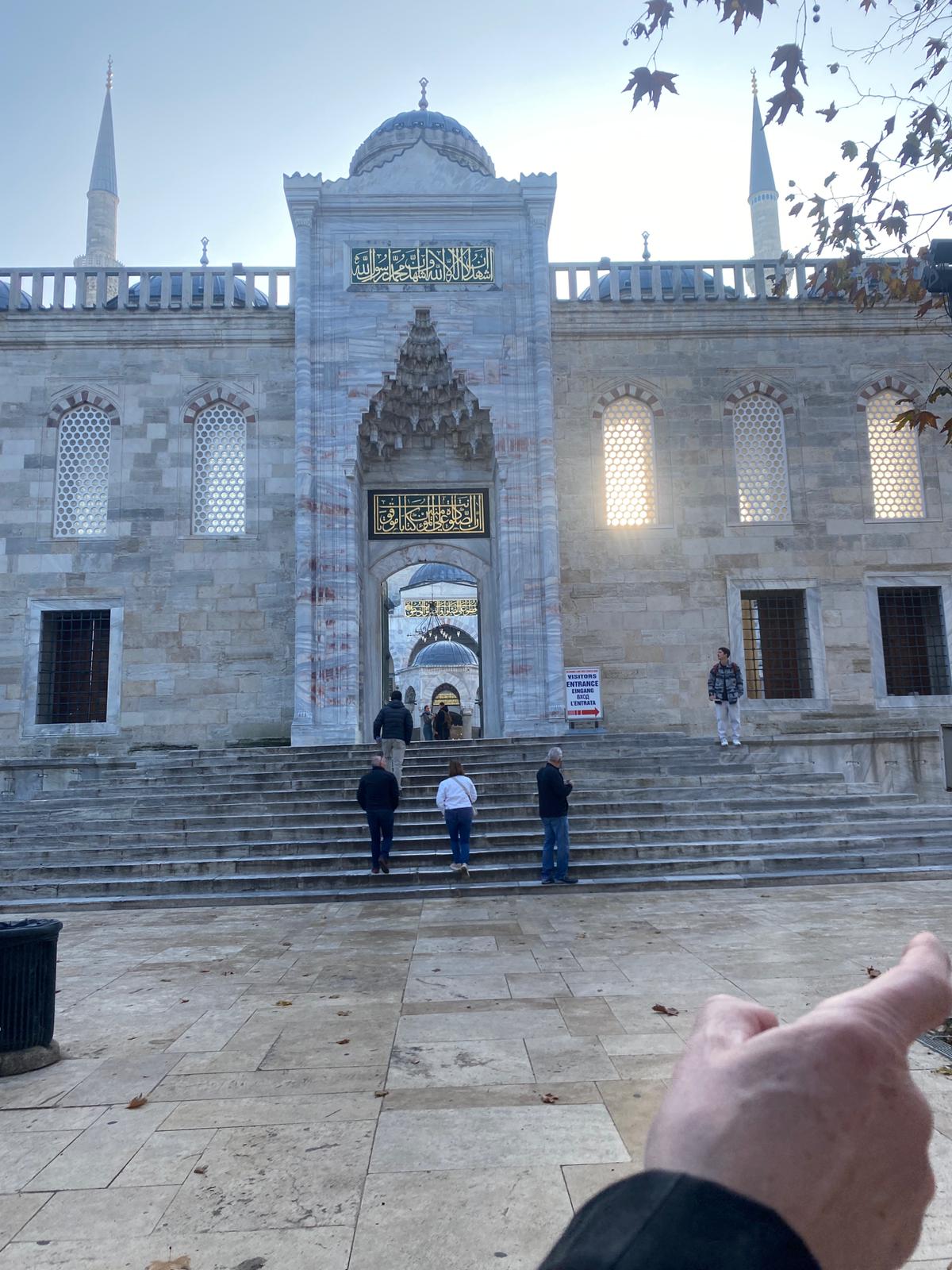
Observing the blue mosque from a far you’ll note both the domes and the blue tiles and magnificence of this structure, then as you head towards it you’ll pass through the grand entrance (be sure to use the Hippodrome Entrance) through a Marble Courtyard into the famous inner courtyard where the beauty of the exterior stands before you.
Entering into the inner courtyard you’ll find yourself surrounded by arches on each side which are constructed in Islamic and Ottoman designs – with a beautiful and continuous flowing fountain found in the centre of the courtyard.
Taking a moment to appreciate the beautiful stone design of both the courtyard and of the perfectly symmetrical design of the blue mosque – you’ll also notice the famed tomb of Sultan Ahmed lying next within the courtyard, who was buried alongside his masterpiece after its construction.
Being the biggest courtyard of any Ottoman Mosque – and one that ranks almost equal in size to the vast interior, the inner courtyard is also a great place to snap some photos of the bleu mosque – which is forbidden inside – and of course take in the stunning six minarets up close and personal.
The minarets – which were built to assist with the Islamic call to prayer are found with two within the courtyard and four on the Blue Mosques prayer hall, tower above the mosque and are unusual in their design – with six being considered at the time an extravaganza and legend going that when the six Minarets were discovered the Sultan was chastised and an extra minaret was forced to be added onto the holy site of Mecca – although such tales are now considered myths.
Regardless of their purpose or design, there’s no denying that the minarets are stunning and their unique design – in an almost pencil like fashion are both unique and complement and add to the beauty of the Blue Mosque and it’s exterior – and guide to way inside the stunning interior and sacred wonder of the world.
The Blue Mosque Interior
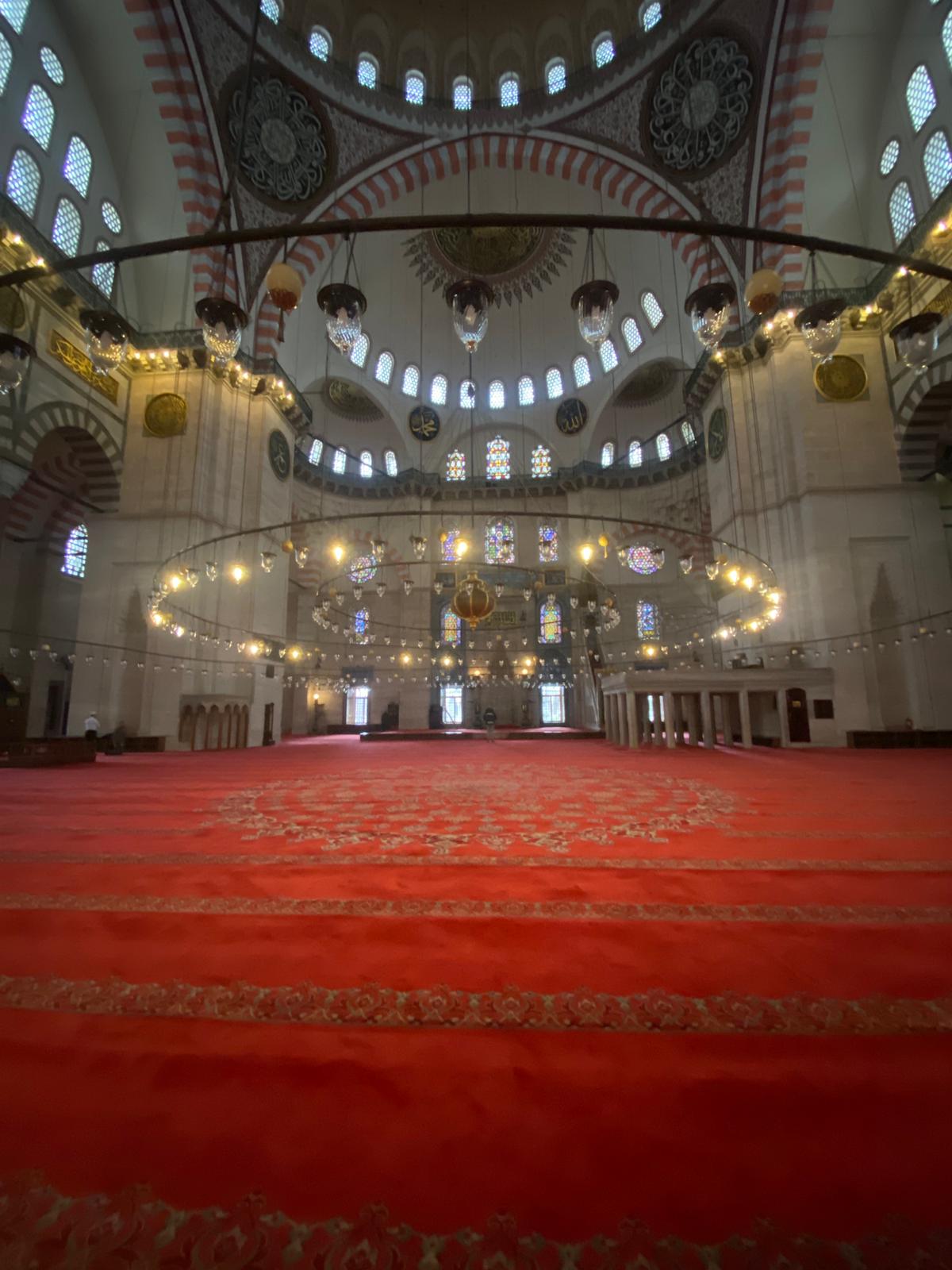
Stepping beyond the inner courtyard and having taking in the majestic exterior, you’ll see the mosque open up into a gigantic prayer area – which can be off limits to non Muslims depending on when you visit and to woman who have to use a separate part of the mosque for praying. When first entering the first sight that will no doubt hit you is the stunning beauty of the interior of the mosque – with the beautiful stained glass windows, the central dome and the beautifully marble carved Mihrab that points the way to Mecca light up by more than 200 dimly set candles and lights.
Observing further and you’ll notice the stunning central dome – which is held up by four ‘Elephant Feet’ marbled columns inside and which is the central point of the blue tiles outside, and then the interior outwardly projection additional domes – which all combine to make the stunning prayer space.
The prayer space itself is dotted with a series of prayer mats – which are constantly being replaced – and which sit on top of a flowing regal red carpet that covers the whole of the interior and you’ll also notice the stunning ceramic tiles – designed in true ottoman style that feature carvings of fruit and flowers – and in particularly tulips, which were said to be one of the favourite flowers of the Sultan – with some of the tiles being noticeably worn away and lost over time.
Following the tiles round you’ll notice the Sultan’s platform – from where he would also pray and observe the construction of the mosque and you’ll come to the stunning Mihrab – which is the door that faces Mecca. Found on the famed Quibla wall, this door is considered the most important part of the blue Mosque and is uniquely carved out of marble, with a series of inscriptions and Islamic text offering loyalty to the holy prophet Mohammed.
From the Mihrab, you’ll also notice a pulpit – which is where the Iman will deliver a service and which assists in the correct direction to offer Islamic prayer, and above the pulpit and the Mihrab you’ll notice the stunning windows of the blue Mosque. Although once all Stainless and hand crafted venetian windows – which have sadly been replaced by knock offs – the windows are still stunning and allow the sunlight to light up the inside of the blue mosque, and which also illuminate the internal blue paint of the upper levels – creating a magnificent and beautiful effect of blue light when stepping within the mosque.
This internal blue light effect is complemented further by the presence of a series of chandeliers and dilmly lit lights that light up the interior of the blue mosque creating a unique and ambience inside the holy site, and for those with a keen eye you’ll notice that the lights are created out of Ostrich Eggs – which is a specific design creation to fend off spiders and prevent mass cobwebs forming.
For those luckily enough to hear prayer within the Mosque you’ll also notice the unique acoustics within the interior with the holy prayer site being specifically designed to isolate voices, that make for a truly special and unique effect and adds further ambience and scarcity to the incredible interior of this unique wonder.
Although sections of the stunning Blue Mosque may be cornered off for non-Muslims there’s no doubt that the vision of Sultan Ahmet to build a mosque to rival Hagia Sophia and create an everlasting and historical monument that would reflect the beauty and significance of both Ottoman Architecture and show reverence to the Islamic culture is fulfilled in the stunning blue Mosque – with the beautiful exterior and famous blue tiles combined with the towering Minarets and holy palace inside making the Blue Mosque not just a jewel of Istanbul but one of the most holiest and beautiful wonders of the world.
Dusk Viewing:
Alongside viewing both stunning and majestic wonders individually, we’d also advise making time to view them together and in particularly at sunset when the beautiful Turkish sunset lights up both wonders and in particular makes the sunning blue tiles and minarets of the blue Mosque light up and glow creating a stunning photo.
While the wonders of both Hagia Sophia and the Blue Mosque can be snapped at sunset from the beautiful Sultanahmet Park which lies between the two sights and from where you can get great views of the wonders at sunset or at night when the wonders light up, we’d also advise making time to take them both in from either an ariel view at the Seven Hills Hotel whose rooftop bar and view is simply stunning of the whole Istanbul skyline or from a water view as you take the ferry over the Asian side of Istanbul at sunset for incredible pictures of the Istanbul skyline.
Regardless of how you chose to photograph the wonders, taking in the twin exteriors of Hagia Sophia and the Blue Mosque at sunset is a sight not to be missed as the incredible exteriors of both storied and beautiful sacred complexes light up making for a stunning sight as you take in these twin wonders of the world in all their glory.


How long to stay:
We’d advise allocating a full day to explore the wonders of Hagia Sophia and the Blue Mosque – being sure to avoid visiting during prayer time and giving yourself a few hours to explore each one – before picking a spot to enjoy the miraculous sunset and the illumination of both wonders to cap off a great day exploring these two twin spectacular wonders.
Top Tip:
With both the Hagia Sophia and the Blue Mosque now being Mosque’s and religious complexes there’s a range of etiquette protocols that need to be followed when visiting both wonders:
- Firstly be sure to follow the dress code – which includes wearing headscarves, not wearing shorts or low cut t‑shirts when visiting.
- Be sure to remove your shoes when visiting – you’ll be given plastic bags in which to put them when you arrive – as shoes are completely banned within the interior of both complexes.
- Make sure you don’t take photos within the inside of the interior of the Blue Mosque – outside both complexes are fine and inside Hagia Sophia is currently permitted so long as you’re respectful.
- Be aware that both complexes are mosques so you can expect them to close suddenly and priority to be always given to Muslims answering the call to prayer – and when visiting be sure to be quiet and respectful as disrespectful behaviour is not tolerated.
- Be aware that food and drink as well as bags are strictly forbidden so be sure to eat and drink before entering.
Finally on a more positive note we’d advise as a top tip to time your visits around the call to prayer – first visiting the fascinating Hagia Sophia and then heading to the storied Blue Mosque – before ensuring you make time to catch the beautiful sunset over the twin wonders for a truly magical way to cap off your day at these twin wonders.
Cost:
As they are both religious complexes, there is no charge to enter both the Hagia Sophia and the Blue Mosque – and instead, visitors are asked for donations to assist with the upkeep and preservation of the beautiful interiors of both Mosques.
For this who want a more detailed guide of the Hagia Sophia – you can expect to pay €15 for a walking tour that will highlight the key parts of the stunning interior – and may include a boat ride past it, but from a personal standpoint we’d advise heading their by yourself so you can explore the beauty of Hagia Sophia at your own pace and leisure.
So with both wonders being free of charge your main costs will be in getting to Istanbul and for the likely €5 for public transport to the wonder and for the cost of a drink when watching the beautiful sunset – so all in all we’d advise to budget €30 euros for a day at these two twin wonders once you’ve got to Istanbul – an absolute bargain to take in two of the most majestic wonders of the world in a single day.
Best Photo Spot:
Beginning with the two wonders, for Hagia Sophia you are currently fine to take photos so long as your respectful – so we’d advise making sure grab a shot of the beautiful domes and minarets from outside first and then taking a photo inside on the upper gallery level from where you can grab an incredible shot of the interior of Hagia Sophia looking down on the mosaic floors below and capture the beauty of the dome from the interior.
For the Blue Mosque photos are off limits inside, so your photo’s need to be centred on capturing the incredible blue tiles and minarets from the Sultanahmet Park for a panoramic view of this incredible piece of Ottoman Architecture – as well as when inside the inner courtyard – where you can grab stunning photos of the exterior of the Blue Mosque capturing the beautiful blue tiles, arches and minarets in all their glory before venturing inside.
For a unique and beautiful photo of both wonders – which we’d really advise snapping at sunset when the two complexes light up and are at their most beautiful, you can head to the beautiful Sultanahmet Park that offers incredible photos of the two complexes side by side against a series of beautiful fountains – or for a more unique and equally beautiful photo we’d advise either hopping on the Asian ferry that traverses the Bosphorus river for a beautiful river photo of the Istanbul Skyline that will allow you capture these two wonders from the sea – or alternatively for a more relaxed photo we’d advise heading to the top of the Seven Hills Hotel in Sultanahmet where a rooftop bar with sweeping views over the while of Istanbul and two wonders await you and were you enjoy a nice relaxing drink to cap off your day watching the sunset over the two incredible wonders of the world that are the Hagia Sophia and the Blue Mosque.