Jerusalem
Overview:
The promised Land, the city of Jerusalem is a site of great beauty and the holy sites for Judaism, Christianity and Islam, with the old city being the religious and historical centre of the world featuring unique religious wonders as the western ‘wailing’ wall, the Church of the Holy Sepulcher, where Jesus was believed to have been crucified, and the Dome of the Rock where the prophet Mohammed is believed to have ascended to the heavens, making the contested city of Jerusalem a place of not just individual beauty, but a spiritual and religious wonder that continues to influence life as we know it.
Believed to have been founded in 3000 BC – making it one of the oldest cities in the world, Jerusalem is also a place with a bloody and sorrowed past, with the city being the subject of frequent wars and crusades as empires, kings and religions fought over it, with access to the city today heavily guarded and multiple security checkpoints established before entry at one of the still standing 8 gates that date back thousands of years is permitted.
Yet despite the bloody past and the six-day war of 1967 which saw Jerusalem become part of Israel, the fact that Jerusalem’s diverse religious symbolism and significance is also reflected in its multi-ethnic population and in the four quarters of the truly stunning Old Town, gives hope that a path towards peace is possible, which helps to add further beauty to this traditional, religious and spiritual wonder of the world.
Where:
Jerusalem is claimed by both Israel and Palestine, although governed and looked after by Israel, and sits in the Judean Mountains acting as a border between Israel and Palestine — in terms of finding it the best option is to head from Tel Aviv to Jerusalem using a car or public transport and then entering the old city though one of the 8 gates.
Getting there: For those without restrictions, getting to Jerusalem is quite easy, with the city being accessible by bus, taxi or train. The best option for access is to fly into Tel Aviv airport and either take the highway direct to Jerusalem, or after a day in two in Tel Aviv, get the bus from the central bus station (about 8 shekels) to el Aviv – which should be on either bus 405 or 408.
You also have to option of using the train from Tel Aviv to West Jerusalem but be warned the train is somewhat slow – although the scenery is beautiful, we’d recommend using the train if this is a one off trip as the scenery on the way can be beautiful.
Once in Jerusalem, be prepared for strict security measures, metal detectors and pat downs, which will increase depending on where you’ve come from, and given that the old city is 1 km in width you can frelly walk along on foot to explore it at your own pace.
In terms of entering the old city, you have the choice of entering, as explores have done over the course of thousands of years from one of the following 8 gates, while each is spectacular we’d recommend the Damascus gate for it’s history and as it’s at the northern part of the old city, with taxi drop off points and is the scene of celebrations on Israrl independence day.
The 8 gates from which you can gain entry are:
The Damascus Gate:- built in 130 CE by the Romans, this gate is at the North of the old City and is also the scene of independence day celebrations.
The Dung Gate – expect buses to drop you off here, it’s on the south side and close to the Wailing wall (you’ll hear it on approach)
The Herod Gate – on the north side of the old town, features a house once believed to be the place of King Herods heir.
The Jaffa Gate – the busiest gate of them all and complete with a taxi rank, it’s near the tower of David, we’d advise avoiding this one as the crowds are normally large and the security measures tough.
The New Gate – close to the Christian quarter, this is a good gate to exit from as it’s close to west Jerusalem.
The St Stephen’s Gate – for those wanting to visit the mountain of Olives or trek the Via Dolorosa – this is the gate for you, carved out by Christians it also honours the death place of St Stephen – although his manner of death is disputed.
The Tanner Gate – only recently open despite Jerusalems age, the tanner gate was once home to house of simon tanner, who was a friend of the apostle Peter.
The Zion Gate – The quietest gate, this gate provides access to the Armenian gate and reflects the violent history of Jerusalem, with multiple bullet holes, scratches and carvings still etched on the wall.
Best time to Visit:
Between March and May or September and October are best based on the climate and the tourist seasons, however for those who want to experience a true Israelis experience in Jerusalem time your visit on the sabbath to see the wailing wall prayers or for an even more intense experience during the Israel independence day celebrations in mid-April when the Damascus wall comes alive – although be warned shops will be shut during this period.
Explore:
In attempt to settle the ongoing and bloody disputes which enshrine Jerusalem’s history, the city is now divided into two separate sections; West Jerusalem and East Jerusalem – with East Jerusalem being divided into 4 separate quarters; the Jewish Quarter, the Muslim quarter, the Armenian quarter and the Christian Quarter that make up the famous old city which is surrounded by walls – and which is accessible by one of the eight gates.
While the division and structure of the Jerusalem – two halves, with one divided into quarters, the city itself is just shy of a kilometre in width, which is really hand for exploring everything the historical and beautiful holy sites that still stand there, with each quarter having a unique identity and its own special atmosphere.
The Jewish Quarter:
The main site to see is the western wall, which is one of the last standing walls of the temple mount from over 2,000 years ago and as alluded to in the name was once the western wall of the Temple Mount. Believed to be built by Herod in 20 BC, it also goes by the wailing wall – not primarily because you will see people chanting, praying, dancing and screaming at it — but because it was once a place of pilgrimage to morn the destruction of the holy Jewish temple in 80bc.
For explorers, it’s fine to approach the wall as long as you’re respectful and for a true bucket list experience it’s advised to not only say a prayer at it, but place a piece of paper in one of the walls cracks to ask for forgiveness of your sins.
While those further interested in the wailing wall can experience a trip in the remaining tunnels of the temple mount, which still remain from its earlier construction, a further religious experience open to the public in the Jewish quarter is a trip to either the Rambam Synagogue (a Medieval synagogue destroyed in 1540 and rebuilt in 1967, the once destroyed Huvra Synogogue or the rebuilt Four Sephardic Synagogues.
Finally alongside the wailing wall and multiple small museums, the Jewish quarter features two small squares, the Hurva Square and the Machase Square, which while being beautiful are both sadly draped in sorry history, having been the place of last stands and ultimately town down and rebuilt and now offer eating opportunities and a chance to learn further about the history of Jewish settlements within Jerusalem.
The Muslim Quarter:
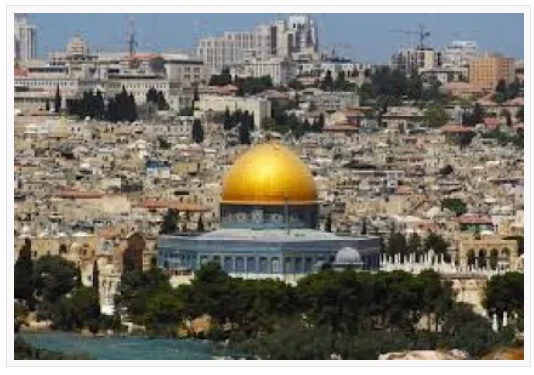
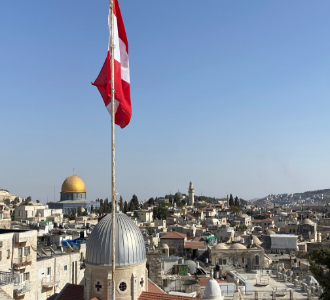
The Muslim quarter features the most striking and arguably beautiful part of Jerusalem, with the Temple mount (Knows as the holy site to Muslims ) which also features the iconic large Gold dome known as the dome of the rock at its peak which is a Islamic shrine – from which non Muslims are prohibited from entering.
As with all things in Jerusalem the Dome of the rock and the temple Mount have been destroyed and rebuilt on multiple occasions since its construction in 691 CE, with the temple believed to be built over the ruins of the first ever temple (Solomon’s Temple) and the scene of many significant religious events for all religions including being the place where Mohammed ascended to heaven and Abraham’s sacrifice of his first born — a trip to visit the Temple mount is truly a special and spiritualty transforming experience.
The Muslim quarter is also home to multiple markets and Bazaars for those wanting a keep sake and is home to two key catholic sites, the Chapel of the Condemnation – where Jesus was put on trial by Pontius pilot and the Flagellation Monastery where Jesus was tortured and beaten before his crucifixion death. While the l‑Aqsa Mosque, which dates from 701 CE is currently off limits to non-Muslims, the Muslim quarter undoubtedly contains a series fo historical and religious sites that underline the religious importance of Jerusalem.
The Armenian Quarter:
The smallest and quietest of the quarters, the Armenian quarter features two incredible monuments, the first being the cathedral of St James which was constructed in the 12th century and is the final resting place of St James and the second being the sacred citadel, which is now a museum that tells the history of the old city and Jerusalem, which is well worth a visit.
The Christian Quarter:
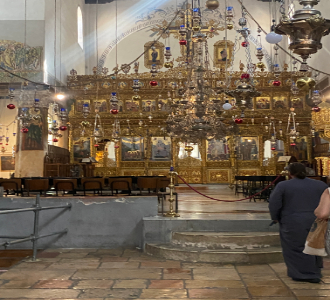
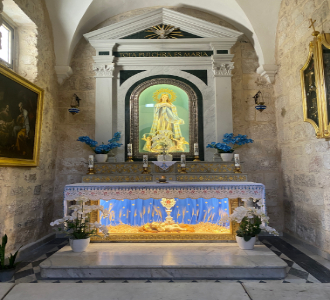
The home of Catholics features churches, with the main and most spectacular one being the Church of the Holy Sepulchre, which is believed to be the place where Jesus was crucified, was buried and rose again, an event which represent the cornerstone of Christian beliefs. Despite this the church is split into multiple section between the various Christian and catholic groups, each fighting for specific areas of the church – so you will see multiple chapels, prayer booths and confession room as you explore the church.
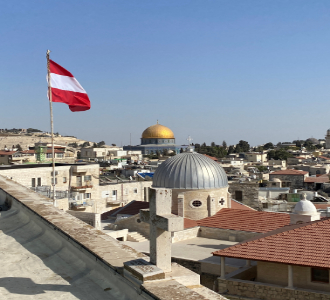
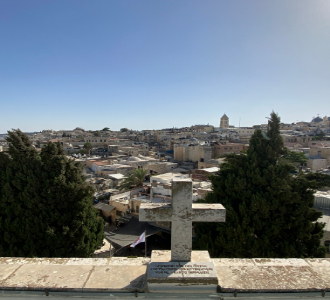
Alongside the Holy Sepulchre church, is the church of the Lutheran Redeemer, which features a nice bell tower and the church of the St John the Baptist, which is unfortunately closed to the public, but which was used in the crusades for multiple purposes, including a hospital. For those who are keen to explore Jerusalem from a higher elevation, there are a series of steps on St Mark’s Road next to the church of St John the Baptist which leads to both the fantastic courtyard of Khan el-Sultan and then to rooftops of the Christian quarter, which you are able to walk along to explore Jerusalem from the sky.
Within the Christian quarter is also the little known road of Dolorossa, which allows you to walk the way of the sorrows – the road that Jesus supposedly took on the route to his crucifixion which ends in the Holy Sepulcre where he is also believed to be at rest.
While the four quarters are all unique and full of life changing spiritual monuments, it’s important to note that the areas are still disputed, especially following the six day war between Israel and Jordan in 1967 and the controversy surround the west bank settlement, so it’s advised to absorb both the spiritual sites of the area and it’s history as well as be on your guard for any events or incidents.
Outside the old city and into the west of Jerusalem, you’ll find a bustling city and a series of embassies, cafes and shops, centred around Ben-Yehuda Street, along with nightclubs that can make a bit of a noise in the evenings.
You’d also be advised when visiting Jerusalem to explore the Church of the Dormition, believed to be the burial site of Jesus’s mum Mary and the final Tomb of the great King David who conquered Goliath, even if you’re not a fan of the tales, the church is a fascinating site with beautiful artefacts and tapestries.
Finally a trip up the mount of Olives (or a taxi ride up it for convenience is recommended) with the sunset view of the old city a truly stunning sight and something not to be missed for that perfect picture, with the trip down also featuring further mosques, churches and the incredible Tombs of the Prophets, which is still preserved from the 5th century and is the final resting place of revered prophets including Malachi and haggai – for a nice stop on the way down and back into the stunning city of Jerusalem.
How long to stay:
As the old city is only a kilometre in width, and can get very crowded, we’d recommend spending a few hours exploring the old city and it’s various sights, with a stop outside in west Jerusalem for lunch before a trip up the mountain of olives – meaning a day is a good time to stay in and around Jerusalem, for those lucky enough to be there on a Friday be sure to spend extra time at the wailing wall as the Sabbath approaches – it’s truly an awesome sight.
Top Tip:
Unfortunately, the dispute that has surround Jerusalem for thousands of years continues to this day, so it’s advised to be on your guard and check official warning before visiting the west bank or east Jerusalem – and expect volumes of security when entering. It’s also advised for females to be particularly cautious, particularly around large crowds, with single Palestinian men banned from entering some sections of Jerusalem in an effort to address multiple groping incidents and sexual assaults.
For those we are interested in a guide, it’s advised to book well in advance, with a top travelling tip being to explore Jerusalem as an extended day trip which also includes a visit to another unique wonder the Red Sea – and for those with extra time use a trip to Jerusalem as a starting point for a trip to Petra.
Cost:
The main sites in Jerusalem, including the Temple Mount, the wailing wall and the church of the nativity are all free of entry, although there are of course restrictions on what you can do based on your religion and nationality. The main costs for visiting Jerusalem will likely be the cost of a bus or Taxi in (expect to pay at least 8 shekels if staying in the area and 30 if visiting from Tel Aviv) with food, drinks, donations and souvenirs likely to set you back another 50 shekels during the course of the day – for those exploring Jerusalem with a guided tour, you can expect to pay a further 80 shekels for a good quality guide.
Best photo spot:
While anywhere in the Old Town is unique, a shot of the whole city from atop the Mount of Olives – where you can take in the Dome of the Rock, the wailing wall and the Damascus Gate is not only a beautiful photo, but one rich is both beauty and history.