
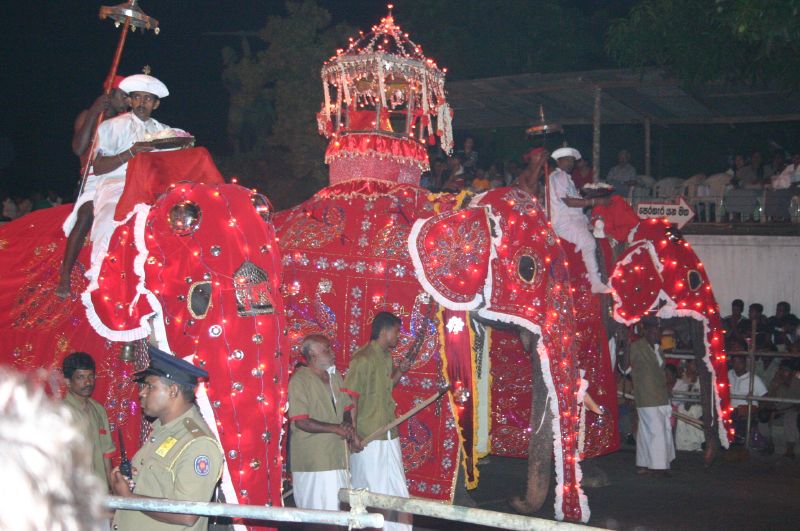
An Extraordinary Procession of Faith and Tradition
Kandy’s Esala Perahera honours the Sacred Tooth Relic through Buddhist devotion and the traditions of four devales. Drummers, dancers, torchbearers and ceremonial elephants move through the city’s streets.
Visit the Temple of the Tooth, understand the Kumbal and Randoli nights and arrange your view early. The evening’s visual richness belongs within a living religious observance.
Listen to the rhythm. Respect the reason for the procession.— THE TRAVEL LANTERN
Festival Guide
Understand the procession’s religious purpose, stages and visitor arrangements.
1Festival Overview
Explore the Sacred Tooth Relic, four devales, Kumbal and Randoli nights, music and ceremonial order.

A religious observance in the streets of Kandy
The Kandy Esala Perahera is rooted in devotion to the Sacred Tooth Relic of the Buddha, housed at Sri Dalada Maligawa, the Temple of the Sacred Tooth Relic. Its processions bring religious observance into the city’s streets. Visitors encounter music, dance, ceremonial dress and torchlight, but these elements belong to a purpose deeper than public entertainment.
Begin with that context rather than approaching the event only as an evening parade. Many spectators are devotees, and participants carry responsibilities within an established ceremonial order. A respectful visitor can appreciate the artistry while recognising that the occasion is not arranged solely for a tourist audience. The setting is a functioning city and a living sacred place.

The Tooth Relic and the temple
The relic’s history is closely connected with Sri Lanka’s religious and royal traditions. In Kandy, its temple stands within the former royal precinct. Visiting the complex before a procession helps place the evening in context. The temple remains a place of worship throughout the year, with its own entry arrangements and daily religious services.
The procession’s ceremonial casket should not be casually described as the exposed tooth being carried down the street. Sri Lanka Tourism explains the role of a replica casket in the public procession. Keeping that distinction clear matters: a visitor’s view of a richly dressed tusker and canopy is not a public viewing of the relic itself.
For the temple visit, follow current entrance rules and allow time for screening. Dress appropriately and remove footwear where required. Observe people worshipping without obstructing them or turning a shrine into a portrait backdrop. A reserved street seat for an evening procession is entirely separate from temple admission.

Four devales and a combined procession
The Dalada Maligawa procession is joined by processions associated with four devales: Natha, Vishnu, Kataragama and Pattini. These shrine traditions contribute to the event’s religious complexity. They should not be flattened into the claim that all four deities are simply housed inside the Temple of the Tooth.
Historic accounts connect the combination of the Dalada and devale processions with the eighteenth-century Kandyan kingdom. Earlier traditions form part of a longer history, while the present arrangement has developed through particular periods and institutions. Avoid a single sweeping claim that every part has continued unchanged since antiquity.
The order gives the evening a structure. Officials, musicians, dancers and ceremonial elements appear within a sequence rather than as interchangeable attractions. The Diyawadana Nilame is the temple’s chief lay custodian; other offices have their own roles. An introductory explanation can help you recognise this organisation without requiring you to identify every participant from a distance.
Kumbal and Randoli nights
The principal public street programme builds through Kumbal processions and then Randoli processions. The official 2026 schedule, for example, listed five Kumbal nights followed by five Randoli nights. These are successive stages of the programme, not a separate ten-day period for each stage. Preliminary rituals and the concluding events also need to be understood separately.
The later Randoli nights are associated with a fuller ceremonial presentation, culminating in the final Randoli procession. They can also bring particularly strong demand for accommodation and viewing positions. Choosing an earlier night may suit a visitor who wants a different balance of atmosphere, cost and crowd pressure. No night can guarantee a particular photograph or an identical view.
After the final night, the programme includes Diya Kapeema, the water-cutting ceremony, and a daytime procession. These have their own timing and locations. Do not assume that staying awake after the evening event automatically gives access to every ritual. Follow the current programme and any restrictions around sacred or crowded areas.

Drumming, dance, flags and torchlight
The sound of drums helps define the procession long before every participant is visible. Kandyan performance traditions bring distinctive movement, costume and musical discipline. Watch the coordination between musicians and dancers, and allow the scene to pass rather than asking someone within the procession to stop or pose.
Whip-crackers, flagbearers and torchbearers contribute different sounds, shapes and rhythms to the street. Flames create changing patches of light rather than even stage illumination. This makes the atmosphere distinctive, but also means spectators need to remain behind the established line and keep a safe distance from active performance space.
Look beyond the largest ceremonial element. A drummer’s hands, the alignment of a group, a flag moving above the crowd or the preparation of coconut-shell lights can reveal the labour behind the evening. These details broaden a photographic account and help avoid reducing the whole Perahera to a series of elephant images.

Elephants, cultural significance and welfare
Elephants have an established ceremonial role and wear elaborate dress in the procession. Their presence also raises animal-welfare concerns. Cultural significance does not remove questions about captive animals, noise, light, movement and handling. Visitors should recognise both the religious context and the continuing debate without claiming that every animal’s condition can be judged from a distant photograph.
Stay well back and follow barriers and handlers’ instructions. Never approach, touch, feed or try to attract an elephant’s attention. Do not use flash, laser pointers or loud devices. A wish for a closer picture is not a reason to move into the route. If an animal or crowd situation changes, follow police and event staff immediately.
You can make the visit more balanced by focusing on the human traditions too: drumming, dance, craft, religious practice and the city’s response to the occasion. Read current welfare reporting before deciding how you wish to engage. Avoid adding animal-contact activities simply because they are marketed alongside a festival trip.
A thoughtful viewing experience
A good evening begins well before the procession reaches your position. Confirm where you may sit or stand, locate toilets and water and agree on a meeting point. Once roads close and crowds settle, moving across the route may be difficult. Keep plans modest enough that you can remain comfortable and attentive throughout the wait.
The most rewarding visit joins a respectfully conducted temple visit with one well-planned procession evening. Listen, observe the sequence and leave room for what you do not yet understand. The Perahera’s colour and movement become more meaningful when seen in relation to faith, service, the arts and the people of Kandy.
2When & Where
Check the temple’s annual dates, nightly routes and the concluding water-cutting and day procession.

When the Festival Happens
The Perahera usually falls in July or August, with dates set annually. At review on 7 November 2026, a confirmed 2027 programme was not verified on the temple’s official site. Do not treat a calculated full moon or a commercial seller’s dates as the temple’s announcement.
Temple of the Tooth
Sri Dalada Maligawa is the religious centre of the event and a separate visitor destination. Check the official FAQ for current entry, dress, screening and access arrangements.
Kumbal Perahera
The past 2026 Kumbal nights ran 18–22 August. These dates illustrate the programme structure; they are not upcoming dates. Each night’s departure time and route should be checked separately.
Randoli Perahera
The past 2026 Randoli programme ran 23–27 August. Demand generally grows around the culminating nights. Verify the exact date on any accommodation or seating booking.

Final Night & Day Procession
The 2026 final Randoli was 27 August, followed by water-cutting and the day procession on 28 August. The next edition’s ritual times and locations must come from its official programme.
Procession Route
Routes and road closures can vary by night. Confirm that your seat faces the actual route, that access remains possible after closures and that you have a usable return pickup point. Do not assume a balcony elsewhere in central Kandy has a view.
Best Time to Arrive
Arrive in Kandy before your principal viewing day where possible. On the evening, follow the seat provider’s or official crowd-control instructions and allow hours for access, waiting and the procession. Avoid a tight same-night onward journey.
3Festival Advice
Prepare a respectful viewing plan with reliable seating, toilets, transport and space around the procession.
Choose a reliable viewing position
Confirm the route, seat location, visibility, weather cover, toilets and refund terms directly with a reputable provider. Street viewing may be possible in authorised public areas, but does not guarantee space or comfort. Do not rely on unsolicited offers or pay someone who cannot explain exactly what is being supplied.
Respect the religious setting
Dress modestly, keep voices low and follow guidance when sacred ceremonial elements pass. At the temple, cover shoulders and knees, remove footwear where directed and observe current photography rules. Keep worshippers’ paths clear.
Fire, animals and crowd space
Remain behind barriers and away from torchlight, whips and elephants. Never touch or feed animals, use flash at them or try to attract their attention. Keep children close and identify an exit and meeting point before the evening becomes crowded.

Common Mistakes
- Booking around unconfirmed dates.
- Assuming every evening follows one identical route and start time.
- Confusing a street-seat booking with temple admission.
- Ignoring toilets, water and the long wait.
- Blocking worshippers, pavements or emergency access.
- Crossing the active procession for a photograph.
- Expecting transport to reach a closed central street.
Ask about accessible seating, steps, toilets and the final approach before paying. Crowds, heat, rain and prolonged sitting can make a central location difficult even when the seat itself appears suitable.
4How to Experience
Combine a procession evening with temple context and time to understand the traditions.
Essential Esala Perahera Experience
Choose one procession night with a confirmed viewing position, and visit the temple separately for context. Leave a comfortable interval between visits and secure the return journey before the streets close.
Full Festival Experience
Attend a Kumbal night and a later Randoli night if time and budget allow. Use the official programme to understand how the sequence develops. Include the day procession only when its date, route and practical access suit your plans.

Best Cultural & Religious Experience
Read about the Tooth Relic and four devales, listen closely to the drumming and observe the ceremonial order. Respect devotees and approach animal involvement thoughtfully. A slower, informed visit can reveal more than trying to attend every night.
5Photo Guide
Photograph dancers, drums, torchlight and the city without disturbing worship, performers or animals.

Best Subjects
Dancers, drummers, flags, torchbearers, ceremonial dress and the surrounding city create a varied record. Include religious context with care.
Best Light
Late daylight helps with the city and preparation. Torchlit processions involve uneven light and moving subjects.
Best Positions
Photograph from your permitted seat or spectator area. Do not lean into the route or stand above others to obtain an angle.
Dance & Drumming Photography
Use a shutter speed suited to movement and raise ISO as needed. Watch gestures and group rhythm rather than interrupting participants.

Torchlight & Night Photography
Protect bright flames from overexposure. Slower exposures can suggest movement but may blur the entire subject; practise before the main procession arrives.
Temple & Cultural Photography
Follow room-specific signs and staff instructions. Do not pose disrespectfully with sacred images or photograph worshippers intrusively.
Procession Photography
Include wide context and smaller details. Avoid flash near animals or participants and do not cross the procession.
Phone Photography
Clean the lens, reduce exposure around flame and avoid digital zoom. Keep the screen below other spectators’ sightlines.
What Not to Do
Do not approach elephants, use laser pointers, block exits or place equipment in the street. Respect any prohibition on filming or photography.
Practical Information
Secure a suitable view, understand the current route and organise the evening before roads close.
Best Time to Arrive
Wait for official dates, then arrive well before your chosen procession.
How to Get There
Plan Colombo or airport travel, local road closures and a return pickup.
What to Bring
Modest clothing, water, rain protection and a verified seat booking.
What to Expect
Long waits, devotional crowds, drums, torchlight and controlled streets.
Best Time to Arrive
Book against the temple’s confirmed annual programme. Reach Kandy before your key viewing day if possible, especially for the final Randoli. Follow the entry deadline for any reserved seat and allow for road closures.
Locate toilets and refreshments before settling. Avoid booking a late connection immediately after a procession whose passage and crowd clearance can take time.
How to Get There
Bandaranaike International Airport and Colombo are common starting points for onward road travel to Kandy. A prearranged licensed driver can simplify luggage and arrival timing. Regular intercity buses are another option, subject to current services and traffic.
Rail is a potential approach through the Colombo–Peradeniya corridor, but hill-country services have experienced disruption and a timetable alone is not proof that your train is operating. Check Sri Lanka Railways notices and the actual bookable service close to travel. Confirm any transfer from Peradeniya to Kandy and keep a road alternative.
Within Kandy, road closures affect buses, taxis and tuk-tuks. Agree on a legal pickup outside the controlled area, know the walking route and avoid expecting a vehicle to reach your seat after the procession.
What to Bring
Bring modest clothing, comfortable shoes, drinking water, rain protection, a charged phone, spare power and your seat confirmation if booked. Check whether a cushion is useful and allowed at your viewing location.
Carry a small secure bag. For temple entry, dress to cover shoulders and knees and follow footwear and security requirements. Avoid bulky camera supports, flash use and any device that could disturb animals or participants.
What to Expect
Expect a religious procession, prolonged waiting, dense crowds, powerful drumming and torchlit movement. Different nights have different routes and ceremonial emphasis. Access to toilets or refreshments may be limited once you are settled.
Keep clear of the route and all animals. Plan an unhurried departure, observe local instructions and recognise that temple worship and street viewing have separate arrangements.
Photo Gallery
Nineteen credited archival photographs: procession scenes, fire performance, lighting preparation, ceremonial elephants, Kandyan music and clearly labelled temple and city context.


Current information and sources — reviewed 7 November 2026
Reviewed 7 November 2026. Sri Dalada Maligawa’s official programme lists the past 2026 sequence: Kumbal 18–22 August, Randoli 23–27 August, water-cutting and day procession 28 August. A confirmed 2027 programme was not verified. Check the temple’s current announcement before booking.
Background: Sri Lanka Tourism’s festival explanation, historical ritual account and nineteenth-century procession history. These sources distinguish religious purpose, the four devales and the public ceremonial casket.
Visitor checks: official temple FAQ, Sri Lanka Tourism visitor advice, Sri Lanka Railways notices and official rail reservations guidance. Confirm actual operating services, accessible access and annual road controls.
Animal-welfare context: Parliament’s explanation of captive-elephant welfare regulations and August 2026 reporting on the proposed regulatory review. Safety context: 2026 police guidance. Draft regulations are not described here as enacted law.
Photo credits and licences
Archival photographs show earlier editions. Local-context and museum images are labelled separately. Images use responsive cropping. Banner supplied by the site owner.
- Kandy Esala Perahera procession, 2006 — archival photograph — S B from Sydney, Australia. CC BY 2.0. Source and original.
- Fire performance at Kandy Esala Perahera, 2010 — Richard Shaw. CC BY 2.0. Source and original.
- Fire spirals at Kandy Esala Perahera — archival photograph — Sachin Kaveesha Fernando. CC BY-SA 4.0. Source and original.
- Kandy Perahera — archival procession view — Shashikaprathibha. CC BY-SA 4.0. Source and original.
- Coconut-shell lights prepared for the Kandy procession, 2007 — detail — Rob Hooft. CC BY 3.0. Source and original.
- Coconut-shell lights prepared for a procession — archival view — Rob Hooft. CC BY 3.0. Source and original.
- Esala Perahera — archival procession detail 1 — Ashan96. CC BY-SA 4.0. Source and original.
- Esala Perahera — archival procession detail 2 — Ashan96. CC BY-SA 4.0. Source and original.
- Kandy Perahera — archival festival scene 1 — Omar AV. CC BY 3.0. Source and original.
- Kandy Perahera — archival festival scene 2 — Omar AV. CC BY 3.0. Source and original.
- Kandy Perahera — ceremonial procession, archival view — Omar AV. CC BY 3.0. Source and original.
- Fire-wheel performer at Kandy Esala Perahera — Daniel Liabeuf. CC BY-SA 3.0. Source and original.
- Elephants in ceremonial dress at Kandy Esala Perahera — Daniel Liabeuf. CC BY-SA 3.0. Source and original.
- Temple of the Sacred Tooth Relic — daytime Kandy context — Dan Lundberg. CC BY-SA 2.0. Source and original.
- Buddhist flags at Sri Dalada Maligawa — temple context — Dan arndt. CC BY-SA 4.0. Source and original.
- Evening at the Temple of the Tooth — architectural context — Lalith nawarathna1. CC BY-SA 4.0. Source and original.
- Kandyan drum and musician — cultural context, not labelled as a festival session — Philip Nalangan. CC BY-SA 4.0. Source and original.
- Kandy Lake on a Perahera evening — city context — Omar AV. CC BY 3.0. Source and original.
- Elephants at Esala Perahera — archival view — en:User:Bodhitha. CC BY-SA 3.0. Source and original.
