
Machu Picchu
Table of Contents
Show
Overview:
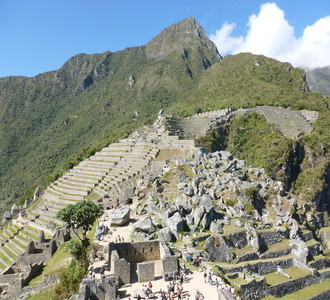
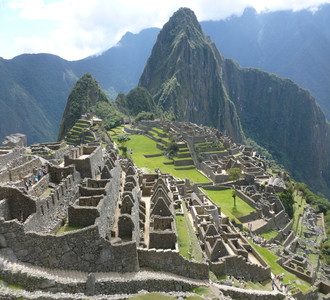
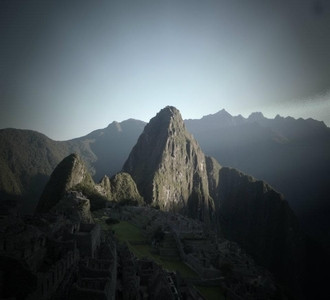
Sitting 8000 feet amongst the spectacular peaks of the Andes, the Incan city of Machu Picchu remains perhaps the most iconic of all the wonders of the world, and also the most unexplained with theories about its true purpose and role in Incan life still being explored.
It’s re-discovery has also led to a boom in tourism, with Machu Picchu now Peru’s most visited site and the 4 day Inca trail trek, often hailed on the world’s best, to reach its summit seeing overwhelming demand — forcing the Peruvian government to introduce quotas and expensive passes on both the trail and for the Machu Picchu site itself (2500 people a day) in order to help preserve and ensure the ongoing restoration of this truly spectacular wonder of the world.
Where:
Machu Picchu sits amongst the Andes mountains in Peru, above the valley of the Urubamba River where the rivalling peak Huayna Picchu which offers scenic views of Machu Picchu also sits. In terms of accessibility the nearest town is some 50 miles away called Cusco, which now serves as both a primary tourist hub for Machu Picchu access and as a acclimatisation spot for weary travellers either beginning or returning from the wonder.

Best time to Visit:
The peak rain season is November to March – so be sure to avoid visiting then as you’ll struggle for tour guides and will need to come prepared with a bundle of cagoules. You can expect peak tourist season to hit in July and August in line with the summer holidays, so the months of late April – May will offer the best experience, with the rainy season having past and there being less crowds – although for an even more authentic Inca season consider timing your visit with the IInti Raymi festival in mid-June.
Getting there:
Visiting Machu Picchu can be as challenging as you’d expect for a lost city from the 14th century – with no direct route or road available.
However luckily you do have options – and not all of them rely on ancient methods, the first and easiest is using a combination of transport, with train tickets from Cusco stations Poroy, Urubamba or Ollantaytambo (approx. $60) leaving regularly to the city of Aguas Calientes or Machu Picchu station — with tickets available at either http://www.perurail.com or http://www.incarail.com – but be warned they book up months in advance.
From the city of Aguas Calientes you’re then faced with a bumpy 2 hour bus ride up the 2000 feet high slop to the gates of Machu Picchu, where you can stretch your legs amongst the ruins and climb the peaks of Huayna Picchu.
For those who fancy immersing themselves in the Inca Trail and exploring the Andes ruins on their way to the wonder, there are a series of treks available the most popular and arguably the worlds greatest hike is the 4 day Inca trail hike for which there are 500 spaces a day, with their also being a 7 day, 3 day and 2 day Inca trail hike all of which guide you through the Andes with spectacular views and the need for acclimatisation – and for which you can only attempt with local guides and which will set you back a couple of hundred dollars as a minimum – but the trek there is highly recommended !
Explore:
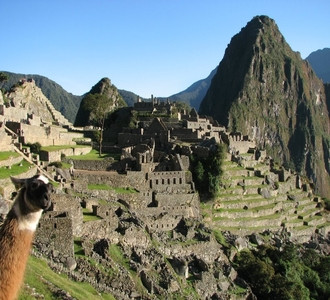
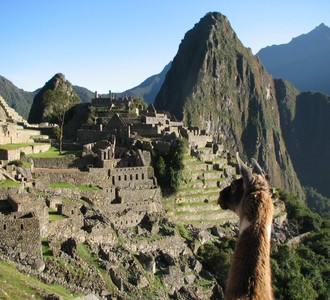
Alongside the stunning views on the Inca trail of the Andes valley that accompany you on a Trek to Machu Picchu, the site itself is full of wonders (and llamas), with the ruins themselves offering a fascinating insight into Inca life.
Highlights for exploring including the four main temples, the Temple of the Sun – showcasing unique stone work from the 14th century, the temple of three windows – featuring three windows, the temple of Condor – a torture temple and the main temple, which is believed to be where main events took place.
There’s also the Intihuatana to check out – a 14th century sun dial, and most importantly the view point of Sun Gate (Inti Punku), Montaña and our personal favourite of Huayna Picchu – although be warned only 400 people are allowed up Huayna Picchu daily so it’s advised to book in advance.
Cost:
Once you’ve sorted out getting there, there is also an entrance fee to enter Machu Picchu of $40usd – and there are quotas allowed for entrants each day so again be sure to advance.
If travelling by train and bus expect to budget $150 usd one way to get to Machu Picchu – although this price often increases allowing for a hotel room and an overnight stop to break getting to the wonder up into multiple days.
For those taking on the trek, expect to pay around $1200 usd – allowing for a tour cost of around $800, permits, camping gear, rations and transport.
Either way it’s not going to be a cheap wonder to visit – but it’s definitely worth it.
Fun Fact:
There’s actually no signs or details on the site explaining the ruins and where each temple is, so you have the option of grabbing a guide to explain the history and sites of Machu Picchu to you – or you can discover an off the beat hidden museum called Museo de Sitio Manuel Chávez Ballón which lays everything out for tourists to uncover the mysteries of Machu Picchu.
Alongside this – expect llamas everywhere, including on the photo spots.
Best photo spot:
Unquestionably the peak of Huayna Picchu – it may take an hour to summit it, but the views are definitely worth it – expect to be photobombed by the occasional llama as well.
More Information: For more information and to book your tickets visit the official Peruvian Machu Picchu government website at https://www.machupicchu.gob.pe/
For those going by rail it’s advised to get your ticket bookings in early at either http://www.perurail.com or http://www.incarail.com
