Mount Fuji
Overview:
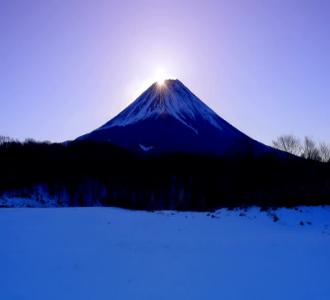
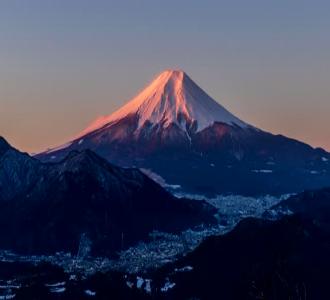
The mountain of the Gods, the incredible Mount Fuji stands as the iconic Symbol of Japan, with the 3,776 metre mountain towering over the country’s capital of Tokyo and standing not just as the centre piece of the incredible Fuji-Hakone-Izu park, but as one of the best places in the world to summit to watch the sun rise over the sleeping city below, making the beautiful and towering Mount Fuji a truly unique and awe-inspiring wonder of the world.
Enshrined in Japanese culture by poetry, painting, woodcuts and song, the almost perfectly symmetrical and round mountain is believed to be named after the ancient Japanese word for Fire – which is not surprising given the Volcano erupted in 1707 covering the land below it and sky above it in great ash – with the next eruption predicted for the 2300’s.
Today, the mountain is viewable from a series of picturesque lakes, viewpoints and valleys from all over Japan and is also climbable over the course of a long day by one of four stunning but challenging routes, as explorers wind their way over the ash fields and rocky terrain that take them to the summit — where alongside being closer to the heavens, they have to chance to traverse the summit crater, pass through the Summit’s Torri Gate and witness the spectacular sun rise from the top of Mount Fuji, which allows explorers to not only follow in the footsteps of Japanese forefathers but take in a true bucket list highlight and experience the full beauty of this incredible wonder of the world.
Where:
While associated with Tkoyo – and best reached from there Mount Fuji actually lies 100km away from the city cetnre and is found to the west of Tokyo on the island of Honshu which sits in the border between the Shizuoka and Yamanashi regions.
Getting there:
While Mount Fuji stretches across the Yamanashi and Shizuoka prefectures and is 100km away from Tokyo – the best way to reach it is still from Tokyo – and take advantage of Japans incredible public transport, with many options available during the on peak season between July and August.
For those who wish to climb the mountain, you’re going to want to head to the 5th station of the Mountain – which is best done by bus – with the below routes recommended for each of the four hiking routes:
For the Fujiyoshida route – and the easiest route to get to, hope on the direct Keio express bus from Tokyo’s Shinjuku station to Kawaguchiko Fifth Station – this will drop you right off at the start of the trail and there are four buses a day at 1500 Yen – roughly 10.50 usd.
For the Fujinomiya Route – head to Mishima Bus Station in Tokyo – and then hop on the direct bus to the Fujinomiya fifth station – as this route is less popular expect three buses a day and expect to pay 1750 Yen – roughly 17usd.
For the popular Gotembaguchi Trail – there are 10 round trips a day during hiking season and you can get the bus from Tokyo’s Gotemba to Gotemba 5th Station with Gotemba reachable on the JR underground line from Tokyo City Centre – it’ll then be a short walk to the start of the trail at the 5th station – expect to pay about 1800 Yen for a one way ticket – for those with tight plans this route is recommended due to the frequency of the buses.
Subashiri – The less popular and challenging Subashiri route is accessible again from Tokyo’s Gotemba station – and is one of the most easily accessible routes by public transport, simply head to the main station and get on a bus heading for Subashiri 5th station, you’ll see them as big blue buses marked for the trail – you’ll then get dropped off near some woodland where the trail appears in front of you and you can begin the ascent – expect to pay 1600 Yen – roughly 16 usd to get to the start of the trailhead.

Best time to Visit:
For those who wish to climb the mountain it’s highly recommended to climb in the on season – which is July to Septamber which is when the huts on the mountain are open, the paths are illuminated and the harsh weather that can take control of the mountain in the off season is at its peak.
You’ll also find a range of more direct public transport, but just be warned that even during summer its important to warp up warm and be prepared for all weather conditions. You’ll also find the on peak season incredibly popular, so much so that human traffic can form on the more popular Fujiyoshida route – so for those who do take on this route be sure to leave early – and we’d really recommend taking on this route during a week day in late July – and avoiding mid august when crowds are at their peak.
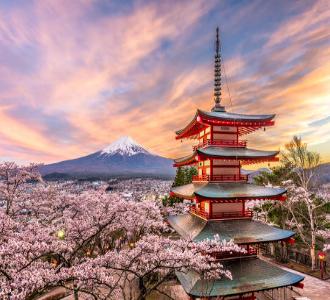
For those who do journey outside the on peak season, the best place to experience the mountain is from the five lakes national park or for a completely unique experience be sure to visit during Sakura in April- in the middle of cherry blossom season (link) – where the view from the mountain from the five storied pagoda of Chureito Pagoda gives you a view of the mountains against the backdrop of the stunning cherry blossom festival.
Explore:
The main and best way to explore Mount Fuji is to summit it, with a hike up the mountain taking in the sunrise considered an ultimate bucket list experience and the best way to truly experience the magnificence of the wonder that is Mount Fuji.
Alongside that, given the visibility of Mount Fuji from both a series of stunning of Japanese Lakes and from Downtown Tokyo (the best photo spots are described below) it’s also worth budgeting some time to make sure you check out Mt Fuji from a series of various scenic and picture-perfect spots in Japan to allow you to truly appreciate the wonder and for those who don’t fancy making the ascent up the mountain – but still want to experience the beauty of Mount Fuij.
Closest to the mountain and the one that allows you to truly experience the beauty of the mountain from a far if the Fuji Five Lakes National Park:
Fuji Five lakes:
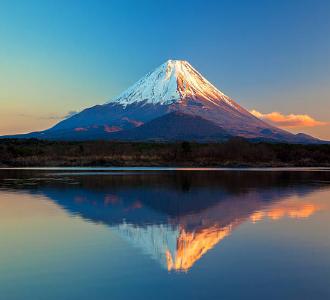
The best option for those who don’t fancy climbing the Five Lakes park is unsurprisingly made up of five stunning reflective lakes that each offer an incredible view of Mount Fuji and allow for it to be seen in all its glory without requiring a hike up the mountain.
Officially known Fuji-Goko, this park sits at the mountains base (i.e. no ascent required) and as a result of the volcanic activity within the park, features numerous hot springs and overnight traditional Japanese Pubs – which are ideal for those who wish to kick back, receive some pampering and take in the wonder of the world that is Mount Fuji in total comfort.
Kawaguchiko:
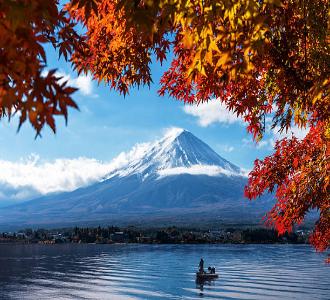
Having made your way to Fuji Five lake park, which is easily reachable by Bus or Taxi – we’d recommend heading straight for the lake of Kawaguchiko – the biggest and easily the best of the five lakes and giving yourself a good half hour to grab some fantastic snaps of the mounting as it reflects across the beauty of the pristine Kawaguchiko lake and against the numerous trees that dot the lakes shoreline.
With the lake walkable in a brisk 3 hours, you’ll get a chance to take in Mt Fuji from various angles, and for those brave enough a dip in the cool lake with the Mountian in the background makes for a stunning photo – with numerous ramps and viewing spots available all over the lake. Having finished a circular tour of the lake, we’d recommend heading indoors to one of the many pubs that dot the lake, and sipping away your troubles with a cool Japanese beer with the stunning scenery of Mount Fuji behind you.
Yamanakako:
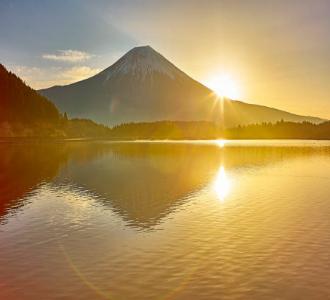
Next up is the Yamanakako lake, which is a more wild experience than Kawaguchiko, with the Yamanakako lake being more underdeveloped than it’s sister lake and slightly smaller, but offering stunning views of the mountains from all angles. For those that want to experience the majestic sunrise over Fuji but don’t want to make the hike we’d recommend coming here in the early morning and heading to the far shore – and then spending the rest of the morning traversing the stunning lake as you take in the beauty of Mount Fuji from this stunning lake.
Motosuko:
The most difficult to access, but perhaps the most stunning you’ll recognise Motosuko lake from the image of Mount Fuji on the Yen bills, with the lake providing an absolutely stunning scenery from which to take in the mountain, particularly as the sun sets – just be warned you may have to walk along bits of the highway to reach the perfect photo spot of the mountain against the Motosuko lake.
Saiko Lake:
A lake to visit but not explore, as there’s no clear path around the lake and a lot of the road round it is highway – what we’d suggest is heading to Kohoku viewpoint by taxi and grabbing a few photos of the mountain reflecting on the lake before heading on to one of the three much more enjoyable lakes above.
Shojiko:
one to visit only if you’ve got time on your hand, while the Shojiko lake is undoubtedly impressive, to traverse it you’ll find yourself walking alongside cars on the highway and it’s a much more enjoyable exploration experience and taking in of the wonder that is Mount Fuji from any of the top 3 lakes listed above.
Climbing Mount Fuji:
Having explored the mountain from the best of the five lakes, you’ll need to get yourself to level 5 of the mountain – which is easily done by either public transport or by hiking from the mountains base – for around mid afternoon or evening as this is where the four treks that lead to the summit begin – and from where you’ll be faced with the ultimate bucket list task of summiting Mount Fuji.
Before you do so, we’d strongly recommend making the hike in the on period of climbing on a week day, to avoid being blown off the mountain during the harsh windy conditions that hit the mountain during off peak season, and being sure to check the weather in advance to make sure you’ll have a comfortable ascent. It’s all strongly encouraged to make sure you’ve got all the necessary gear – gloves, hat, food, water, hiking shoes and a good solid walking stick before making the climb.
With everything set – you should budget 8 – 12 hours to make the round trip climb and be sure to time it so that you witness the incredible sunrise which usually takes place at 4:30am from the summit, with the most enjoyable way being to set off mid-afternoon, camp in a hut overnight and then advance onwards the next morning. For those who don’t fancy a hut, you can make the climb in the evening and time it for the morning sun rise – just be prepared for altitude sickness and possible injury as you quickly ascend and bring a flashlight with you to guide your way.
The mountain itself is divided into 10 levels, and you can get a bus up to the 5th level – with camping huts (which are always warm!) available on levels 7 and 8 for those sensible hikers who chose to rest overnight halfway through their climb and who fancy a hot meal as they ascend the mountain.
Having reached the 5th station, anyone who wishes to ascend the mountain will be asked to visit the Murayama Temple, to observe Japanese tradition to ask for a safe hike and pay respects to the holy mountain, and from here you have your pick of one of the four exquisite route that takes you to the summit:
Kawaguchiko (Fujiyoshida) route:
The most popular and most enjoyable route the Fujiyoshida trail is a more relaxed and less challenging route – which is estimated to take 10 hours round trip and has a well defined gently path that weaves up the mountain, with many opportunities to pay snacks, hot food, water and souveniers as you gently ascend up the mountain.
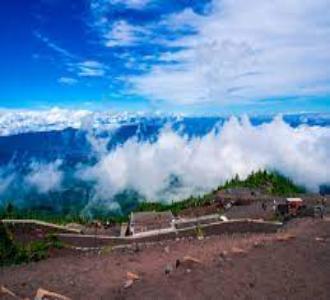
Starting at Kawaguchiko 5th Station, you’ll first find yourself weaving through beautiful Japanese flower gardens and then taking on some of the rougher terrain of the Mountains volcanic legacy,
with the trail curving round to the 7th and 8th stations – from where there are multiple huts in which can rest for the evening.
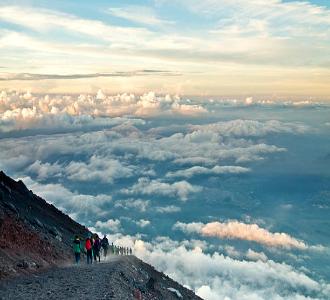
From the higher stations, you’ll find the volcanic and rocky track that guides you to the summit well marked – even in the evening, and despite it being well worn due to the number of visitors that ascend it, the higher you climb the more unique and beautiful views you’ll experience as the beautiful Japanese sun sets on the house of the rising sun below – making for a truly special experience.
As you reach the top, you’ll find the crater of the Mountain, one which you can traverse as you wait for the incredible sun to rise before gently heading back down the mountain and into the bustling city of Tokyo.
While the other treks do offer a challenging experience – we’d really recommend the Fujiyoshida route – it’s comfortable while challenging and while a lot of the track is ascending up rock and volcanic debris, it makes for an enjoyable experience to the summit of one of the wonders of the world.
Fujinomiya:
The second best route in our view and the second most popular, the Fujinomiya route is very similar to the Fujiyoshida Route – with a volume of huts, a well lit path, and numerous places to stock up – the one big difference is the ascent from the 8th and 8th stations, where instead of facing solely a steep path up, you’ll be faced with rocks as well – making this route somewhat dangerous for those who are hiking here at night.
Considered a more scenic route, the Fujinomiya route takes less time when descending – as you can slide down from the 7th station, but again the many rock edges that protrude from the mountain make this a risky and painful experience if you get your angles wrong – but for those who brave it and make your way up the steep path and past the rocks – the views from not just the top but also the ascent and descent of the beauty of the mountains and the city down below make it well worth it.
Gotembaguchi route:
A track for those who want to avoid the crowds but still experience a comfortable and scenic track the Gotembaguchi route up the mountain take around 9 hours, and has the added bonus of allowing you to slide down the mountain on your way back down – cutting your descend time in half.
Be under no illusion though, the Gotembaguchi route is much tougher and stepper than the Fujiyoshida route, with the early descent taking you up an ash field – that has the potential to run the clothes of anyone that stumbles, and being incredibly rocky from the 8th station upwards – meaning that a summit up the mountain in the evening is not recommended for this route without extreme caution.
You’ll also find less huts, less food and water options and less viewing spots up the path, but it is a path recommended for those who want to experience the beauty of summiting the mountain without facing the crowds that prevent access at time on the Fujiyoshida or Fujinomiya Route.
Subashiri:
The less popular route the Subashiri route is a more fulling and challenging route up the mountain, with this route being incredibly steep, seeing you face sharp rocks, uncomfortable terrain and being not as well signposted as the other routes – but on the flip side it’s also a less traveled route, and chances are particularly in high season you’ll see only a couple of fellow explorers traversing the route, meaning the long trek up and the ultimate summit is a more fulfilling and enjoyable experience that the other three routes.
Along the Subashiri route you’ll find no vendors, only a few huts and definitely no souvenir stands or vending machines, instead this will be a tough ascent beginning from the 5th station and narrowly jagging left to right across steep terrain and over sharp rocks in an exposed and wild environment – which gets the full brunt of the mountains winds — as you summit the mountain.
While not for the faint hearted, the views up the Subashiri Route are just as spectacular and it makes the descend downwards and the celebratory Sake that you treat yourself that bit sweeter as you reflect on the conquering of the mountain along the tough Subashiri Route.
Huts: While it is possible to hike the mountain in one long eight hour stretch to get to the summit for sunrise, especially along the Fujiyoshida and Fujinomiya Routes, it’s advised to get yourself a spot in one of the huts that occupy the seventh and eight stations on the mountain, to give you a chance to enjoy the beauty of the mountain on your ascent at your own pace and make the hike in the morning for the sunrise that but more enjoyable.
To do this you’ll need to reserve a spot in the hut, and we’d recommend aiming for one of the Hinode-kan, Fujisan, Fujiichikan, Kamaiwakan, or Toyokan huts depending on your route up. Do note that these are basic huts – don’t be expecting wifi or cable tv, and chances are you’ll get a dorm type spot to roll out your sleeping bag alongside fellow climbers – so snoring from fellow lodgers is not off the table.
For costs – you can either pay by the hour at 1000 Yen (10 Usd) or for the Full night at 5000 Yen (50 Usd) depending on when you arrive, which means that there is also an option to spend a few hours in the huts to get yourself warm if the weather is cold before continuing onwards.
Most of the huts will also offer warm but basic food – rice and curry sauce – for an extra 2000 yen (2 USD) which will basic is always welcome for people who ascent up the mountain and are beginning to feel low on energy.
So while a stop off in a hut is highly recommended – either as a quick break of for a small kip – you can either book online at https://www.fujimountainguides.com/mountain-hut-reservations.html — or try your luck over the pone in Japanese – just be sure to book well in advance as the huts book up quick given the popularity of the mountain.
Sunrise:
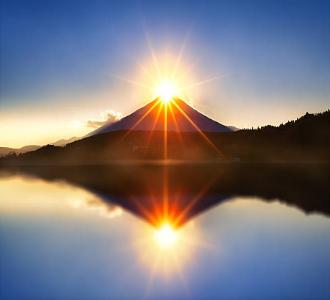
While each route takes you to the iconic sunrise, which happens each day at around 4:30 am – we’d really recommend heading to the summit at least an hour before.
While you’ll have to brave the cold weather of the summit – if you get there an hour before especially if you’re heading up the Fujiyoshida route you’ll likely hit volumes of people and even be bought to a standstill which can cause you to miss the sunrise. On top of this, for those with high quality cameras – the view below of the stunning Tokyo city lit up the moonlight is itsle is an incredible photo shot, and you can either do a stunning time-lapse of the sun as it rises over the mountains.
Once at the top you can traverse the crater (it takes an hour) – if there’s not too much human traffic and also pass under a small Torii gate to signify your summit– before taking advantage of the hot food and souvenir stands that line the mountain and slowly making your way back down to civilisation to reflect on the magnitude of summiting the holiest of Japans mountains.
How long to stay:
We’d recommend budgeting 3 days to explore the wonder – 2 days to make the most of the summit hike, including one day stopping over at a hut and then the extra day to explore the views of the mountain from the photo spots listed below including the 5 lakes and from Downtown Tokyo – giving you a chance to experience the mountain in its raw form as you conquer and to grab those scenic photos of the whole of the mountain from the various incredible photo shots including the 5 lakes that gives you a stunning view of this incredible wonder of the world.
Top Tip:
For those who attempt to summit the mountain – make sure you come prepared with the necessary gear and clothing as it gets very cold at the summit. IN particular it’s strongly advised to have a decent pair of gloves, a woolly hat, solid hiking shoes, walking sticks, torches, and avoid shorts at all costs, as well as rain proof clothing – be prepared for the mountain and especially the summit to provide you with little protection from harsh winds and rain.
For those that do make the summit, it’s strongly advised to go during the on peak season, as people have been blown off the mountain in the past due to high winds – and try and time your visit for a day with good weather forecast and on a weekday in July – as at times crowds can be too much on the ascent and you may end up queuing – and also be ready to make sure you get to the bus stop on time, as you may end up at the back of the queue and find yourself stranded on the mountain till the evening.
For those who do ascend, make sure you time your journey so that you see the sunrise from the mountain – it’s a truly stunning experience, to do this we’d recommend making the hike from level 5 or the base in mid afternoon arriving at the huts on the 7th or 8th level at sunset – and then journey upwards for the sunrise at 4:30am the next day – or time your ascent so that you go straight from level 5 in the evening up to the summit for sunrise – but be warned that the latter route would mean you trek up the mountain in the dark increasing your risk of altitude sickness and injury.
Cost:
To visit or climb the mountain from inside the national park you’ll be expected to give a 1,000 yen (100 USD) mandatory donation – and you can expect to fork over 300 yen (3 USD) for each toilet break you need (using bottles is not encouraged) with a hut reservation which can be made at (https://www.fujimountainguides.com/mountain-hut-reservations.html) coming in at 5000 yen – or 7000 yen if you opt for meals – which combined with the average 5000 yen bus cost to get to level 5 puts the average cost of climbing Fuji at around 6,500 yen.
For those who don’t make the climb but opt for a tour – expect to pay around 1,500 yen to be given a guided tour of the mountains base and the surrounding 5 lakes park.
Fun Fact:
While you’ll hear the mountain referred to as Fujiyama in popular culture, it actually has no meaning in Japanese – so expect some funny looks if you ask for directions to Fujiyama, the same principle applies for the use of Fuji-San – with san used to refer to people’s names but meaning mountain when describing Fuji-San.
For those who do make the climb, as touristy as it may sound we’d recommend picking up a date stamped walking staff, not just to help you up the mountain but as it makes a great souvenir and serves as proof that you’ve conquered the mountain of the gods.
Best photo spot:
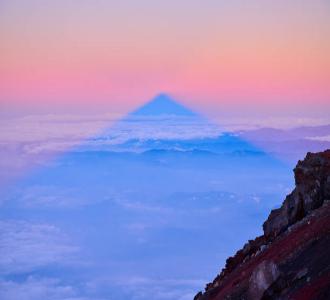
Unquestionably the pinnacle photo of Mount Fuji is from its summit, as you watch the light of Japan rise giving life to the beautiful city of Tokyo and beyond below after the hike up the Mountain – it’s certainly a shot worth braving the cold conditions at the top for !
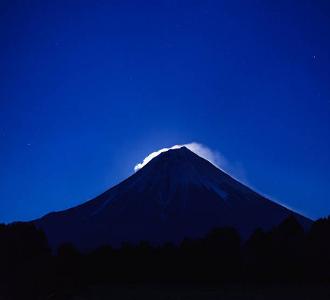
Alongside that you’ll want to grab a photo that actually has the iconic Mount Fuji in it, and for that given it’s size and that it’s visibility stretches across the areas of Shizuoka and Yamanashi we’d recommend first grabbing a shot from incised the fuji Five lakes national park – and especially from the lake of Kawaguchiko – where the great shoreline and reflective lake offers a stunning view of the whole of the mountain on a clear day – with an insiders tip being to head there in the evening, to capture the mountain against the backdrop of the stars.
For those want the same shot as that which appears on the Japanese Yen, you can head further into the Five Lakes park to Lake Motosuko – where you’ll need to hike to the western side to be faced with a stunning view of the great Mountain.
For those who arrive outside of climbing season but in the middle of cherry blossom season (link) – one of the famous spots for cherry season te five storied pagoda of Chureito Pagoda happens to be one of the best places to take in the Great Mountain, whose beauty is enhanced in a snap when accompanied with the stunning Cherry Blossoms in full bloom.
For those who want to enjoy the beauty of the Mountain whilst soaking in hot springs – a particularly great option for those taking in the mountain in winter, then the Hakone Hot Springs are the best bet, which offer stunning views of the full scale of the mountain whilst enjoying a bit of pampering.
And finally for those who want to see the full beauty of the mountain but find themselves only with a day in Tokyo – you can journey up the many sky scrapers that line the city for a birds eye view of the full mountain with the Bunko Centre in particularly being known to offer free yet fantastic view of this godly and truly unique wonder of the world.