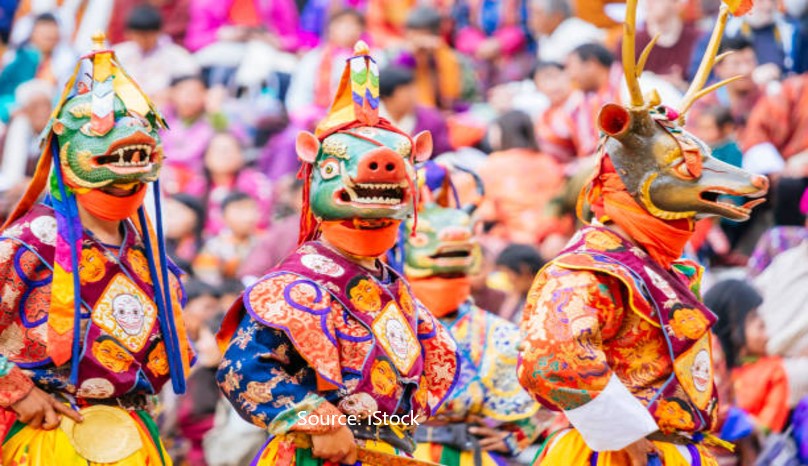
Paro Tshechu
What: Bhutan’s festival of dance, the Paro Tshechu honours the buddist and yogi Padma Sambhawa who introduced Buddhism to the Himalayas with a four day celebration inside a local Dzong that starts with three days of sacred dances and rituals performed by monks wearing elaborate and colourful costumes, singing, chanting, socialising and the parading and selling of local arts and crafts.
But the real highlight of Paro Tshechu comes in the early hours of the last day, with the presentation of a gigantic traditional Thangha, a huge cloth and sacred scroll containing imagery of the buddah which according to legend has the ability to cleanse a viewer’s sins and correct their life path, with people queuing for hours to get a glimpse of the holy Thangha before it’s taken down before the sun rises.
When: Paro tsechu takes place on the 10th – 15th day of the Bhutanese lunar calendar, which is usually in the early parts of March or April – know that there are monthly tsechu’s that take place all over Bhutan but for the best experience it’s recommended to head to Paro.
Where: The Tsechu takes place in locations all over Bhutan, but for the best experience head to the town of Paro in Bhutan with the first day of the dances held inside the Paro Dzong and the following days dances held in the courtyard outside, with the Thangha being unveiled in the early hours of the final day of the festival inside the Dzong.
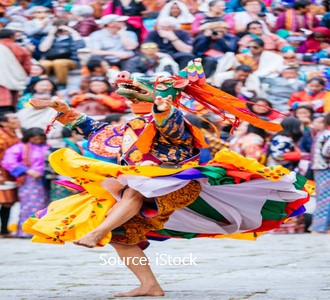
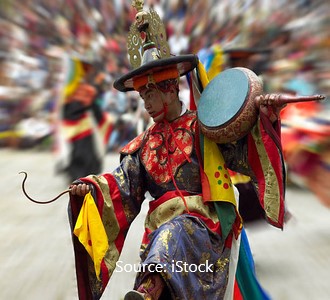
Duration: Paro Tsechu lasts for four days – with the first day seeing celebrations, including masked dances, rituals, socialising, the displaying of crafts, beginning in the early morning in the Dzong and lasting for the next three days in the courtyard – with the pinnacle of the festival taking place at midnight on the last day when the Thongdrel is unveiled in the Dzong, with crowds forming queues for hours to see it before it’s wrapped up and stored away early in the afternoon of the last day – before a final dance and party brings the Tsechu to a close.
Tickets: Attendance to the festival is free and participation and viewing of the sacred thangkha is also free — although contributions to the Dzong and purchasing of the crafts and gifts on offer from locals and the stalls dotting the celebrations are encouraged.
Need to Know: Wear bright colours to celebrate the festival and feel free to join in the celebrations– a number of toru operators combine viewing of the Paro Tsechu