Petra
Table of Contents
Show
Overview:
The ‘Lost City of Petra’ is an ancient Nabatean city carved out of red, white, and pink sandstone that dates all the way back to the 1st century BCE, and with its grand storied columns, stunning architecture and perfectly intact ancient monuments, the city severs not just as the symbol of Jordan, but as a truly unique and beautiful wonder of the world.
Believed to have once been a trading city and the capital of the ancient Nabatean between 300 B.C. and the 1st century, the city once featured an advanced water system, that took advantage of its unique position near the red sea and the Persian Gulf to sustain life and serve as unique trading hub, before being badly damaged by an earthquake and occupied by the Roman invasion and the ultimately being abandoned in the 12th Century.
In fact, it was not until the 18th Century the city was ‘re-discovered’ to the western world, with the ancient and architectural wonder then receiving mainstream recognition following its appearance in the Indian Jones and the last crusade film, although of course there is no record that the events depicted in the film are accurate.
Also referred to as the ‘Rose City’ on account of its beautiful sandstone, the ancient city is not formed of the iconic Treasury, which is lit up by candles at night but also the rest of the city, which is also uniquely carved in rock and still maintains the original sacrifice temple, a series of tombs and the streets that were once used to house and maintain this once bustling city, with its unique architecture, ancient traditions and sheer beauty making it a truly unique and stunning wonder of the world.
Where:
Petra is the symbol of Joran and is found deep in the mountains of southern Jordan carvbed out of Rock, with the nearest city being the charming town of Wadi Musa – that serves as a tourist hub with decent hotels, restraunts and access.
Getting there:
Despite being located in the mountains of Jordan, Petra is quite accessible and there are a number of options to get there.
The easiest one is to fly into the country’s capital of Amman – and then use the good infrastructure in the city to take a rental car of bus trip to Wadi Musa – an approximate 3 hour drive,
For those without access to a rental car you can take a bus from anywhere in Jordan to Wadi Musa, with the main company being called Jett, but be warned the buses are crowded and uncomfortable, although it is worth it if you’re on a tight budget.
From Wadi Musa, you can actually walk to the wonder if required, which if done in the morning can be quite cool and a good way to stretch your legs, you’ll also find that most hotels offer free shuttles as well – and as a last resort you can grab a quick taxi – which is a decent option when seeking to get back form the wonder in the evening if you stay for the candlelight view of Petra.

Best time to Visit:
The best time to visit Jordan is during the spring and autumn – April, May, October and November – as it’s dry, not too hot and the crowds are smaller. Summers can get hot, with August average temperatures from 17–34°C (67–93°F), and not much shade on site.
Explore:
The wonder of Petra is in not just its magnificence as a ‘lost city’ but also in it’s architectural and carved stone beauty.
For exploration, you can hire a guide, but we’d definitely recommend being yourself in the city of Wadi Musa and either walking there or grabbing a shuttle in the first instance – as you can always pick up a guide and a donkey when you’re there.
In terms of the top things to see and do, with the ancient city of Petra being some 60km long, chances are you’ll leave bits uncovered, but the following are the top 9 sights with a short explanation to see when there:
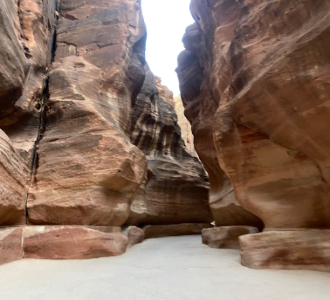
The Siq — the Siq is the pathway from the entrance and visitor centre to the Treasury and main sights of Petra. A walk through the Siq is a unique experience in itself as it’s a long gorge that takes you winding and narrow canyons, etched with carvings and history and helps create the anticipation as you journey through the more that 1‑kilometre-long natural carved beauty to the main and famous sights of Petra.
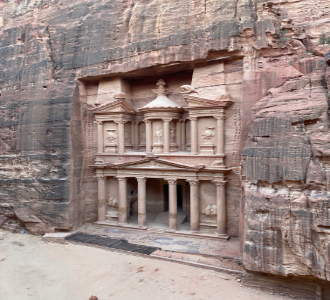
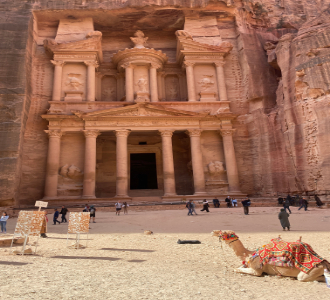
The Treasury – the iconic and famous site of Petra, the treasury is the most intact and beautiful part of the ancient city of Petra , with the large sandstone columns welcoming visitors in what is always a draw dropping and awe inspiring experience. While you can’t journey into the Treasury, this 45 metre high monument is incredibly breath-taking, with the multiple carving and colours of the sandstone still standing as one of the great wonders of the world.
As a bonus tip when visiting, is to not only arrive early, but also make sure to stay late to grab photos by yourself when tourist trips will disappear – as well as making sure you’re here for one of the night candle lit experiences which is truly romantic.
The Treasury by Night – Alongside visiting the treasury during the day, once an evening ever 3 days, the treasury will be lit up be candlelight, recreating the evening scenes from centuries ago. With the candles providing a romantic and yet stunning experience to not only photograph this unique wonder but explore this unique wonder of the world in a blissful setting.
The Street of Facades – The next step after the treasury will be the fabulous Street of Facades, which are a series of still preserved streets which feature a series of additional buildings carved into the cliff face facing south – which give you a sense of the scale of the ancient city of Petra. These streets are also lined with Nabatean tombs, an old amphitheatre and multiple caves – for those who wish to explore inside the stone of Petra.
The High Place of Sacrifice – Giving you spectacular view of Petra down below, the high palace of sacrifice was once used as a place for animal (and occasionally humans) sacfices and has fantastic irrigation given its construction in the 1st century, with special drains in place to absorb the flow of blood – be warned though finding the palace of sacrifice can be tough – it’s at the end of a long and winding trail of about 45 minutes and contains 900 steps to reach, for those struggling in the heat you can hire a Donkey to help.
The Theatre – A small but beautiful thetra built into the rock during the 1st century, the theatre is an open space as well as circular ring which gives an insight into the entertainment and ceremony grounds of Petra when it was active.
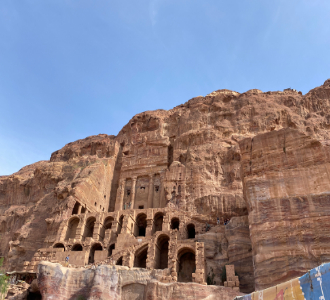
The Royal Tombs – The famous tombs of Petra are themselves grand mini replicas of the best of Petra’s monuments, with their being the Corinthian, Silk, Palace and Urn Tombs – all named after the tombs decoration. While all the tombs are grand be sure to check out the Palace tomb, which is 3 metres wide and resembles the treasury – not a bad place for a final resting place.
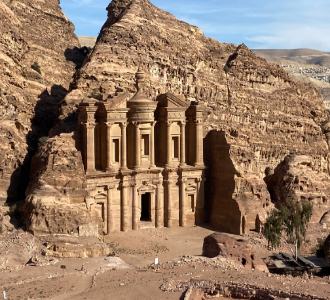
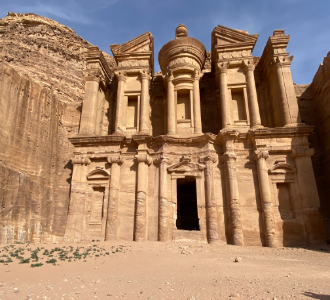
The Monastery – Still intact from its use in the 1st Century BC, the Monastery is one of the final yet grandest sights in Petra. It’s almost a 2 hour hike from the entrance of Petra, but it’s certainly worth it – as the Monastery contains all the beauty of the treasury and is similar structure – but higher and with more unique carvings. Just be warned there are almost 900 steps to the top – so after a full day at Petra don’t be afraid to get some help from a local Donkey to make the climb.
The cave bar – While not a typical Petra monument, the cave bar is officially the oldest bar in the world and after trekking through the heat and the monuments through Petra – it’s a great spot to cool off and down a cold one and reflect on the unique wonder of the world that you’ve just experienced.

How long to stay:
While you have the option of doing a day tour with a tour company, we’d recommend budgeting at least 2 days for Petra and basing yourself in Wadi Musa.
The two days will allow you to explore Petra at your own pace, enough time to hit all of the unique sights of this wonder of the world, and if you time it correctly get to experience Petra at night, which itself is well worth staying overnight for.
Top Tip:
While Jordan borders Iraq and Syria, the country itself is actually incredibly safe with a well-developed infrastructure, so while of course be on your guard no special precautions out of the obvious need to be taken when visiting.
As a top travelling tip, we’d advise to not hire a guide at the first point, but to explore Petra at your own place, with plenty of guides an offer in the city if required, but just be sure to base yourself in Wadi Musa overnight and time your visit to experience Petra at night – and don’t be afraid to hire a Donkey to help with climbing the stairs for the Monument or high place of sacrifice.
Cost:
Tickets to Petra are a little pricey at 70usd (50 JOD) for entry for one day – but for those who stay for the night experience a two-day entry ticket is $80 usd (55 JOD) with an extra $17 usd required to experience Petra at night – which is well worth it.
There are multiple price ranges for hotel accommodations available in wadi Musa as well ranging from $50 usd a night to $300 – and flights to Amman are relatively affordable at $150 usd return from Europe, so a trip to see this unique wonder is both affordable and well worth it.
Fun Fact:
Alongside the Indiana Jones and the lost crusade film which helped bring the lost city of Petra to Global attention, the wonder has also been the host of a Transformers and the Mummy returns film – be sure to pack the soundtracks for all three films on your ipod as you explore the ancient city.
Best photo spot:
While the hikes to the alter of the sacrifice and the Monastery give you grand views looking down on Petra, the iconic photo is in front of the Treasury – both during the day and the evening candle light display – be sure to get there either early doors or at the closing call for the best non tourist crowded photos.