Semana Santa
What: Celebrated in almost all Spanish speaking countries Semana Santa celebrates the last week of Jesus life, including the crucifixion, resurrection and ascension, with either solemn processions or colourful celebrations, floats, re-enactments, parades and reading of religious rites to mark the end of lent and pay homage.
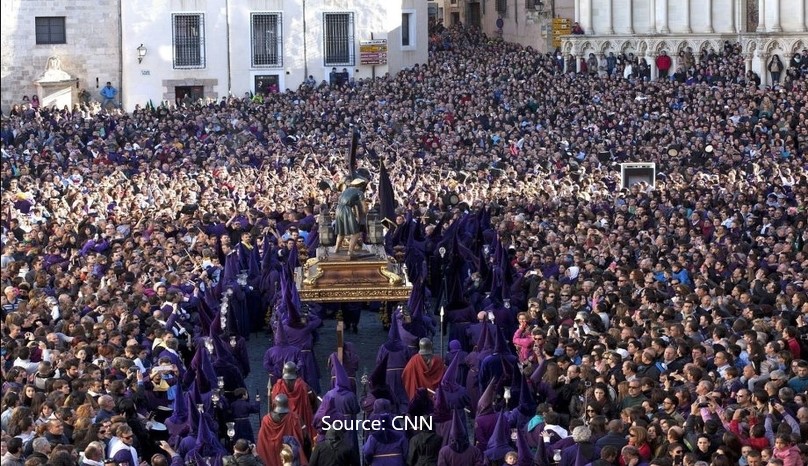
The most iconic celebrations take place in Spain itself led by a series of religious brotherhoods who, as well as parading floats and re-enacting the easter story of Jesus, march in a series of processions known as pasos – where beginning on good Friday, lifesize statues of the crucifixion and of the virgin Mary are carried through the streets of towns by a series of barefoot nazarenos – followers of Christ – who are dressed head to toe in purple robes and are holding either candles or chanting in unison as they slowly make their way to the city’s main church to celebrate Easter Sunday.
When: The exact date of Easter Sunday and the week preceding vary each year, but you can expect Semana Santa to fall in early April and the build-up including good Friday to take place in the week prior to Easter Sunday.
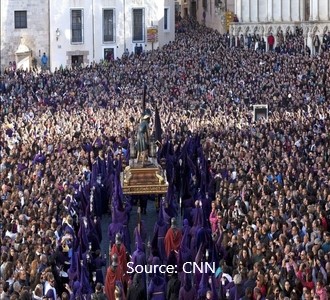

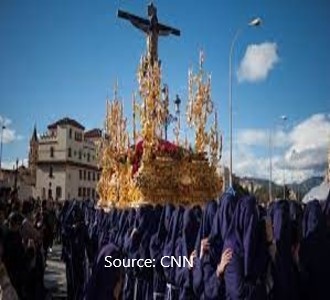
Where: With Semana Santa being celebrated all across the world, the traditions and festivities vary from country to country. For the best and most traditional experience it’s recommended to head to spain and in particular either Seville on the street of Via de la Plata for the processions of ‘pasos’ and the parading of vast floats accompanied by the the iconic nazarenos in traditional pointy or head to Cabanillas, where on Easter Sunday one local is selected to play the role of Judas – and angry locals do their best to catch him and ‘avenge Jesus’ by hunting him through the streets.
For the other Spanish speaking countries where Semana Santa is celebrated the best viewing spots are as followed:
For Quito, Ecuador the marking of Semana Santa begins with the good Friday parade where a procession of purple robed devotees line the streets carrying floats and statues through the city centre which continues until the end of Easter Sunday, with the music, food and colours of the processions increasing reflecting the journey of Jesus.
For San Miguel del Allende, Mexico, the festival is comparable to Lewes Bonfire Night in the UK – just with more fireworks and less health and safety ! – with loud parades, floats, parties happening during the lead up to the end of lent, with the highlight being the exploding of a replica Judas and hated world or political figures with fireworks.
For Iztapalapa City, Mexico, a full scale re-enactment of the last days of Jesus takes place and has been running for the last 150 years, with the event being nationally televised and held in the national park the roles of Jesus, the roman soldiers and the apostles are all highly sought after and require months of dedication and training to perfect.
For Antigua, Guatemala, the unofficial home of Semana Santa, the streets become alive with colour, with petal designs, murals and coloured carpets lining the streets to welcome the procession of purple robed nazarenos carrying statues of Jesus and Mary to remember Easter Sunday.
Duration: While Semana Santa lasts a full week, the parades really kick into gear from good Friday and last until the evening mass on easter Sunday – and while there’s no set time for each event, expect to see several processions a day beginning after morning mass (approximately 10am) and lasting until the early hours from the Friday to the Sunday.
Tickets: There is no cost to attend or watch Semana Santa or the parades – although contributions to the various churches hosting the event are always greatly received.
Need to Know: Wherever you choose to celebrate Semana Santa be sure to book in advance, expect crowds and depending on your destination expect heat and the occasional firecracker thrown in your direction.