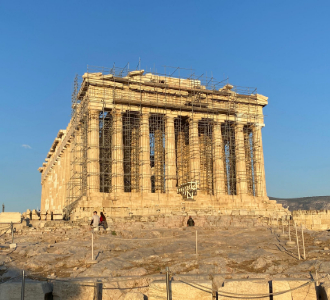
The Acropolis
Table of Contents
Show
Overview:
The stunning reflection of the best of the Greek empire, the 5th Century Acropolis which today sits atop a hill in the middle of modern Athens, is a former citadel, military base, fortress and democratic birthplace, which embodies not only the best of Greek architecture, sculptures and statues but also serves as a historical walkthrough of the power, wealth and beauty of Greek Civilization.
Honouring the patron of Greece – the God Athena, the Acropolis is home to a series of great historically important temples and buildings. The pinnacle of which is unquestionably the great Parthenon Temple, which has survived numerous bombings to still stand tall as one of the greatest and largest temples the world has ever seen, and thanks to a series of restoration projects which have helped understand and maintain the famous statues, frieze and metopes of the temple.
In fact the Parthenon, combined with the many temples including those dedicated to Zeus and Athena, and the numerous statues and Roman Agora’s which sit atop the Acropolis, has helped make the Acropolis not only a truly unique place where the glory of the Greek Empire can be relieved, but thanks to the truly unique beauty, history and stories contained within this unique site makes the Acropolis a truly unique and must experience wonder of the world.
Where:
The Acropolis and it’s accompanying temples sit atop a large hill in the middle of the Greek capital of Athens, so it’s hard to miss. With the official address for those using map apps being Athens 105 58, Greece.
Getting there:
Be prepared for the busy entrance of Acropolis, so whichever way you get there and regardless of the season get there early ! – and be prepared for a walk up the hill given the acropolis location.
For transport there, the nearest metro station is very helpfully called the Acropolis or the “Syngrou-Fix” on the red line – which is a short switch over from the green line Piraeus Station for those arriving into Athens by train.
Once there you will need to follow the on foot signs out of the station and up the hill and head for either the western entrance (the main one) for ticket purchasing and collecting before you enter this unique wonder.
Best time to Visit:
If possible, make sure to visit the Acropolis between either March – May or September – November, when the heat will slightly less intense and ticket queues at a minimum. IF visiting during the summer be sure to visit in the early morning – or risk being stuck in the long queues of the acropolis in sweltering heat, which will take away from the enjoyment of your Acropolis experience.
Explore:
Having made you up the hill to the base of the Acropolis and having got your hands on tickets (both can be challenging feats), it time to explore the Acropolis sites and the many wonders it possess.
First up we’d suggest heading to the museum and taking in the various videos and information boards that will give you an overview and then taking in the following main sites of the Acropolis:
The Parthenon
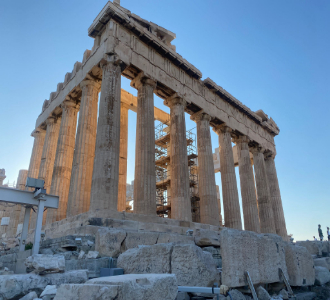
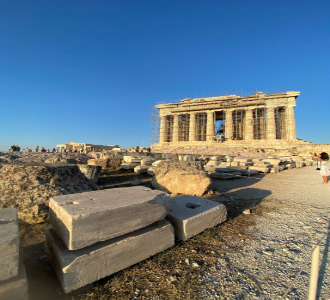
The big one on the Acropolis, the Parthenon was the centre of religious life in Athens as far back as the 5th century BC – and this fantastic temple was seen as the symbol of not only Greek Democracy, but also power, wealth and culture and at the time of its creation was unquestionably the greatest temple in the world.
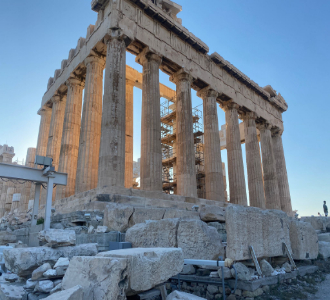
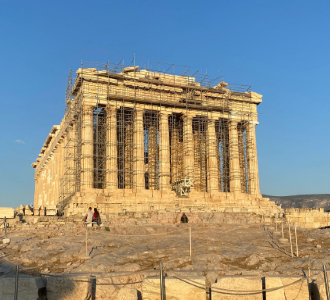
Unfortunately, it was bombed by Persians in 1687 and despite an ongoing restoration project parts of the Parthenon will remain forever destroyed. Yet what remains is still a stunning large temple, constructed from Pentelic marble, that has served many purposes over its lifespan, including as a mosque, a democratic house as a tribute to the great goddess Athena (who once had a life size statue within the temple).
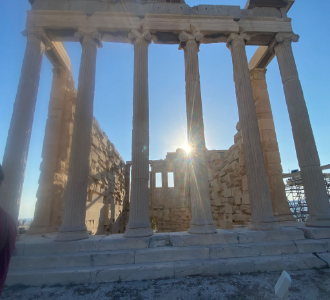
A visit today will allow you to not only admire the beauty and wonder of the temple but also admire the unique statues and architectural designs of the temple from the 5th century, with the metopes, frieze at the top of the walls, the pediments (all discussed below) helping to present and tell stories of the great Athenian culture and history through the centuries.
The frieze – Also called the great Panathenaea is one of the unique sculptures and carvings found on the top of the walls of the Parthenon and it is believed to depict the procession of Greek gods in honour to the god of Athens, Athena and also portrays a series of horseman, musicians a series of unlucky animals which were sacrificed in the name of Athena.
While unfortunately knocked down in certain areas – the frieze still remains visible in certain places and through digital reconstruction on the North, West and South sides and the unique and detailed carvings, which sit higher than 100 metres in certain places standing adding to the architectural beauty of the Parthenon.
The Parthenon Metopes – Alongside each side of the Parthenon are metopes (a space between a stone tablet) which are all uniquely carved and which depict an element of Greek mythology.
The most in tact and grand of these are the 14 metopes found on the east side of the Parthenon, depict four key battles in Greek Mythology – the battle of the giants also known as the Gigantomachy in which a series of Giants helped avenge Zeus.
With the 32 metopes on the south side, depicting the battle of the Centaurs and the Lapiths (the centaurs lost), the west showing the battle of the Amazons and the destroyed stones of the North side showing the Trojan War and the victory of the Greeks over the Trojans.
What’s so unique about the Parthenon Metopes is the level of detail and the story telling and history which they retain, with closer inspection revealing the painstaking and yet beautiful details that must have been required to carve these details in the 5th Century.
The statues in the pediments – Finally the last major sight of the Parthenon and perhaps the grandest and most beautiful are the statue in the pediments. The pediments are the intersections or the roof over the corners of the temple (the Parthenon’s famous Temple appearance) and in each pediment lies a unique statue in tribute to Athena – the east side showing her creation and the west side showing her victory of Poseidon . Considered important as they represented offerings to the gods, these statues are carved with immense detail and are considered an important and historical artifact in understanding and appreciating Greek Culture.
Outside of the Parthenon, there are also many sites of interest in the Acropolis, with the top 6 outside the Parthenon being, in our humble opinion, the following:
The Propylaia Gates:
Found on the western part of the hill, the Propylaia Gates served as a security of type in the days Acropolis was used for governing, to prevent those considered unworthy from entering, they were then adapted over the course of many years to act as security as the temple and the Greek empire came under threat and ultimately fell.
The Odeon of Herodes Atticus
The theater of the Acropolis, the Odeon of Herodes Atticus was built in the 1st century AD and named after the leader Herodes, it has since undergone multiple restoration projects and now stands as a cultural and entertainment venue in Athens – so much so that throughout the year international acts will compete to perform here — for those exploring Athens and the Acropolis and who are looking for a unique experience to complenet an acropolis visit a trip to the Odean of Herodes Atticus is highly recommended.
The ancient Agora
An Agora – an open space used for social discussions sits on the north west side of the Acropolis – while now considered an ‘empty space’ the agora is a site of history with discussions, decisions and democracy enshirend within the ground of the ancient agora at acropolis.
The Tower of the Winds: — The worlds first meteorological station (which now days would show bright sun) the tower of the winds or to give it its official name the Horologion of Andronikos Kyrrhestes sits in the Agora and also functioned as a time piece in the absence of a calendar, with the tower considered a living monument of the ingenuity of the Greek Empire and how ancient civilisations lived with the seasons.
Temple of Olympian Zeus
The temple of Zeus was a 104 large column temple dedicated to Zeus the god of the Sky and at one point was considered the grandest and greatest temple in Greece, but was unfortunately destroyed in 267 AD and then used for spare parts. Yet despite this thanks to restoration work, parts of the huge temple, which sits in the shadow of the Parthenon remain, allowing visitors to take a stroll through and envisage the might temple and pay their respects to Zeus and appreciate the marvel and architectural feats that this once great temple represented.
The Temple of Athena Nike
Found in the southern eastern side of the acropolis the Temple of Athena Nike stands on the ruins of multiple other temples, each constructed and then torn down to be improved upon in an effort to further appease the God of Athena. Now the temple stands as a lasting monument to the god Athena and also a truly unique piece of architecture that adds further beauty to the wonder of acropolis.
How long to stay:
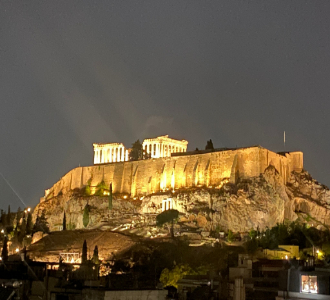
We’d recommend budgeting a full day for the acropolis – with 5 hours enough to explore the wonder and the many temples and sites during the day and being sure to arrive earlier for a cooler ascent up the hill and as the crowds will be at a minimum – and then budgeting for a second trip taking advantage of the all day ticket to explore and experience the Acropolis at night, when the illuminated evening lighting makes the sites truly come alive.
Top Tip:
Firstly, be sure to book your tickets in advance and online in advance – queuing for hours in the heat of the Acropolis is an uncomfortable experience – especially as you will just have made the ascent up the steep hill.
Secondly make sure you bring plenty of water, a little bit of food and an umbrella – both to cope with the soaring heat, the climb up the hill and to produce your own shade — which after trekking round the exposed hill seeing the many wonders of the Acropolis will be most welcomed – and don’t forget the sun tan.
Finally when exploring the wonder itself, we’d recommend skipping a guided tour and going round at your own pace, but being sure to visit the museum first – to take in a video and histporical guide of the many wonder you’re about to experience and see.
Cost:
The Acropolis tickets usually cost 30 euros (reduced to 20 in the off peak season) – which includes access to the Parthenon, the ancient agora, the Temple of Olympian Zeus and the Odeon of Herodes Atticus – and is valid for a week, so you can come back for a second viewing in the evening time for a full Acropolis wonder experience.
For a much more enjoyable experience it’s advised to book tickets in advance online at [https://etickets.tap.gr/] – as the queue for the Acropolis is notoriously long. If buying tickets on the day be sure to arrive early (opening hours 8am – 8pm) and come packed with lots of water for a more enjoyable experience- while there are skip the line tours, these usually tend to be overpriced and are known to rush visitors through the site so it’s advised to go buy yourself at your own pace to fully enjoy, explore and immerse yourself in this true wonder of the world.
Best photo spot:
For a photo of the Parthenon and the stunning gates, statues and temples, the best place is up close and personal on the top of the Acropolis itself.
To grab a photo of the whole of the Acropolis – you’ll unfortunately have to do more hill climbing, with the summits of the Ardettos Hill and the Strefi Hill both providing a great shot of the whole of the wonder, as well as our own personal favourite the summit of Mt Lycabettus at dusk – just be prepared for a hot and exhausting climb.