The Colosseum
Table of Contents
Show
Overview:
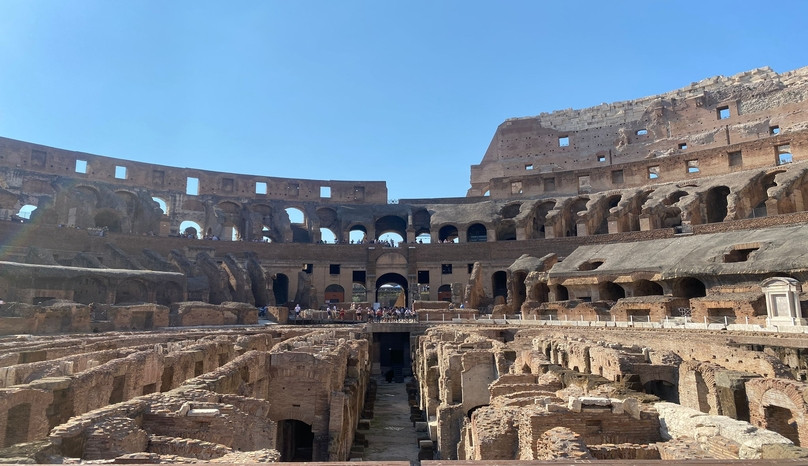
One of the ‘seven wonders of the world’ the Colosseum is an architectural and historical wonder piece, with it having doted the Rome skyline since 72AD and over the course of 2000 years still remains the largest amphitheatre ever built, with its stoned walls, unique Hypogeum tunnel system and storied floor telling the history of the greatest empire to ever and the contest, victories and story of one of the greatest man-made wonders created on the planet.
While construction began in 72AD under the rule of Emperor Vespasian it took but 8 short years until the Colosseum was fully completed and hosting the famous gladiatorial battles – often overseen, paid for and hosted by the emperor himself – with the contests, which also included mock sea battles and animals bought from all over the roman empire, sometimes lasting for a 100 days and estimated to have climbed the lives of more than half a million people and 2 million animals during their 400 year run.
Despite suffering sever damage in two earthquakes in the 14th century and being de-constructed for its stone after the fall of the roman empire, the colossal Colosseum still stands in the heart of Rome as a true wonder, with the 4 million annual visitors enjoying the opportunity to explore inside and outside this unique monument and recapture the glory days of the Roman Empire, with the Colosseum standing as a past, present and no doubt future wonder of the world.
Where:
The Colosseum is located in the heart of Italy’s capital of Rome and is hard to miss when visiting the city, with it being located near the tourist hot spot of Piazza del Colosseo which includes the Forum Romanum and the Palatine Hill.
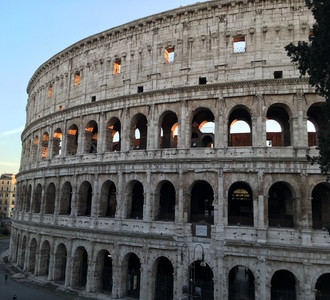
Getting there: You’ve got many options to get to the Colosseum, including walking and by taxi – but the easiest option is unquestionably by Italy’s fantastic Metro system – with the Colosseum having it’s own Metro station called the Colosseo which gives you the chance to grab photos from the outside of the wonder at the Nicola Salvi photo spot and enjoy the wonder from outside before venturing into the storied arena.
Best time to Visit: As 4 million people visit the Colosseum every year it can get a little crowded – particularly in the summer months when the school holidays arrive. Therefore it’s advised to avoid the summer months and the weekends – and time your visit for early in the morning between the months of October – November or February — May for the best experience and for okay weather, and make sure to take a trip to the Colosseum in the evening, the witness the splendour of the wonder against the backdrop of the Italian moonlight.
Explore:
There are 3 main ways in which the Colosseum has to be experienced.
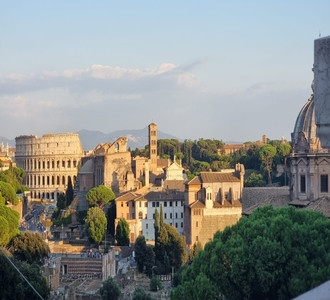
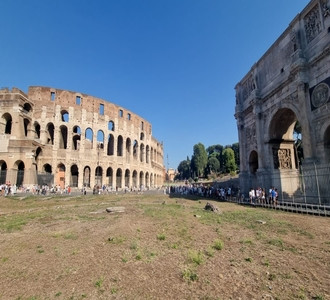
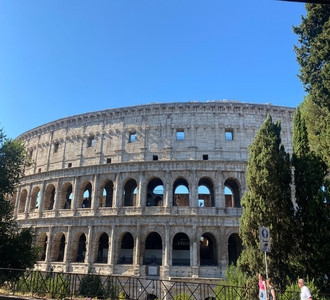
The first is from the outside during the day trip with the approach from the Colosseo station offering a full width view of the wonder and it’s unique reminder of Rome’s place in the modern city, with a photo from the viewpoint of Nicola Salvi something not to be missed, as well as the Forum Romanum and the Palatine Hill.
Secondly the Colosseum needs to be seen in the night time, while tours are available for access, the best place is to grab a bite to eat at one of the many Italian restaurants that dot the wonder and then stroll round the area with the backdrop of the Italian night sky finishing near the Palatine Hill for a panoramic night view.
And thirdly, the main one is to enter the Colosseum to walk along the storied stone of the amphitheatre and it’s insight into Rome’s past. While we’d strongly recommended a tour to make this as easy and possible and to assist with tickets and provide an overview of the various spots, it’s possible to do this as an individual – with the main and only entrance on the southern side of the Colosseum where you will have to pass through a security check to enter.
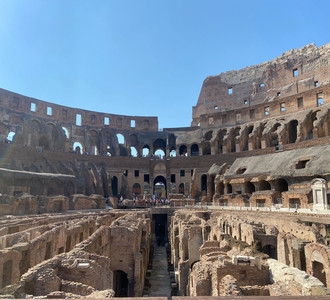
From here you’ll find yourself on the second floor and the old spot of emperors and dignitaries and you can descend onto the actual floor of the arena where gladiators and animal of the past would
do battle. On the floor itself you’ll be able to glimpse into the 35 different Hypogeum underground passages that assisted slaves in removing fallen gladiators and where combatants would line up before entering the arena, and for those on a tour you’ll hear stories of Gladiatorial legends who made their name and won their freedom in the arena.
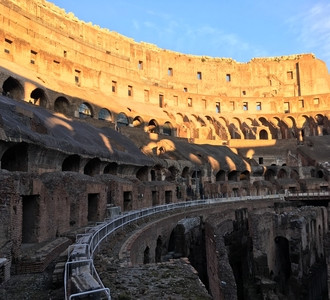
Finally it’s possible to ascend to the top floor of the arena for a panoramic and wide view down across the arena, giving you an exact experience of how the common folk in Rome would view the events taking place on the arena floor below. Just be warned though we’d again recommend a tour as there are daily visitor limits and you can expect long queues if you arrive without pre-bought tickets.
How long to stay:
We’d recommend a full day to experience the Colosseum both during the day and at night to truly soak in the wonder, but given its position within the Piazza del Colosseo and so close to the wonders of the Forum Romanum and the Palatine Hill you can budget 3 hours for the Colosseum see the rest of Rome and return for an evening meal and a night time experience.
Top Tip:
Alongside including a trip to the Colosseum as a stop in exploring the best of Rome – given the Colosseum is so close to another wonder of the world the Vatican City (just 2 miles away) we’d recommend ticking off both wonders in one special day.
Cost:
Admission to the Colosseum cost 12 euros – and you can get tickets from (https://www.coopculture.it/en/colosseo-e-shop.cfm) – but we’d strongly recommend a tour that sould include a trip to the Forum Romanum and the Palatine Hill which should come in at around 40 euros and last around 3 hours.
Fun Fact:
Over the course of it’s almost 400 year run some half a million people and more than 2 million animals fell in the arena — make sure you follow the safety instructions at the Colosseum to make sure you don’t add to the list !
Best photo spot:
On approach a photo from the Nicola Salvi ledge with yourself and the Colosseum in the background is a great shot, as is the view from the top 4th floor of the whole of the inside of the Colosseum – finally make sure you climb to the top of the the Oppian Hill to get an ariel shot of this true wonder of the world.