The Forbidden City
Table of Contents
Show
Overview:
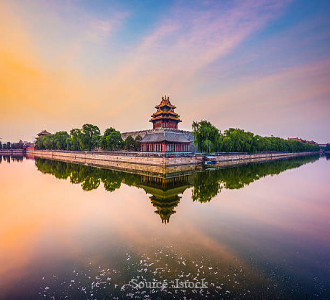
The world’s largest Imperial Palace, the Forbidden Palace has stood for more than 600 years and reflects the power, beauty and history of the Great Chinese Dynasties, with 24 Emperors, including those of the Ming and Qing dynasties having not only called the Forbidden City home, but also wondered it’s immense and stunning halls and palaces to host feasts, celebrations and of course ruled and implemented decisions that have defined history.
Having only been opened to the public in 1925, the Forbidden City is so named as only Emperors, their consorts and families and selected invited dignitaries were allowed to enter, with the splendid inner and outer courts now open to explorers who can marvel at the architectural beauty and splendour of the halls, palaces, courtyards and gardens of what was once the political and cultural heart of China.
Alongside this, the Forbidden City, which occupies more than seven and a half million square feet in land, contains one of the largest museums in the world, which houses more than one and a half million artefacts that document the culture, practices and history of the various dynasties, meaning that a day spent exploring this unique, beautiful and awe-inspiring city gives you not just a chance to travel back through the storied history of the Chinese dynasties but a chance to experience a truly unique and captivating wonder of the world.
Where:
The forbidden City sits in the heart of Beijing, reflecting its past as the home of Emperors and the heart of the Chinese dynasties.
Getting there:
The forbidden City is found in the centre of Beijing, so the easest way to get there is unquestionably by subway – which is both cheap and efficient.
There are two subway lines that will drop you off at the Forbidden City ‑the first is Subway line 1 where you head for the Tiananmen East or west station or Subwya line 2 where you can get off at Qianmen Station – from either stop it’s then a short walk to the South gate of the Forbidden City, which is the only gate from which you enter.
The southern gate is the Meridian Gate and was once the only gate used by the emperor and from which you enter into the main courtyard of the Forbidden City, you then spend the next couple of hours following a south to North route around the Forbidden centre where you exit at the brilliantly named Gate of Divine Prowess at the north of the Forbidden Centre – from where you can proceed to the top of the hill at Jingshan Park for some stunning panoramic views of the Forbidden City.
Best time to Visit:
As with visiting other wonders in China, you can expect the Forbidden City to be packed on both Chinese New Year and the May National Day, so it’s advised to head for the Forbidden City in either the Autumn – when the Autumn leaves make for stunning scenery and the weather is mild – or between March – April, when spring offers pleasant viewing with less crowds.
Explore:
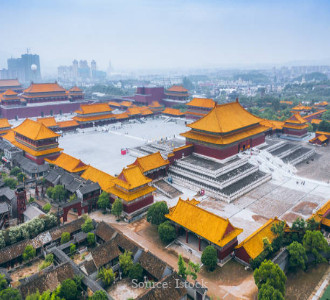
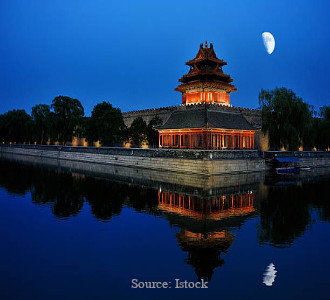
The Forbidden City is the worlds largest palace complex at 720,000 square meters – so there’s lots to explore and you could spend a couple of days exploring all the palaces, halls, towers architectural beauty of this wonder – and that’s not to mention the nearly one million pieces of cultural heritage items that are found in the many museums, including the stunning Treasures of the Palace Museum.
However as most people favour and find that a half day trip is enough for the Forbidden Palace – and as the 9,999 and a half rooms do begin to look similar after a while, below are the best top hits to explore and take in at the Forbidden City:
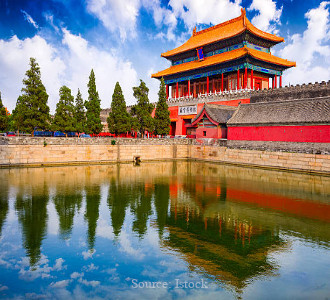
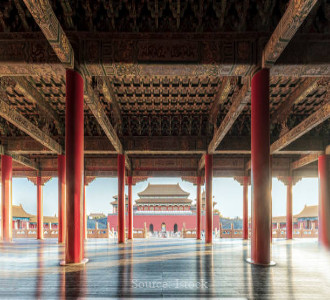
Following the south to North Route, you’ll enter through the Meridian Gate – which is a stunning large front door of the palace – and which was once used and reserved for the emperor alone, where he would sit to inspect his armies, take tea and ask questions of the ancient stars when alone, this gate is truly stunning and once inside be sure to get in one of our top tips – a chance to mount the walls of the Forbidden City – by heading left to the East Prosperity Gate from where you can walk along roughly one mile of the wall and enjoy a moment of quiet with no crowds and grab some stunning photos looking down on the forbidden city.
Back from the Meridian Gate – you’ll then come to the Gate of Celestial Purity – which splits the Forbidden City into two distinct sections – the inner and outer court and acts as the main gate to the Forbidden City.
The Outer Court:
Once used for ceremonies and national affairs, the outer court has three key dignitary halls:
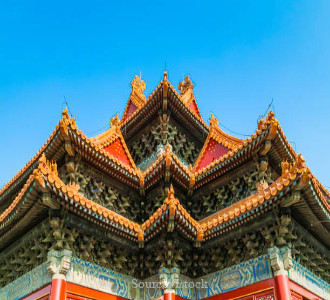
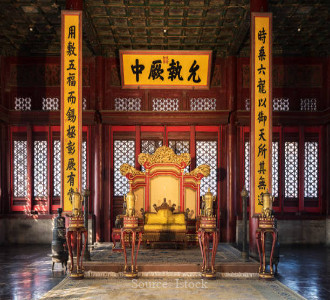
The Hall of Supreme Harmony – with a great name, the hall of the Supreme Harmony is a huge three story hall, that features the amazing Golden Carriage Palace which was once the throne room of emperors and marked the place of key ceremonies, including the announcing of war, sons and the passing of emperors. It features memories of china’s past and provinces and an ancient sun dial as well as brilliantly carved unique marble floors – fit for an emperor – with the highlight unquestionably being the two metre tall throne, situated in the middle of the room surrounded by dragons.
Hall of Preserved Harmony– standing at the end of the Marble Terrace the hall of Preserved Harmony was built in 1420 and then rebuilt in 1765 but retains all of it’s original charm as a place where Emperors would host large feasts and banquets to mark important events including marriage, years end and victories – and is a truly large and stunning hall that no doubt went a long with its beauty in help to preserve harmony. For those that head to the Forbidden City on a rainy day or in winter make sure you head here first, as the hall is designed to create an optical illusion of Dragons drinking and absorbing water.
The Hall of Martial Valour – a place of immense history and a truly fascinating historical site, the hall of Marital Valour was the epicentre of a peasant rebellion – where the poor broke into the palace and trashed it as well as burning down some of the neighbouring building, before putting to death. Alongside that the hall was mainly used as a meeting place for less important meetings that didn’t meet the requirements of the hall of supreme Harmony – and as an office where main of china’s key historical moments were recorded.
The Hall of Central Harmony - The smallest of the halls (reflected in its name – is a square wall that inhibits traditional Chinese architecture and which features two unique unicorn sculptures sitting alongside another throne that make up parts of and represent ancient Chinese mythology, this hall is quieter that the other three but of course just as impressive and a real reflection of the power and glory of Chinese dynasties.
Inner court
The inner court was the living area of the Forbidden Palace, for peasants and the emperors and offers a fascinating insight in the lives and mindset of the emperors, with three key grand and beautiful palaces visitable for explorers:
The Palace of Heavenly Purity – Despite it’s name, the palace of heavenly Purity is a smaller version of the hall of Supreme Harmony and acted as the Emperors sleeping Quarters – with the items within it mostly being similar in design to those in the hall of supreme harmony, but on a smaller scale. Used as both an official residence, for the signing of documents and hosting of meetings, the Palace is again a stunning example of Chinese architecture and beauty and for this reason also hosted many official banquets – including our personal favourite the banquet of a thousand seniors – and was also used as a place for fallen Emperors to lie in state to allow royal respects and mourning to take place.
The Palace / Hall of Union and Peace – The place of union and peace features an incredible single roof structure with a diamond pinnacle and was a place of official business being the site of the signing of many unique and historical documents and pieces of legislation – including some that are still active today.
Although damaged by fire and then rebuilt in 1797, the Palace of union and Peace still retains its unique charm, and feature two incredible pieces of Chinese ingenuity – the first being a unique wind-up chiming clock built in 1798 that has three tiers and still chimes today and the over being a device constructed in the same era that was a water clock that drips water to tell the time – in lieu of watches – that still works a a time teller today – a true sign of Chinese ingenuity.
The Palace of Earthly Tranquillity — The home of Empresses from 1368 to 1644 and then the martial bedroom of the Emperor and his Empresses, the Palace of Earthly Tranquillity also served as a temple for sacrifice (not sure it’s something you’d want close to your bedroom) with two sacrifices offered to the Gods each day to please the Emperors suppositions and in an effort to bring good fortune to their reigns.
Inside the Palace the walls also reflect the superstitions of the emperors, with the majority of walls painted red, and a series of lanterns and architecture which is supposed to inspire good fortune for all evident through the Palace.
Upon leaving the Palaces, and after taking a moment to appreciate their beauty and storied history you’ll come up to the Imperial Garden, which once offered views and hosted entertainment and parties, and which now stands as a quite beautiful traditional Chinese garden – complete with walkways, stones and rivers.
A final not to be missed sight is the Treasures of the Palace Museum – which is the most famous and completes museum in the Forbidden Cities grounds and sits inside the palace of earthly tranquillity – and hosts more than a million pieces of cultural significance – accounting for just under a fifth of all the historical artifacts still on display in China.
While an extra and small fee is required to enter the museum ($1.50 USD) it’s more than worth if for the many exhibitions, ancient books from the Emperors, artworks and insights that along with the Palaces, Courtyards and Gates of the Forbidden City let you explore and understand this truly unique wonder of the world.

How long to stay:
We’d recommend budgeting 4 hours and making the Forbidden City part of a long day exploring Downtown Beijing including Tiananmen Square and the Summer Palaces, just be sure to enter from the south gate and exit from the North – if you try and go the other way round it can add extra time onto your trip !
Top Tip:
Make sure to get there early to avoid crowds on both the subway (pre rush hour) and at the forbidden city itself, for those wanting a more in-depth tour of the city be sure to hire your guide before arrival – as those at the entrance guide often overcharge and are known to be somewhat inaccurate when giving a tour.
Cost & Tickets:
Ticket to the Forbidden city including the inner and outer courtyard cost 60 CNY (10usd) in April to October and drop to 40 CNY (6 usd) in the off peak season of November to March
– with it costing an additional 10CNY (1.50USD) to visit the Treasure Gallery – making access to the Forbidden City not so forbidden in terms of budgets!
Just be sure to book your rickets in advance online and bring your official ID with you when you visits, as this is a strict requirement and there is a maximum visit number of 80,000 a day, so it’s worth booking early.
Fun Fact:
The Forbidden city is still forbidden with an estimated 20% still off limits to commoners, although that’s much better than the previous full prohibiton of entry to all that was associated with the city to all but the imperial families and invited high officials that an to the 20th century.
As a bonus fun fact, don’t be surprised if you run into some cats as you make you way round the city, — they are now official residents of the Forbidden city – a stay over from the Ming and Qing dynasties that kept cats for good luck – and come and go as they please, just be sure not to feed them.
Best photo spot:
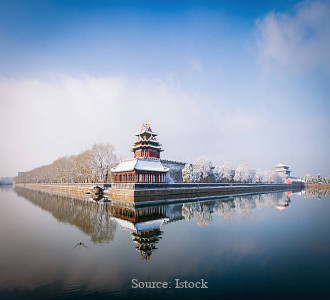
We’d recommend grabbing photos of the Forbidden City from two unique spots, firstly inside the walls – where you can make a small climb by the east prosperity gate to get an unblocked and top down view of the exquisite place and then after leaving the palace by the north gate make the climb up to the top of the hill at Jingshan Park just opposite the Forbidden City for a panoramic top down view of this incredible forbidden wonder.