The Great Pyramids
Overview:
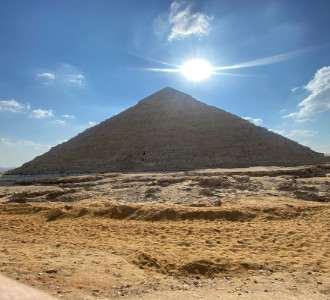
One of the original and the last remaining Seven Wonders of the Ancient World, the Great Pyramids stands as not only ever-lasting monuments to the Glory of Ancient Egypt but as the proud National Symbol of Egypt and as stunning architectural and beautiful wonders of the world.
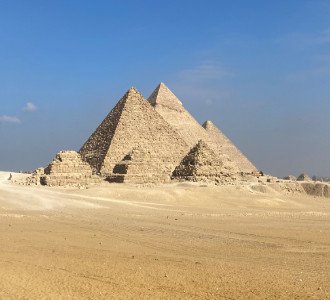
While there are over 150 Pyramids dotted around Egypt, the Nine pyramids of the Great Pyramid Complex – which includes the stunning Great Pyramid of Khufu – which once served as the great Pharos final resting place – and the two main pyramids constructed for the Pharaoh Khafra (Khufu Son) and the Pharaoh Menkaura as well as six ‘queen’ pyramids that once housed the loved ones of the Pharaohs – stand as the largest in the world, with the highest the Great Pyramid clocking in at 481 feet and being constructed out of 2.3 million limestone blocks – a truly unique architectural feet given the pyramids began construction in 2550 BC.
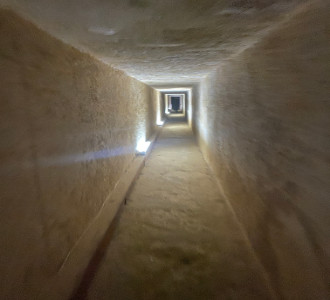
Created as shrines to the ancient Pharaohs, who at the time of construction were believed to be Gods who would live forever and would use the Pyramids as passageways to the next life when they were enshrined beneath them, the pyramids have survived looting, depletion, and the passage of time to still remain incredibly accessible with all of the Pyramids affording explorers the opportunity to journey within them and to witness where the Sarcophagus of the great Pharos once lay.
Alongside this, the incredible sunrise and sunset that greets the passage of time at the Great Pyramids each day, combined with the Great Sphinx that guards the Pyramids and the storied and incredible history contained within the iconic Pyramids, helps make the Great Pyramids a true wonder of both the ancient and modern world and an absolute must visit for any traveller.
Where:
The Great Pyramids can be found in the stunning capital of Egypt in Cairo – with the pyramids themselves resting just on the edge of the town and reachable down the pyramid road which takes you to the main Giza Plateau – from where you can begin to explore the wonder.
Getting there:
Having reached Cairo – which is easily done by Plane to the international airport of Cairo – or by train, bus or cruise from just about anywhere in Egypt, you’ll see the great pyramids on the horizon from just about anywhere in Cairo – and getting there can be done as simply as taking a Taxi or Uber or Private Car for around $30 USD down the pyramids road to the Giza Plateau and straight to the entrance to the wonder.
For those who don’t want to put their faith in a private Car, you also have the option of multiple day tours from just about anywhere in Cairo – and for which you can expect to pay $100 USd for a full day trip – or get on either bus 355 or 357 from anywhere in the city which will drop you off at the pyramids for as little as $1 USD – although given that both options will see you arrive with potentially hundreds of tourists, we really would recommend a private car or Uber for a much more enjoyable experience.
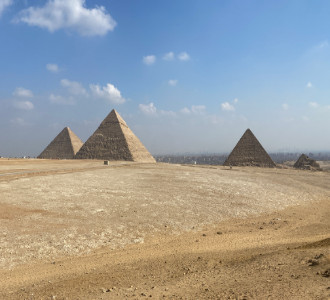
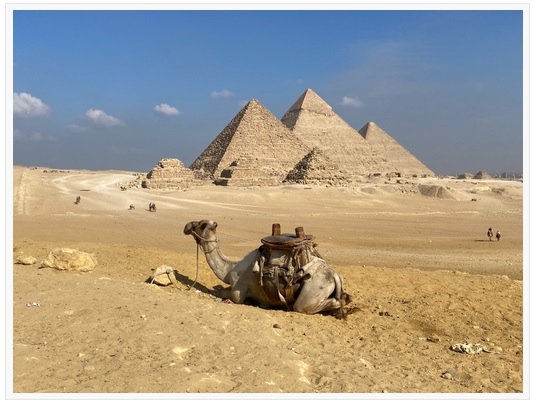
Once at the Giza Plateau you have a choice of two ticket officers, one bt the Great Pyramid and one by the Sphinx, and we’d really recommend taking the Great Pyramid, the Khafra Pyramid and the Sphinx in on foot, and then flagging an uber or Camel to visit the Menkaura Pyramid and the panoramic views that the photo spot of the entire wonder of the world of the Great Pyramids that the Menkaura Pyramid offers.
Best time to Visit:
Egypt can be very hot, so much so that it can make visiting the great pyramids regardless of their beauty a little uncomfortable if you go during the peak heat summer months. As Winter and Christmas (December — January) are considered the tourist season if you can time your visits for October and November or February and March you should get the best of both worlds – just be sure to avoid Fridays as the Pyramids get particularly packed as Fridays are considered a holy day in Egypt.
For visiting the pyramids themselves, it’s a truly unique experience to watch the sunrise over the pyramids, and despite the pyramids not opening officially till 8am, you can grab a coffee and early breakfast and watch the sun rise.
It’s also advised to go straight from sunrise straight into the pyramids at 8am when they open – as you’ll find the wonder begins to predictably fill up with tourists from 10:30am on – with most of them clearing out by 2 – for those who wish to explore the wonder with minimal crowds ‑additionally getting there at the opening will put you at the front of the queue for tickets to enter the pyramids, as only 300 are sold each day.
While the Pyramids officially close at 4pm- it’s again worth hanging round in the evening and timing your evening meal with sunset before catching the 7pm laser and night show at the pyramids which is a fantastic way to cap off a great day spend exploring one of the true wonders of the world.
Explore:
The incredible Great Pyramids are found in the heart on the edge of the city of Cairo – in fact a lot of visitors are surprised by just how close the city tails off into the wonders, with cleverly angled photos giving the impression they lie in the vast Egyptian desert.
In fact you can stroll or uber your way down the pyramids road to the Giza Plateau with the great pyramids standing and looming over the city of Cairo. Given their popularity, we’d advise to get their early – both so you can witness the stunning sunrise over the ancient wonders, but also so you can have as quiet a time as possible to explore the wonders.
After purchasing your tickets from the main ticket office – which opens at 8am you’ll enter both the Giza Plateau and the official Pyramid complex, where you will see the great pyramids before you:
The Great Pyramid (Khufu Pyramid)
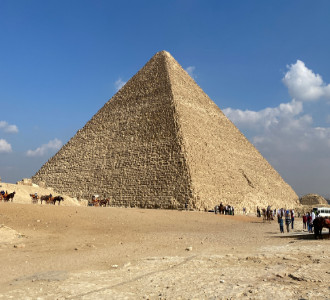
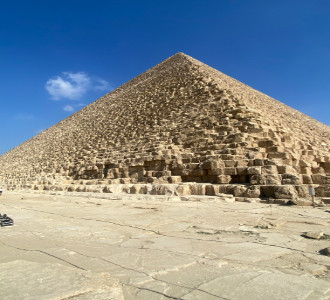
Undoubtedly the biggest and best of the nine pyramids, the Great pyramid stands at 481 feet and is associated with and sometimes called the Khufu pyramid, on account of the Fourth Dynasty pharaoh who was embalmed inside it and conceived its construction in around 2540 B.C.
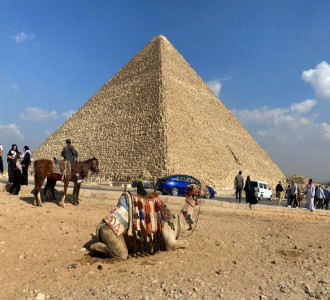
As soon as you approach the Great Pyramid, you’ll be struck by both its sheer size and beauty – and we’d recommend either walking or taking a camel around it to grab some stunning photos of the 2.3 million sandstone blocks and their unique formation constructed by 100,00 men that make up the magnifcient wonder.
As you pass round the incredible pyramid you’ll also notice three additional smaller queen pyramids, which themselves are stunning and which are known as the eastern cemetery and believed to have at one point housed the wives and daughters of Khufu.
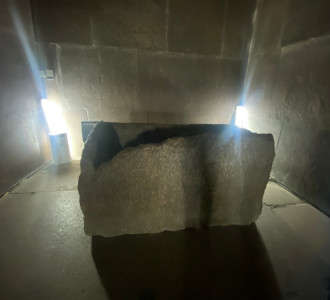
Alongside the outer beauty of the great pyramid, you have the option to journey inside, with the dark and narrow corridors giving you a feel for what lies inside the heart the Great pyramid – with a grand gallery and the incredible Tomb Chamber – which contains the empty sarcophagus of what was once Khufu’s mummy being found inside.
Unfortunately most of the inside of the Great Pyramid has been looted, so inside it can be a little empty, but we’d also recommend checking out the solar boat museum – which features five long boats believed to be from the time of construction of the pyramids that sit in a small museum next to the great pyramid and which were uncovered during excavation – and also heading to the area known as the western cemetery, where the Tomb of Senegemib-Inti lies which gives an incredible insight into the mummification process of the great Egyptians.
Pyramid of Khafra
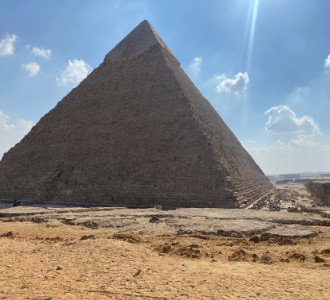
Clocking in at 136 m the great Pyramid of Khafre that lies close to the great pyramid houses the son of Khufu – Khafre and was cleverly constructed to sit on a higher piece of land than the Great Pyramid making it seem larger in both photos and at first viewing.
As you again approach the pyramid you’ll get a sense of it’s sheer size and beauty, as well as the again incredible architectural feat that led to its construction, with there being a notable flat top to the pyramid with an indented centre – that it is believed once housed a jewel, before it was looted.
While the Khafre pyramid lacks the queen temples of the other main two pyramids, its construction also included the great sphinx (below) which is believed to have been created to stand guard over Khafre after his embalmment, with the pyramid being especially of interest for those who want to see what they pyramids were like at their original construction – as some of the original limestone remains in an incredibly well preserved condition.
Like the Great Pyramid the Khafre pyramid can be entered for an additional fee – although be warned that the pyramids operate on a 2 on 1 off rotation to allow for restoration work to be undertaken inside. With the great Khafre pyramid featuring incredible but narrow walls which open up into a large space that is believed to have been sued for offerings, before descending down into the depths of the Pyramid where the burial chamber and what was once the final resting place of Khafre lies.
The Menkaura Pyramid
The smallest of the pyramids, also a bit of a trek from the main site the Menkaure pyramid sits at 62 metres – less than half of the great pyramid and the Khafre pyramid and is believed to have been built by the Pharaoh Menkaure in 2480 BC – who wanted his own pyramid and viewed himself as an equal to both the pharaohs Khufu and Khafra.
Of note from an archaeological perspective is that the Menkaure Temple is made from different limestone blocks than the previous two temples, but there are also three queen pyramids for the wives and daughters of Menkaure lying nearby – although portions of them are depleted and are believed to have never been completed.
As with the previous two temples – it’s possible to enter inside the Menkaure temple and despite it’s smaller size a trip inside is a real treat, as the narrow pathways open out into mortary temple and then down into what was intended to be the resting place of Menkaure.
While the Menkaure Pyramid is smaller and perhaps not as grand as the first two Pyramids – it does have once incredible feature, it’s position towards the far end of the Giza Plateau and it’s elevated stance means that it makes for great panoramic photos of the whole of the incredible wonder that is the Great Pyramids of Egypt.
The Sphinx
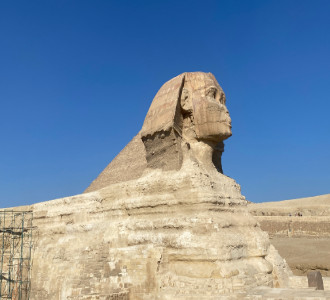
While not officially part of the Great Pyramids, the Great Sphinx sits in the heart of the Pyramid Complex, and is believed to have been constructed and designed by Khafre to watch over his final resting place – with the Great Sphinx standing alongside the pyramids as one of Egypt’s natural and incredible wonders.
Carved out of natural Granite, the incredible Sphinx sits 20 metres high and 73 metres wide and has the head and cloth of a man – and the body of a lion, in what is believed to be the form of a sun god (which is very fitting for Egypt) known as Ra-Horakhty, with the great sphinx designed to face the rising sun to absorb its power during the day.
While like some of the pyramids the Sphinx has suffered from vandalism and depletion – with the nose and beard famously removed in 1378 after invaders found locals worshipping it, it sill stands today as a debated archaeological mystery with some even suggesting it contains a secret passageway into the Pyramids – what is clear though is that it stands as a great and proud symbol of the Egyptian Empire and encapsulates and guards the incredible wonders of the world in its midst.
The nightly pyramids Sound and Light Show:
Alongside exploring and seeing the mysteries and beauty of the Pyramids at sunrise, during the day and at sunset, we’d recommend making time for the nightly 7pm sound and light show at the Giza pyramids – which allows you to see the great wonders lit up and projected upon as the Sphinx recalls their history, construction and splendour.
While another thing that you’ll have to pay for separately as you explore the wonders, the nightly light and sound show allows spectators to sit in front of the Pyramids and have the key parts of the pyramids design highlighted to them, making for an incredible way to top off a visit to this ancient, historical and beautiful wonders of the world.

How long to stay:
While you can cover the whole of the Giza Pyramids in a couple of hours – we’d recommend allocating a full day to explore the wonder – beginning with a sunrise over the great pyramids and giving yourself enough time to explore the whole of the three pyramids – including venturing inside – and the Great Sphinx and the Giza plateau – before grabbing a bite to eat and taking in both the incredible sunset over these stunning wonders of the world and staying to watch the always entertaining Sound and Light Show from 7pm.
Top Tip:
Alongside making sure you get there for sunrise, and avoid visiting on the peak days – it’s an unfortunate shame that while the Pyramids are a true wonder, they also attract a lot of tourists – which in turn attracts a lot of ‘helpers’ – which can be either scammers, fake guides or pickpockets.
While there are tourist police that patrol the site of the wonder – easily identified by there black or white police gear – you will undoubtedly find yourself offered a camel ride, offered a photo or offered an ill-informed tour at an extortionate price – so it’s advised to stay well away from them.
It’s also advised – and especially for solo female explorers – to be extra careful about both accepting advice and assistance from helpers and keeping an eye on both your belongings and yourself.
Yet despite this, as long as you have your wits about you – the great pyramids are a truly unique wonder – and we’d advise as a further top tip to ensure you soak in every second exploring these incredible ancient wonders of the world.
Cost:
Having made you way to Cairo – we’d recommend hoping in an Uber for a day tour and being ferried between the pyramids to make your life and experience there as easier as possible – with the cost for a full day Uber at the pyramids likely coming in at around 250 Egyptian Pounds – roughly #15 USD.
From there and having made your way to the pyramids and the Giza Plateau – which are open from 8 – 4 every day, you can expect to pay 120 Egyptian pounds roughly $8 for entry to the whole pyramid complex which includes the Great Sphinx statue which makes a perfect photo spot.
With access to each of the three pyramids interiors – depending on which one’s are open ‑coming in at 100 Egyptian pounds ($6 USD) for the Great Pyramid, 40 Egyptian pounds ($3) for the Pyramid of Khafre and 25 Egyptian pounds (roughly $1.50 usd) for the Pyramid of Menkaure – just be sure to get your tickets early as only 300 are sold each day to enter the pyramids.
As a quick tip – be sure to that when you buy your initial entry tickets you also get your tickets to the interiors as well, as it can be a confusing system as to what you buy when given the ticketing system — you don’t want to find yourself queuing in the heat again for inside tickets as it can take the shine off your visit.
Fun Fact:
Despite popular belief there are actually 9 pyramids that can be seen in Giza – with the Khufu pyramid and the Menkaura having three smaller queen pyramids, which combined with the stunning Pyramid of Khafra – gives you a myth busting and fun fact of 9.
For those not impressed by the number of pyramids at the wonder, you can also take in a panoramic view of the Pyramids and witness both the oldest and only remaining wonder of the world from the nearby Pizza Hut.
Best photo spot:
There’s two great photo spots to get the panoramic views of the Pyramids – the first and unquestionably best is at the Giza plateau – at the aptly named Giza Panorama photo spot, where you can soak in all of the beauty of the great pyramids – and we’d recommend getting there for a sunrise – when crowds are at a minimum and at sunset – where the sun setting makes and incredible photo opportunity – with their being plenty of great spots for photos – with the further you walk down the plateau the better the view.
Alongside the Giza panoramic spot – we’d recommend making some time at the Sphinx as well where you can get a full pyramid photo of the Great Pyramid – complete with all the necessary novelty photos holding the pyramids and kissing the sphinx.
As soon as you head to the two photo spots, don’t be put off by the crowds – the further away you walk from them the better the views and the thinner the crowd, and we’d really recommend keeping you cameras away from ‘helpers’ – both of which can detract from giving you both the perfect photo and from your experience as you soak in one of the greatest wonders of the world.