The Great Wall
Table of Contents
Show
Overview:
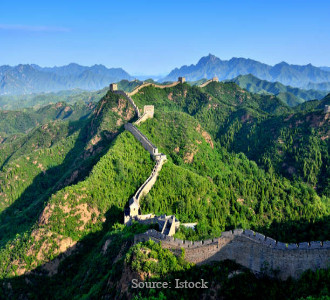
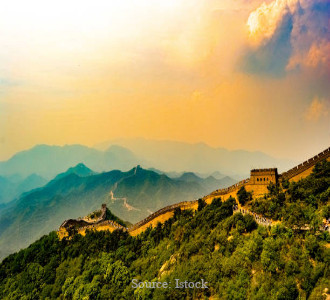
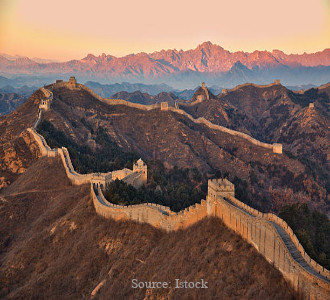
The incredible Great Wall of China remains a symbol of the power and wealth of the Chinese Ming Dynasty, with the wall once stretching over thirteen thousand Miles and despite losing 30% of it’s original structure still remining as the longest wall in the world, with the stunning backdrop of the Jundu Mountains, the intact watchtowers and the rivers and lakes of the yellow sea
that surround the wall, making the Great Wall of China not only a one of the greatest hikes and sights in the world, but a truly unique and awe-inspiring wonder.
Believed to have been constructed during the first unification of China in 221 BC, the wall was constructed by more half a million people using forced Labour and served as a series of fortifications and battle structures to both fortify China again invasion, ease trade and passage along the Silk Road, and served as a form of communication – as various gunpowder signals, flags and lit beacons would be used to pass message along the wall and across regions in China.
Although the wall is not continuous and is broken into multiple sections – allowing for mountains and terrain to strengthen it, it is in theory possible to walk the whole of the wall, although most explorers stick to 5 main sections over a course of a couple of days hiking, taking in the re-constructed sections, the original parts of the wall and where lucky camping and trekking on the wall at night, giving people a chance to both trek across and explore the history, design and beauty of this truly great wonder of the world.
Where:
The Great wall is 13, 170 miles long and at its peak in the Ming Dynasty stretched from Jiayuguan at China’s northwest corner all the way to Korean Border in Hushan.
Today some 30% of the wall is gone, and you’ll find the wall in the main sections has been reconstructed, with the best bits to see it being in the North of China based out of Beijing – although there’s nothing to stop you from taking on the whole trek of the wall if you wish to see it all!
Getting There:
With the wall being thirteen thousand miles long, there’s lots of ways to get there – and many accessible points to begin exploring it from !
But for the main 5 sections of Badaling, Mutianyu, Simatai, Jinshanling and Jiankou — which will let you experience and explore the wall either on day trips or as hiking (including camping and trekking on the wall at night) the easiest and most efficient way of getting to the wall is by basing yourself in downtown Beijing and then taking a train to Badaling or Mutianyu and hiking onward to the sections of Jiankou, Jinshanling and then Simatai – they are only a couple of km apart and it saves both time, money and enduring what can be unpleasant bus rides if you head directly for each section — we’d definitely recommend getting on a bullet train as it’s cleaner, faster and easier if possible.
For each individual section you can get there by:
For the Badaling section, which is the most popular and re-constructed you can grab the S2 train from Beijing’s North Station and head for the easily named Badaling Great Wall Railway Station – with a trip on the bullet train taking 40 minutes – compared to a 2 hour bus drive and costing 20 CNY – just be sure to book in advance especially during peak season.
For the Mutianyu section, there’s no direct train – so you can either grab a train to Huairou train station (about 1 hour) and then grab a taxi – or take your chances on one of the bus with bus 867 Dongzhimen Wai Bus Station heading there – be warned though it’s on a fixed schedule.
For Simatai — We’d really recommend heading here and spending a day as you can walk on the wall at night – the best option is to a tour if not doing this section as a hike – simply because not only can you get on the wall in the evening (they take care of your passes) but it also means you can head back to Beijing in the evening, — for those wanting to head there by public transport grab the underground from Dongzhimen to Beijing Qinghe Station then on to Gubeikou station before jumping in a taxi to the start of the Simatai section of the wall.
For Jinshaling the best option is take the underground to Wangjing West Station and then take a bus to Jinshanling (luanping) – expect the buses to be irregular in schedule and a little cramped – be sure to try and get a seat by yourself as well, as you could end up inhaling multiple bits of aliva from the passenger next you if you’re unlucky.
For Jiankou, while there is no direct train option – we’d really recommend taking the route to Mutianyu and then hiking a short 2 and a half mile trip east to Jiankou, you’ll see the crowds dissaprear and some fantastic scenery – it’s much more pleasant than speading 2 extra hours on a bus.


Best time to Visit:
The scenery of the Great wall changes with the season – so whatever time of the year you visit you can expect and experience the beauty of the surrounding forets and trees – with any time in Autumn where the leaves turn various shades of red and line the wall always a fantastic time to visit.
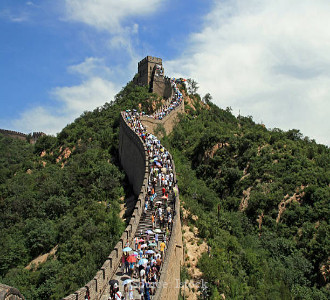
If you’re heading to Badaling and /or Mutianyu expect it to be crowded at any time of the year, — but be sure to avoid visiting the wall during Chinese New Year in February, the May day holildays and the National day holiday that take place in the first week of October – as the capacity of the wall will likely be reached.
We’d also suggest skipping a visit during peak summer time of June and July – when not only are crowds at a maximum, but also the heat in China reaches it’s peak – so based on the above the best time to visit would be either in April or the months of September or October – where you can enjoy minimal crowds (for the wall !) pleasant weather and stunning scenery.
Explore:
At 13,170 miles – there’s a lot of the Great Wall to Explore ! – and chances are unless you have an unlimited budget and a year and a half to spare you won’t be able to explore it all, so below is advice on the main sections, the best treks and the most unique things to do outside the tourist hot spots – to give you the best chance of uniquely exploring this wonder of the wall.
Any trip to the great wall, will require planning, and for those taking on more than a week long hike – be sure to check you have your permits from the Chinese government in order and appropriate hiking and camping gear.
Main Sections: (Time required no more than one day)
The following are the 5 main section of the walls that alongside being tourist hotspots, are the most in tact and accessible, with no more than a day required to visit each one:
The Badaling Section – The main and most crowded section, Badaling is the most re-constructed and preserved section of the wall – with very little of it left intact. For anyone doing a day tour from Beijing this will be the section you can visit as it sits just 45km away from Beijing, with this part of the wall having a cable car, a tobbogen, and even bears in attendance to occupy tourists.
Despite it’s focus on appealing to the masses, and numerous vendors that dot the wall, this part of the wall is still unique and gives a great taste of the wonder of the wall – with it being a postcard picture section of the wall for those quick shots and offering walkable treks both north and south – after which tourist crowds will drop off.
The section in total is just shy of 8 miles – till you begin hitting terrain and broken sections of the wall, with 18 watchtowers along the wall currently available to be explored – we’d recommend heading for the less crowded ones at either the north or South Section – and making sure you hike up the ridge that the wall occupies – allowing you to look back on the long and winding wall to truly appreciate it’s scope and length.
Just be warned that while there are direct trains and buses to the Badaling section, it’s advised to get there early as there are crowd limits of 65,000 which fill up fast in the Badaling section – as it is incredibly popular – and for those on a tight time scale, this is the perfect spot to experience the unique wonder of the wall.
The Mutianyu section – the second best preserved and intact section, the Mutianyu section also sits just outside Beijing and is again incredibly accessible by train (45 miles from downtown Beijing), with this section being idle for those who want a spectacular section of the wall to explore for a day without the tourist crowds and traps of the Badaling section.
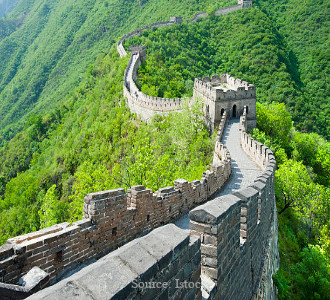
The 3 mile Mutianyu section has magnificent and still standing fortifications – including 20 unique watchtowers that date back to the 14th century, and also visitors to stand on top of the wall after a small trek up a narrow pathway, which allows for stunning panoramic views of the wall against a forest backdrop that stretches for as long as the eye can see – for those wanting a classic yet slightly less crowded great wall experience – this is the spot for you.
The simatai Section A truly beautiful and unique experience and not to be missed – the Simatai section is much less crowded than the previous two sections, and while underdeveloped in reconstruction still maintains the same unique charm that it had upon its construction – with almost 1 and a half miles of the wall including , which dates back to the Ming Dynasty, still standing in its original state.
For the rest of this section of the wall, which is 4 miles long in total, there is lots of great hiking, including a chance to stand atop of the wall, and trek to a reconstructed old town of Gubei – giving explores a chance to see how ancient China both used and lived near the wall.
The Simatai section also has a unique highlight, in that it is one of the few legal spots in which you walk along the wall at night – where a beautiful light pathway against the background of foggy but visible stars make for not only a magical experience, but as you trek along the still standing ruins of the wall from centuries ago – an experience that allows you to experience and understand the history and wonder of the wall – one definitely not to be missed.
The Jinshanling Section – A place for those who have a day and want to explore an isolated and quiet section of the wall that retains the charm and history of when the wall was constructed while also having a fantastic, reconstructed section.
Found 2 hours north outside of Beijing , the section is set against a backdrop of hills, trees and wild terrain, making it a unique place to experience what the wall is truly is – and as it stretches for 6
miles and features more than 50 watchtowers, it’s a great place to spend a day exploring a unique section yet charming part of the war at your own pace – and if you’re lucky by yourself.
The Jiankou Section - The most untamed section of the wall – this is a spot for those who want to experience the current state of the wall, but be warned it’s not complete or officially opened to solo travellers – so you’ll need solid hiking boots and (at least officially) a local guide to enjoy it in a stress free manner.
Stretching for 10 miles, the Jiankou Section is also part of the fantastic Mutianyu to Huanghuacheng trek – and we’d advised taking it in on one of these hikes, which can be done in a fully day, for a fuller experience, as you’ll find the wall stops abruptly in places and rises in steep sharp rises — which can make it a little tough at times for exploring – and the terrain while beautiful in summer can be a bit gloomy — especially if its wet windy.
Treks:
Alongside the sections, the great wall also has a series of treks that can range in length from days to weeks, as you explore the 13 ‚000 miles of the wall in a unique fashion. For those really keen on understanding and exploring the wall, taking on one of these treks is something you truly can’t miss on.
While you can hike from the sections highlighted above in a day, below are the top 4 1–2 day hikes at the wall that should be taken on for a truly unique and enriching experience of this wonder of the world:
Jinshanling to Simatai (2 days):
A trek that features all the hihglights of a great wall trek – the old and the new the Jinshanling to Simatai trek allows you to trek in less crowded but restored areas of the wall and against the backdrop of green forests and wild terrain in almost untouched and unrestored sections of the wall.
While doable as a long day trip for Beijing – the distance is 11km – but allow for extra distance as you explore the watchtowers and the steep ascents, we’d recommended making it an overnight experience as you start off with a train trip to Jinshanling and being your trek east walk along the wall at night in Simatai before spending the night and then either trekking back or catching a bus back.
Gubeikou to Simatai (2 days)
For those who fancy themselves true explores and are able to start off extra early, you can start from the section of the wall at Gubeikou and hike to Jinshannling following the route above for the Gubeikou to Simatai hike which can be done over 2 days including either a hike on the Simatai section in the evening of the 1st day or campaign at Jinshanling on the wall itself – and then making your way either further along on the wall on the second day or heading back to Beijing.
IN addition to the beauty of the Jinshanling to Simatai hike, this hike also includes the queue section of Gubeikou, with a series of ancient villages, tombs and artifacts that allow you to delve deeper into the history of the wall and those who used to and still do live here, with the full beauty of the culture, history and the varying sections on display for explorers who trek this route.
Mutianyu to Jiankou (1 day)
An incredible day hike, the Mutianyu to Jiankou is a tough but incredibly rewarding hike that takes from an ancient village on the wall in Xizhazi to the Mutianyu section of the wall, as you traverse re-constructed parts and wild terrain where the wall drops off, against the backdrop of mountains, lakes and river – for a spectacular hike along not only the wall but against stunning nature, in a true contracst of the beauty of the wall.
Achievable in one long day, you’ll have to get 50 miles out of Beijing on train to the foothills of Xizhazi to start the hike – and then head west, but for those who want to experience the ‘real wall’ away from crowds – this day hike is the one for you.
Shanhaiguan to Laolongtou (the wall meets the sea – 1 days):
The ultimate off road explorer multi-day hike, the Shanhaiguan to Laolongtou is only 1 and a half miles long, but allows you to pass not through unique village towns but also see the end of the wall, where it meets the sea at Laolongtou, for a truly unique experience.
Achievable as a day trip – if you leave early enough, you need to head a few hours out of Beijing to the town of Shanhaiguan and pick up the wall at the spot of the pass under the heavens ‑a heavily fortified gate – from here it’s a gentle stroll with the sea breeze in your hair which brings you to the Old Dragon Head’ – the place where the wall meets the sea and the official end of the wall – to experience and take in a spot of the wall that few venture to.
Unique things to do:
Alongside trekking along the wall, both during the day and the night, there’s 4 unique experiences on the wall that can further add magic to your trip, while some of them may sound corny, you can’t miss them on the wall if you’re truly looking to explore it:
Take a Toboggan trip – as strange and odd as it may sound, you can slide down the Great Wall in a Toboggan – and it’s a lot of fun. Available for CNY 120 at either Badaling or Mutianyu it’s a great way to both reqard yourself after a long hike and get your adrenaline pumping as the beauty of the wall unfolds before you as you zip down at great speed.
Night Trek – while a lot of the wall activities are rightly focused on trekking, there’s one unique experience which often escapes explorers – a trek along the wall at night, with the Simatai section of the great wall, which sits 80 miles away from Beijing available to allow explorers to hike on the wall under stars and with the aid of lamps for a truly unique and not to be missed experience.
Camping on the wall – For those taking on long treks or who just get sick of hotels, you can camp on the wall at Jinshanling, where a legal camping base sits and offers respite for those taking on multi day treks – and for those who don’t fancy trekking a tent and sleeping bag with you, you even have the option to hire campaign equipment from the Jinshanling camping base.
The Huangyaguan Great Wall Marathon Race – for something completely unique and off the beaten track, every May 3 hours outside of Beijing in Ji Country on the Huangyaguan section of the wall a marathon along the wall takes place !
Running since the turn of the century, the Marathon takes in the stunning scenery of the wall, Chinese villages and re-constructed and decayed parts of the wall in the middle of spring, with the race offering a challenging (and hopefully quick) unique way to see the wall, just note you have to register in advance and it’s a 42km marathon – so you don’t have to run the length of the wall.



How long to stay:
This one is truly up to yourself – based on how much of the wall you wish to Trek! – while it is possible to see the wall on a day trip from Beijing, for a stay where you get to explore
the main 5 sections and camp and trek on the wall at night this can be done over 2 / 3 days – with an extra day for the trip to see where the wall meets the sea.
Top Tip: While there are many walking spots given the length of the wall, very few people who visit the wall actually experience anything outside of Badling or Mutianyu – so we’d strongly recommend setting a few days aside to walk not just those two sections, but also experience the beauty of:
- trekking at Simati at Night
- camping under the wall in Jinshanling
- Taking on an additional trail listed above – based on your location and time.
- hiking to the ‘end of the wall’ at Laolongtou where the wall meets the sea
These three experiences will truly set you apart from the crowds and tourists and can all be done over the course of a busy week, which alongside the marathon and Tobogganing down the wall – will give you a truly unique experience of this wonder of the world !
Cost:
Again this is one truly up to yourselves, what we’d suggest though is to avoid a tour – they are normally overprice, restrictive and don’t give you a true experience of the wall.
We’d suggest budgeting 100 CNY for travel one way to the wall for one of the main 5 sections, 50CNY for entrance fees, and a further 500CNY for each day you spend hiking on the wall to account for food, accommodation and fees for camping / hiking on the wall at night – meaning the average cost of a wall trip is 150CNY as a base and 500 CNY for each day spent hiking.
Fun Fact:
Alongside the top tip of trekking on the wall at night in Simatai, camping on the wall at Jinshanling and taking part in the great Huangyaguan marathon in May, it’s a fun fact that the wall despite it’s length and grandeur is not visible from space – at least with modern telescopes – not was it built to repel the Mongols (or dragons if you believe Hollywood) – however despite the debunking of these two myths, the wall is still spectacular and a truly unique wonder of the world.
Best photo spot:
While this again depends on the route you take – as more unique photos open up the further you venture along the wall – chances are any trip to the wall will take in the Badaling section and if so you can get the perfect postcard snap looking along the wall from the high tower of Number 8 – which is handily accessible by a cable car
For those after something unique, make sure you take in the Simatai great wall walk, for a snap lit by lights, against a backdrop of both the wonder of the wall but also the night stars, for a truly special photo of this wonder