The Red Fort
Overview:
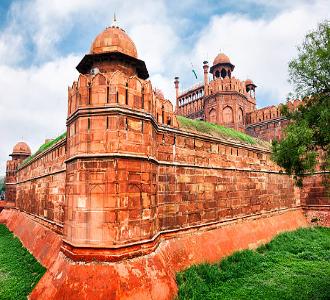
The Symbol of India’s Independence the incredible sandstone Red Fort was the home of the Mughal emperors and stands today as not just a lasting monument filled with the storied history of India, but as a truly exquisite complex with pristine Marble Palaces, great halls, a bustling Bazar and a tranquil garden, making it not just one of the great symbols of India but also a truly astonishing and worthy wonder of the world.
Officially completed in 1648 and conceived by the emperor Shah Jehan when he moved the Indian capital from Agra to Delhi, the Red Fort has undergone multiple attacks, with the Persians attacking the fort in 1740’s, the Maratha kings occupying the fort in the 1750’s and the British taking it over in 1857 – which unfortunately meant that parts of the Red Fort including the fantastic Silver ceiling from the Diwan-i-Khas room, which was melted down to pay for War by the Maratha’s and the Iconic Peacock throne which was lost in the 18th Century are sadly absent from the Red Fort.
Yet despite this the Red Fort in its current state still remains a true architectural and beautiful wonder, with the remaining rooms, palaces and halls all offering a unique insight to the storied history of great Indian emperors, and the nightly video and light show providing a journey into the red forts significance and importance in India Culture which is also reflected every August the 15th when the Flag of India is raised at the fort to celebrate India’s Independence – meaning that the Red Fort is both a stunning and storied monument to India’s past, present and future and a truly beautiful wonder of the world.
Where:
The red Fort is found in the capital of India, in New Delhi – with the old Delhi region officially ending at the start of the Red Fort, it’s easily seen and found by Tuk Tuk or Metro from anywhere in the capital.
Getting there:
The easiest way to reach the Red Fort is either by Tuk Tuk or Taxi from Delhi – just hail one down and tell them the Red Fort – it should cost around 8Usd or 600 Rupees – any more and you’re being scammed.
For those who prefer getting there by the air conditioned Metro and saving a bit of cash you can take either the Yellow line of the Metro to Chandni Chowk station for 30 ruppees and then walk about 500 metres to the Red Fort – or jump on the Delhi Metro Heritage Line (Violet Line) and head to Lal Qila Metro Station which will drop you off right by the Red Fort.
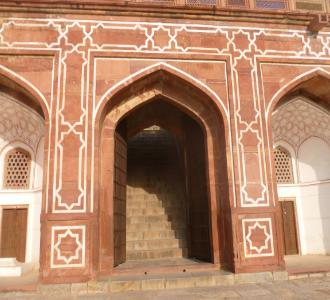
Once at the Red Fort you’ll then need to head to the Lahori Gate and having passed through security and having grabbed your ticket you’ll go through an archway into the fantastic Chatta Chowk and bazaar area and into the incredible red Fort.
Best time to Visit:
The fort opens at 9:30am every day – except Mondays – and we’d really advise booking your tickets in advance online to skip past the queues to allow you to enter early with minimal crowds and when the heat is at a minimum – do note you’ll have to be out as 4pm (we’d suggest earlier to avoid rush hour) as the red fort closes before sun down, but the grassy bank at its foot remains open through the evening to allow for the Video, light and sound show which takes place each evening at 6pm and 7:30 pm to be seen.
For the best time to visit month wise – it’s strongly advised to avoid visiting the red fort during the summer months, as the heat will take away from your enjoyment going round the wonder, instead we’d suggest heading there between September and March – when both crowds and heat will be at a minimum.
Explore:
Although the numerous invasions and sackings of the red fort means it’s currently lacking some of its former glory – including the famous Golden peacock throne – the red fort still stands proud as not just the symbol of India’s independence, but as a unique and architectural and historical wonder – with the towering sandstone walls, the numerous gateways, the intact palaces and a bustling bazaar ‑combined with beautiful gardens and incredible art give a unique journey into the power and history of one of India’s most historic monuments.
In a suggested round tour, the below are our 8 top sights to see in the incredible Red Fort palace:
Lahori Gate:
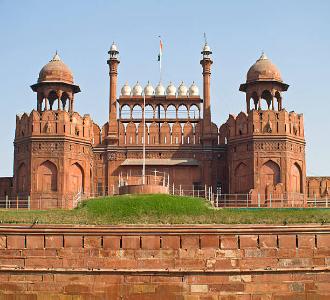
The start of your journey, the Lahori gate will be the main gate through which you enter the Red Fort and is named after it’s corresponding city, with the gate in itself being an awe-inspiring structure and once compared by the Emperor Jahan as a ‘bride’s veil.’ Although the gate has been breached a few times in it’s history and still bears some of the marks of its scarred past, its beauty still remains – and it is rightly the place not just to get the iconic main photo of the red Fort – but also the place with Indian Independence day is celebrated with a Flag ceremony and Speech every August.
Chatta Chowk
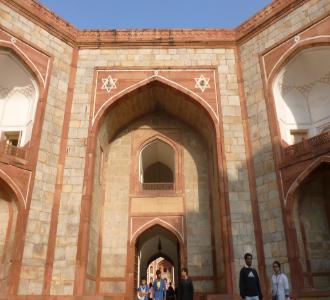
Having journeyed through the gate, you’ll come to the beautiful chatta Chowk – which was once a place for jewellers, crafts men and where salesman would gather to sell their products – including the famous Indian Silk to the royal Family. Although the market is now replaced with the Bazaar (below), the Chatta Chowk, which sits within the stunning entry archway is a place to reflect on the merchant trade and history where travellers would journey across the Silk Road in the hope of selling to the royal family.
Bazaar
As you approach the mid-way point of the archway – having gone through the Lahori Gate and the previous site of the Chatta Chowk, you’ll come up on a Bazaar with multiple goods on offer. While Bazaars dot the marketplaces and streets of Delhi, this one in particular is unique as it is government regulated – so no haggling! – meaning that for those of you wanting a souvenir from the wonder or who fancy strolling around an Indian market minus the hassle and sales pitches, this is the place for you!
The Diwan-e-Aam:
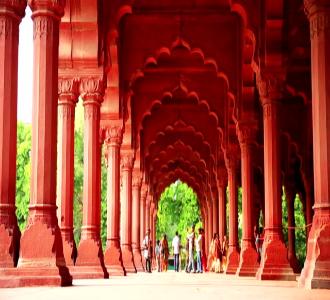
Having made your way through the arch, and grabbed a bargain or two at the Bazaar, you’ll now enter the beauty of the red fort and from its courtyard we recommend heading straight to the stunning Diwan-e-Aam – what was once the red Fort’s palace for public audience and state functions.
The Diwan-e-Aam is divided by stunning concrete pillars into four sections and is full of charm with the floors decorated by stunning Marble and the walls featuring unique carvings from the Mughal era that embodies the beauty and history of this stunning room.
Mumtaz Mahal
The palace of the emperors Shah Jahans wife that she occupied while alive (the Taj Mahal would later be built in memory of Shah Jahans wife) the Mumtaz Mahal also served as prison and army barracks and as museum. While much of the beauty of the Mumtaz Mahal has ebbed away over the course of history and as a result of mistreatment, a small room with art, painting and mirror work still remains which gives a small glimpse into what was once a beautiful place.
Rang Mahal
Once home to the mistresses and additional wives (plural) the Rang Mahal sat within the Red Fort as a palace of Colour and lights – with the outside of the building being uniquely decorated and crafted with a series of mirrors and at works – inside the Range has Marble floors, unique columns and one fo the best features of the entire red fort a marble pool which was known as the pool of paradise in which the wives and mistresses once bathed.
Khas Mahal
Next to the Rand Mahal stands the Khas Mahal, which was the palace of the emperor, as with the Rang this palace was grandly decorated with the best of the Mughal era architecture and art works, including marble floors and stunning architecture – you’ll also notice it is connected to a large tower known as the Muthamman Burj – from which the Emperor would wave and appear before his subjects on special occasions.
The Diwan-i-Khas
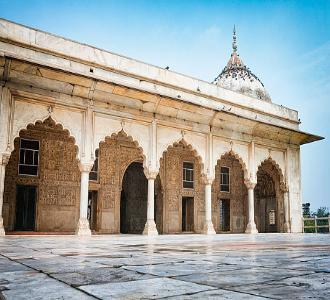
The best remaining structure the Diwan-e-Khas was the hall for private audience, where the emperor would meet fellow kings and dignitaries, against a backdrop of marble floors, stunningly crafter engravings and exquisite columns, in fact so revered was the beauty of this room and it’s magnificent architecture that it was frequently described as heaven on earth by those who visited it.
While the room maintains it’s unique beauty – its centrepiece – the peacock throne which upon its construction was worth one and a half billion pounds, and which was a truly stunning gold throne truly fit for an emperor – remains sadly absent following it’s plundering and the once iconic reflective silver ceiling was chipped away to be sold for parts to pay for war. Yet despite this the The Diwan-i-Khas remains a truly stunning building and a unique place in the great red fort.
Hayat Bakhsh Bagh
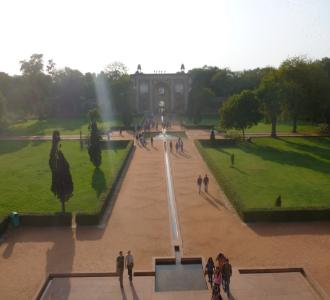
Upon exiting the palace’s, you’ll come across a magnificent garden, with the centrepiece being a sandstone sculpture that sits alongside numerous rivers which will unfortunately dry allow you to envisage the beauty of the gardens and the life that once flowed through it when the red Fort was at it’s most spectacular and which the Indian government has plans to restore. At each end of the Hayat Bakhsh Bagh you’ll find a stunning marble pavilion named Sawan and Bhadon which are still standing and which provide a spectacular backdrop against which to photograph the stunning red fort as you leave the complex and head back into the busy streets of Delhi.
Light and Sound Show
Alongside visiting the Red Fort during the day and taking your time to stroll amongst the stunning palaces, courtyards and gardens, it’s also highly recommended to return to the outside of the fort in the evening — for a light and sound show that tells the history of the red fort, its inception, the numerous wars and how it stands as a beacon for India’s independence.
Each video performance ends with the National Anthem, and is shown first in Hindu language from 6pm and then in English language from 7:30 – with each performance lasting about half an hour and best enjoyed from the gassy bank at the foot of the red fort – with a trip to enjoy the video and explore and understand the Red Fort’s significance a great way to top off a day exploring this truly unique wonder of the world.

How long to stay:
We’d recommend getting to the Red Fort early doors, as soon as it opens – and then spending a couple of hours touring both its markets and the fantastic palaces and courtyards that lie within the wonder – and then being sure to return in the evening for the light, sound and history show that lasts for around half an hour, just be sure to travel safely and be on your guard in the evenings when watching the show.
Top Tip:
It’s strongly advised to avoid visiting Delhi during the summer – to avoid the heat wave, which can make visiting the red fort a little unbearable — also whener you head to the red fort be sure to book your tickets online to avoid long queues when entering, come with plenty of water and get there as early as you can to avoid what can be at time frantic crowds
For those keen on a bargain as well, remember that the Bazaar inside the red fort is supposed to be set prices and regulated by the government, so if you find yourself haggling it’s advised to move on to the next stall.
Finally and especially for females, be sure to be on your guard when going round the Red Fort, while security is tight incidents of harassment and stolen goods have been known to occur.
Cost:
For locals and Indians the price of entry is ₹40 Rupees if paying in cash (0.5 Usd) or ₹35 Rupees (0.45 usd) if going cashless – with international travellers expected to pay ₹600 rupees (8usd) if paying by cash or ₹550 rupees (7.5 usd) if going cashless – making the red fort one of the cheapest wonders in the world to enter.
In terms of getting tickets, out of the four main gates it’s advised to head to the Lahore Gate on the west of the Fort for buying tickets on the day as it’s the most accessible – or alternatively head to (https://insider.in/lal-qila-red-fort-delhi-delhi/event) to buy your tickets online and to avoid queuing – for a much easier and enjoyable experience in entering the Red Fort.
Best photo spot:
You’ll have to get up early – but a shot of the sun rising against the red fort at it’s main gate, will give you not just a shot of the whole of the main fort but a glowing and crowd free snap of this spectacular wonder.