The Taj Mahal
Table of Contents
Show
Overview:
The monument of love and one of the great wonders of the world, the Taj Mahal stands as the best of Mughal architecture and the symbol of Indian’s rich and great history, with the Mausoleum and Great dome that sits at the heart of the Complex, surrounded by the stunning minarets, mosques, fountains, and gardens being not just a symbol and representation of true love, but one of the most iconic and unique wonders of the world.
Built in the 17th century by the fifth Mughal Indian Emperor shah Jahan, the Taj mahal was constructed over 20 years by some 25,000 slaves as a dedicated and intended resting place of the emperors beloved wife, with the emperors plans to build his own black Taj Mahal opposite across the Yamuna river never materialising – and the Emperor now believed to be resting alongside his beloved wife in the tombs of the Taj Mahal.
While the popularity of the Taj Mahal requires both constant cleaning efforts to combat the thick Indian Smog – and has seen the introduction of a daily visit limit at 40,000 to assist with the preservation efforts of the monument, a trip to the Taj Mahal, which can be seen during the day, against the backdrop of the moon and from a sunset river cruise along the Yamuna river – remains one of the great romantic experiences in the world, with the unique and stunning mausoleum standing tall as a symbol of love, architectural beauty and as a truly incredible wonder of the world.
Where:
The Taj Mahal sits on the banks of the river Yamuna in the city of Agra in India as part of the Indian Golden Triangle — once in Agra, all roads point to the Taj Mahal so you’ll find it easy to both spot it and get there.
Getting there:
To get to Agra, from either Delhi or any other Major Indian city, whilst you can get a bus, we’d strongly recommend getting a train – in a 1st class compartment, it’s a much more enjoyable experience, easily booked online and drops you off in the centre of Agra – from which you can tuk tuk to your hotel.
Once in Agra, it’s hard to miss the Taj Mahal, and you’ll find that most hotels are situated on the road to the east Gate – so you should be able to easily walk to either the east or west gate for entry.
For getting entry to the Taj Mahal, it’s strongly recommended to be at either the east gate or west gate at just before 6.00 am having booked your ticket online (go for whichever gate is closest to you based on your hotel location) – if you haven’t got your ticket online be at the gate for 5:30am to ensure you’re in the ticket queue and can get in early.
If traveling as part of a mixed gender couple, you’ll find yourself separated at the ticket office queue — as the queues are divided into Male, female and national and international travellers – and you’ll be separated again into the same lines as you queue to enter – with a series of metal detectors and security measures unfortunately necessary for anyone entering the Taj Mahal.
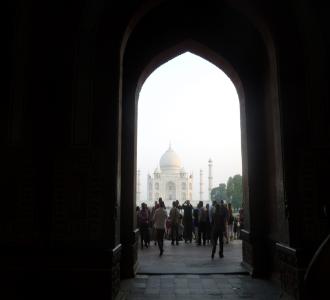
Once inside you’ll then come face to face with the wonder of the world and beauty of the Taj Mahal.

Best time to Visit:
Unquestionably first thing in the morning – with the Taj Mahal opening at 6am and for those without tickets online lines forming at both the east and west gates at 5:30 am, the earlier you visit the less crowds you’ll have, the better photos you snap and the more of the glorious sunrise you can see — all three of these things add up to a more enjoyable Taj Mahal experience – so it’s really worth making the trip early in the morning.
In terms of days, the Taj Mahal is closed on Fridays to the public – and Mondays are normally considered the best day to visit, where crowds are a little bit reduced, if you get incredibly lucky and you’re there at sunrise on a Monday you can have the Taj to yourself and a few other people.
For the month to visit, it’s advised to avoid October to March – not only is this peak tourist season, but also when the fog in Agra is at its peak so any moonlight experience will not be best viewing.
Based on the above, we would recommend visiting on a Monday during the time of the Full moon (for the night experience viewing) in April – May or September and being there at 6:00 AM sharp.
Explore:
There are 3 best ways to experience the Taj Mahal, by day, by Night and by the Yamuna River – unquestionably the main and unmissable one is by day and with an early morning trip to witness btoth the sunrise and see the wonder at a minimum. The below three sections offer advice on what to see in the Taj Mahal and the key sights to explore the wonder.
Taj Mahal by Day:
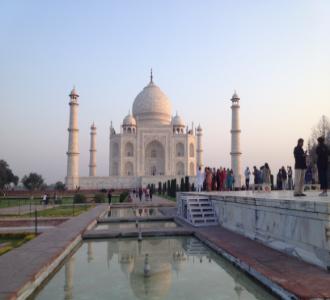
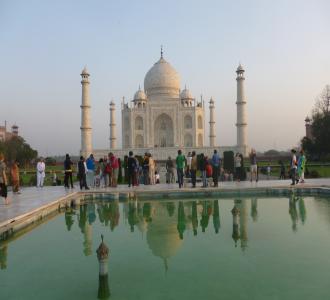
Having got your tickets and passed through the three security checkpoints, you’ll come up on the Taj Mahal for the first time — and we’d advise that instead of pausing to take it in head down the front stairs and to the reflection pool that leads to the Taj Mahal – to grab your first iconic photo at the reflection Pools.
Having taken enough photos to keep your heart content, then head east and through the gardens of the Taj Mahal to the photo spot of the Bench of the Taj Mahal – often known as the Princess Diana Bench – for that photo – of yourself on the bench with the Taj Mahal in its full glory behind you. You’ll only get a couple of chances for the photo as the queues to sit on the bench will form quickly but grabbing photos at both of these spots early can help you get photos for a lifetime with minimal crowds and real add to the wonder of your trip.
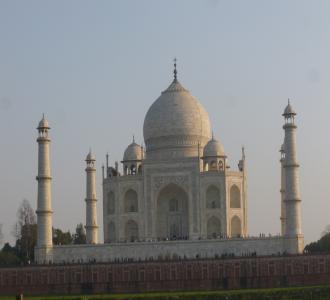
Having grabbed the photos, this is the time to take a step back and admire the beauty of the Taj Mahal – and the first thing you’ll notice is the stunning sparkling white dome which houses the tomb of Emperor Shah Jahan and his wife – with the stunning minarets and twin mosques adding to the immense beauty of the wonder. The Dome itself is 110 foot high, in the shape of a swirling onion, and is complemented with four equally impressive domes at 75 metres high each, and then four minaret towers supporting it which each contain a viewing tower at the top.
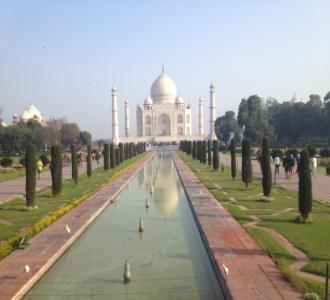
As you then journey towards the buildings, you’ll pass through the reflection pools and the gardens, with each element of the wonder not only symmetrical in its design but truly spectacular and a true testament to the power of love. With the Taj having four waterways representing the four elements of Islams paradise – water, wine, honey and milk.
As you approach the Dome itself, you’ll notice the two sandstone walls with red arches – and you’ll be required to ditch your shoes or wear shoe covering as you journey up the mausoleum itself. Inside the mausoleum, whilst being the world’s best can be a little underwhelming, with the white octagonal marble tomb at it’s centre – although the remains of the emperor and his wife sit below the Tomb area – and the Islamic writing and shining marble floor.
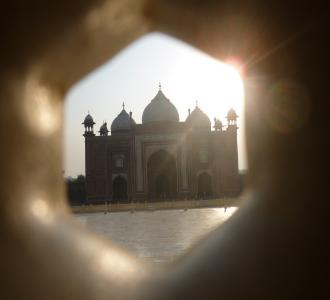
Having passed through the dome, you’ll come to a series of archways – which provide great photos for both the Taj and as a mirror reflection of yourself, and you can then come upon the two mosques which are designed to face Mecca and are again symmetrical and again reflect the beauty of Islam and the love of the emperor for his wife in the beauty of the buildings.
As you exit the main structure, you’ll see the Yamuna River and can journey back up along the fountains, pools and guardians to the exit gate catching one last glimpse of this truly spectacular wonder of the world.
Taj Mahal by Night:
Alongside visiting the Taj Mahal during the day, you can also visit it in the moonlight – with entry to the complex, but not the dome, allowed on fie days of the month, on the nights of the full moon and two nights before and after.
While this experience can add to the romanticism of the building, be warned alongside not being allowed inside the building, there are restrictions on taking videos and you are required to follow a path to a viewing point, so wandering around is off the table.
You’ll also need to be quick to get tickets from the ticket office (see below) as there is a strict 50 person limit for each half hour slot. If possible it’s also recommended to avoid going during the months of December – March when the Fog from the city of Agra overtakes the moon and leaves for a pretty bleak viewing experience.
However that being said seeing the Taj Mahal against the backdrop of the moon can be a truly immense and unique experience, and for those visiting outside the 5 day viewing period it’s worth indulging in a rooftop hotel to catch this exquisite and beautiful sight.
Taj Mahal by River:
Finally make sure you catch the Taj Mahal from outside the grounds with the dome, minarets and accompanying four domes all visible from both the Mehtab Bagh building across the road and river from the Taj and providing a somewhat blocked but still impressive sunset viewing point – with crowds often at a minimum here at the end of the day as well for better photos.
For those who are willing to risk it, you can also take a cruise or boat tour over the Yamuna River at sunset, to see the Taj Mahal from all four covers of the river – just be warned whilst this is a stunning experience, questions remain over how legal it may be – so you’ll have to either book online beforehand for an extended cruise or take your chance with a local down by the river.

How long to stay:
There is now a strict 3 hour time limit at the Taj Mahal, but that’s more than enough to see everything – you can easily see everything and grab those famous photos in 2 hours – and the longer you stay the thicker the crowds as well.
In terms of staying in Agra and getting there, we’d suggest 3 days – 2 nights, one night to allow you to get up early and be at the gates at 5:30 if you are purchasing a ticket on the day – and to use the evening to travel to Mehtab Bagh and watch a partial sunset of the Taj Mahal and then one evening to either see the Taj at night inside the crowds or take in the moon against the Taj from a rooftop bar or Hotel Balcony.
Top Tip:
Arrive early – this can’t be stressed enough – the crowds will fill up even at snrise, but you’ll have a much more enjoyable experience if you can get yourself up early and be on of the first into the Taj Mahal, not only will your photos look better, but you’ll be able to enjoy the stunning sunrise and have more time and space to soak in the wonder of the world.
Further – if hiring a guide and we’d recommend one not just for the stories but also as they’ll be a big help in getting your photos right and will know the best spots off the beaten track for photos – just be sure to not hire one from the gates, but to get a reputable and reviewed guide online ahead of time.
Be sure to dress appropriately as well – whilst not strictly enforced the Taj Mahal is a Muslim site and one of deep religious and spiritual significance to many Indians, so make sure the knees and shoulders are covered and you apply plenty of sunscreen and insect repellent.
Finally be sure to wear bright colours – red, blue or orange especially will help you not only stand out amongst the crowds, but given you a glow against the white shade of the Taj Mahal and make your photos that extra bit special.
Cost:
Despite what you’ll be told be tour guides and by a number of online blogs – there are tickets available online and you can purchase them at: [https://www.asiagracircle.in/] – online bookings are also the best way of entry following Covid, so it’s advised to book early as a current visitor cap of 40,000 is currently in place to protect the preservation of the Taj Mahal.
For those who hate the internet, you can also buy tickets at the gate – and we’d encourage you to be at the gate of entry at 5:30am to make sure you are allowed entry with the person gap and as this will give you best chance of grabbing some sunrise and crowd photos upon entry – just be advised if you’re there as a couple or with mixed genders you will have to separate into different queue lines due to incidents of and to prevent sexual misbehaviour.
For costs, the entry for the Taj Mahal comes at 1100 Indian Rubbles – approximately $20usd for entry during the day for internationals and at 250 Indian rupees – (approximately $4Usd) for Indians – with an extra $5usd required if you want to visit inside the mausoleum.
There is also a strict 3 hour time limit in place – which is more than enough to see the Taj Mahal, but be sure to be out in time to avoid extra fees.
For those wanting to view the Taj Mahal at night from inside the area, you’ll need to book tickets one day before the viewing times – at Archaeological Survey of India office in Agra between 10am – 6pm or email circleagra.asi@gov.in or visit (https://tajmahal.gov.in/night-view.aspx) for a reservation.
Best photo spot:
Photography at the Taj Mahal can be tricky – and regardless of the day and time you go you’ll likely end up with crowds in your photos – so may need to polish up your photoshop experiences for that prized shot !
But to make things as easy for you as possible and to give yourself a better chance of grabbing those great photos – be sure to be at the gate of entry at 6:00am to be one of the first to arrive after
buying your ticket online, as the earlier you arrive not only will you get a stunning sunrise shot of the Taj but the crowds will be reduced. We’d also recommend hiring a guide from a reputable online site ahead of time, they’ll know the best spots for photography, won’t be afraid to put you first and will give you some greats shots to last a lifetime.
From here, we’d suggest there are two spots to head to first for the best photos – firstly head for the reflection pool and the fountains that line to way to the Taj Mahal’s main building – this will take you past the crowds that will form on first entry and give you a great panoramic uncrowded shot of the wonder – from there you’ll have to exercise patience as you head to the famous bench (the princess Diana bench) that gives you the iconic Taj Mahal photo of yourself and the whole beauty of the wonder – you’ll find that crowds and a queue form at this spot so the earlier you arrive the better you’re experience and your photo ! – Just be sure to wear bright colours to make yourself stand out in both your photos and against the backdrop of the Taj Mahal