
The Wildebeest Migration
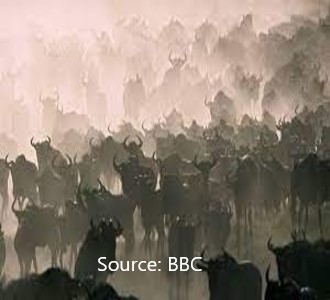
What: The greatest natural show on the planet — the Wildebeest Migration is a year round event in which millions of wildebeest and hundreds of thousands of game migrate in a circular motion across the vast plains of Africa in an endless journey seek out fresh grazing grounds, water, partners and mating and birthing conditions.
Beginning at the start of the year in the Tanzania’s southern Serengeti, the herds which includes zebra’s, gazelle’s and elands travel 500 miles clockwise through the Serengeti and up into Kenya’s Masai Mara reserve, having to navigate along the way predators, which include lions, hyenas and gators hunting in packs and the tough conditions of the plains which cause thirst, hunger and exhaustion causing the loss of a quarter of a million of the herd – making the migration not just one of the toughest journeys on earth, but also a natural spectacle like no other.
When: The Wildebeest Migration takes place all year round, so viewing periods vary based upon the season and the rainfall, July – October is considered the best period as the wildebeest cross the Serengeti plains, with December – March offering the opportunity to view the wildebeest congregating on the Serengeti plains and birthing.
Where: The Migration takes place primarily on the grounds of the Serengeti in both Tanzania and Kenya, beginning in the southern Serengeti and heading up to the Masai Mara reserve- the best viewing spots are considered to be at Ubuntu, Olakira and Kimondo – all of which require tour guides to accompany you to and all of which it is recommended to stay at for at least four days.
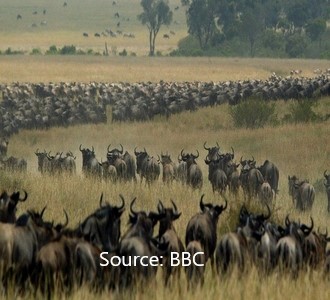
Duration: The Wildebeest Migration takes place all year round, with the viewing chances and habits of the herds varying based on the month and rainfall.
Following the traditional calendar you can expect the following in each of the seasons:
January – March: The migration will finish and then begin again from the southern edges of the Serengeti – expect to see the herds graze, birth and raise their young in these three months, with a flock of predators following them and seeking to separate the young from the adults for easy prey.
April – June: Following the raising of the young and the consumption of the graze, the herd will move into the centre of the Serengeti, followed by flocks of Zebra’s and smaller mammals, you can expect the early parts of courtship (read fights between males) to begin amongst wildebeests during this period.
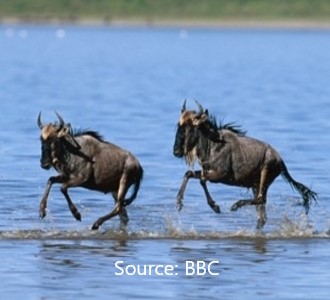
June – August – this is the danger zone for the herd, you can expect dramatic scenes as they try to navigate the crocodile infested waters of the Serengeti – including the famous Mara River where packs of lions wait on the banks to ambush any animal separated from the pack, for those wanting to watch nature at its rawest and most extreme, this is the time to head to the Serengeti.
September – December –the heard enjoys a month of quiet as they cross the border into Kenya and take time to further graze, before following the rains they cross back over the Mara surrounded by waiting cheetahs – and begin the cycle again.
Tickets: There’s no two ways about it – a trip to watch the migration will set you back, with tours starting from $3000 usd and going into the tens of thousands depending on your length and luxury.
The best advice we can give you is to pick the season and activity you want to watch and the camp (we’d recommend one of the Ubuntu, Olakira or Kimondo camps) and seek out a tour operator for your budget and time – with the Nomad Tanzania and Beyond Serengit tour companies both having excellent reputations for providing high quality migration watching experiences.
Need to Know: Whatever season you attend, be warned that there is a strong change of seeing nature at its rawest – with a quarter of a million of wildebeest losing their lives over the course of the migration you can expect to see exhausted and hunted animals at any point on the migration.
More Information: A full herd tracker, which marks the migration pattern of the animals is available at (https://www.discoverafrica.com/herdtracker/) which provides full information and updates on the movements of the migration to help you plan your trip and ensure you get the full migration experience.
