
Uluru (Ayers rock)
Overview:
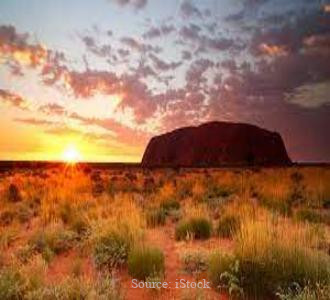
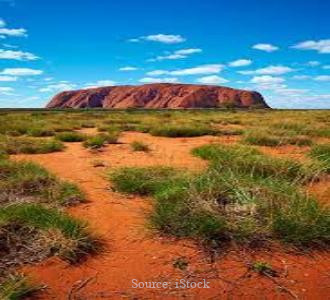
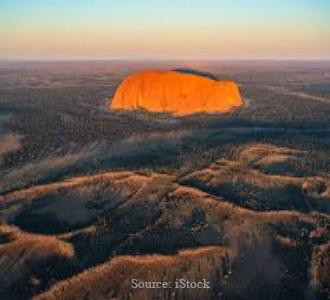
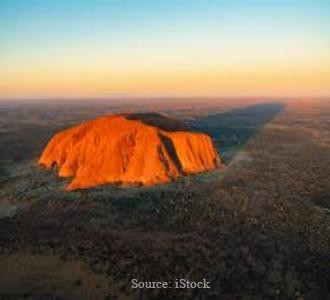
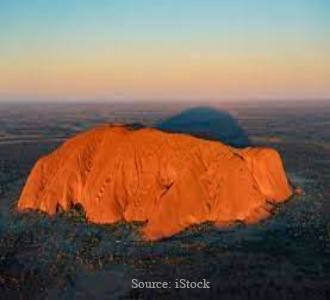
The glowing heart of Australia’s red centre, the famous Uluru which sits in the great and vast Uluru–Kata Tjuta National Park, towers 340 meters above ground and is one of the most spectacular, awe-inspiring and spiritual sights on the planet – with the famous sunrises and sunsets which see the great rock illuminate in a kaleidoscope of multiple glowing colours combined with its sheer size, clear starry nights and great and beautiful vast surrounding landscape making Uluru not just the great symbol of Australia’s famous outback but a truly incredible wonder of the world.
Rooted in the history of Australia, Uluru is believed to be part of a national Park that dates back more than 500,000 years old, with the traditional and now legally recognised owners of this land, the Anangu having called the area home for more than 30,000 years, with Uluru being the source of muck folklore and spiritual meaning for its rightful owners.
Found in the famous red sands and stunning but harsh landscapes of Australia’s centre the Uluru–Kata Tjuta National is also home to the Olgas – a series of 36 dome like towering rock formations that tower above even Uluru as well as the Walpa Gorge and a series of unique but stunning Flora and Wildlife, that all inhibit the 512 square miles of the national park.
As Uluru is now rightly permanently closed for tourists who wish to climb it, the best way to experience this incredible wonder is by getting there for the stunning sunrises and sunsets early and viewing the stunning colour changes in the rock – which sees its go from multiple shades of orange to red and purple – and gives you a chance to take in the truly incredible stunning views that are reflected within the rock with the changing of the sun.
With Uluru and the Olgas also being hike able on some incredible treks, as well as being explore on camelback and offering some of the most incredible night-time constellation and astronomy viewing on the planet, the great long domed Uluru and the Uluru–Kata Tjuta National Park are not just a stunning national symbol for Australia and the great outback, but also one of the most beautiful, spiritual and awe-inspiring natural wonders on the planet.
Where:
The Uluru–Kata Tjuta National Park lies in the heart of Australia in the famous desert plains of the outback in central Australia – with the nearest main town being Alice Springs – some 5 hours or 45o kilometres away and the nearest smaller town being 18km away in Yulura.
For perspective on the remoteness Sydney is a 29 hour drive away and is close to New Zealand than it is to Uluru, so it makes making sure you’ve got your plans in place to get there safely all the more important.

Getting there:
Most travellers will use Alice Springs as a base for getting to Uluru – before travelling on up to the town of Yulura and onwards to the wonder.
For getting there, you have a couple of options given Australia’s size, with the easiest being to fly into either Alice springs or Yulura and hire a car or get a bust onwards to the wonder.
For those flying, flights to Alice Springs are available from all over Australia – or you can choose to fly directly into Yulura airport – with flight from Brisbane a common option as well as from across the country, and then hopping on the free shuttle bust that will take you to the wonder or by hiring a car and driving to the wonder.
For those who head to Allice Springs, which serves as a major town in the middle of the outback, it’s a five hour drive to Uluru–Kata Tjuta National Park – so you can likely forget your sunrise if you go on a day trip, and chances are any bus or tour trip will see you cattled into an overcrowded bus given limited options on your trip – still for those who want this option there are a range of tours on offer in Alice Springs.
Alternatively, for those who want a bit more of an adventure on their journey to this remote outback wonder, you have the option of self-driving. While you can do this by hiring a car from Alice springs or Yulura, Uluru is a common destination of one of the greatest and most remote road trips on the planet – the incredible Stuart highway.
Stretching 1,761 miles, the Stuart highway runs all the way through the heart of Australia from Darwin (crocodile territory) in the north all the way through Alice Springs and the outback to the south of Australia in Adelaide. Travelling either north to south, or south to north – you’ll cover roughly a thousand miles to reach Uluru passing through remote wilderness, multiple Kangaroos and some of the most remote towns in the world – including Cadney Homestead with a population of 16 and Kulgera with a population of 20 – as well as the famous mining town of Coober Pedy – home of the Australian Opal — before eventually arriving at Alice Springs and then the wonder of Uluru–Kata Tjuta National Park.
While not to be taken lightly – as it is incredibly dangerous and you’ll be on your own if your break down, the Stuart highway is a truly incredible road trip – and is not called the explorers way for nothing, as you pass through remote towns, stunning scenery and the great natural beauty and outback of Australia before arriving at the incredible wonder of Uluru in the heart of Australia. For more on the Stuart Highway Click Here.
By Ghan Train:
For another truly incredible travelling experience to reach Uluru–Kata Tjuta National Park – you can go by train across the outback of Australia before arriving at Alice Springs.
Going either North to South from Darwin to Alice Springs, or South to North from Adelaide to Darwin, the Ghan train is one of the greatest train journeys on the planet that takes you down the spine of Australia and the outback in an incredible comfortable journey over 2 days 1 night as you get the chance to watch the vast Australian outback pass you by from your window.
Stopping in iconic towns such as Coober Pedy, the appeal of the train is the amazing scenery – with the starlight evenings, multiple ranges and vast flat limestones offering a truly incredible journey before you arrive in Alice Springs to travel onwards to the Uluru–Kata Tjuta National Park.
While the Ghan is also a throwback to the great travel journeys of yesteryear – unfortunately it’s prices are not and you can expect to pay anywhere between $1500 AUD to $3500 AUD for a 2 night 1 night journey – a steep price but one worth it for the incredible experience.
Best time to Visit:
While Uluru is stunning no matter the season – it’s best to avoid it in the Australian Summer that runs from October – April – as the heat and the weather can make it just too hot.
Instead we’d suggest visiting between May – August, when the weather is a cooler 20 – 30 degrees, and while this means you may miss out on the waterfall effect at Uluru it will make the hikes and walks much more enjoyable – and give you a better chance of seeing wildlife and avoiding sunburn.
For times, you need to budget at least 2 days 1 night at the wonder – preferably 2 nights, as witnessing the incredible sunrise and sunset is an experience you really shouldn’t miss out on !
Explore:
The incredible Uluru Rock within the Uluru–Kata Tjuta National Park is undoubtedly the main attraction you’ve come to the middle of the Australian Outback for – with the mesmerising sunrises, sunsets, hike and vast and beautiful desert all combining to make a fascinating, cultural and beautiful wonder to explore.
While people do come to see Uluru for a day, we’d strongly advise budgeting a couple of days – which will give you enough time to see the rock changing colour during the day, take in the incredible waterfalls that cascade down its side during the wet season, as well as take in the both the incredible Olgas and Walpa Gorge that lie within the around 1,300 square kilometres of the Uluru–Kata Tjuta National Park – for a series of bonus wonders!.
It’s also worth considering and remembering during your exploration of this wonder of its spiritual significant to the local Anangu people – which you can learn more about in the interesting Cultural Centre. While climbing the rock has been rightly banned at the wish of the Anangu people, it’s still necessary to be respectful of local traditions and cultures – and of course immerse yourself in the spirituality of this sacred site for a true Uluru Experience.
Standing at an incredible 340 metres high and presenting a kaleidoscope of different shades of colours from Orange to Red to Purple through the day with the changing sun, Uluru is truly a unique wonder and one of the great symbols of Australia, so in no particular order the below are our top things to do when visiting the incredible wonder or Uluru and the Uluru–Kata Tjuta National Park:
Observing Uluru – Sunrise, Sunset & Waterfalls:
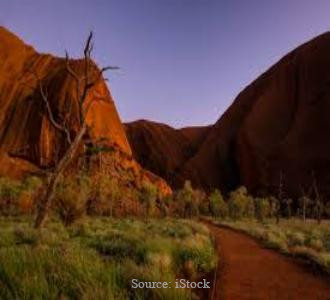
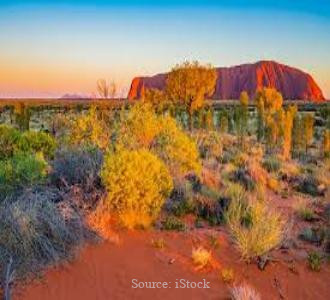
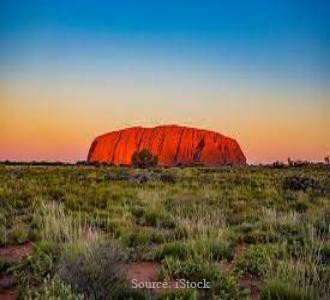
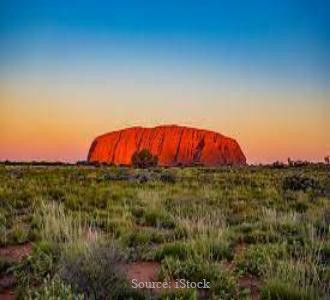
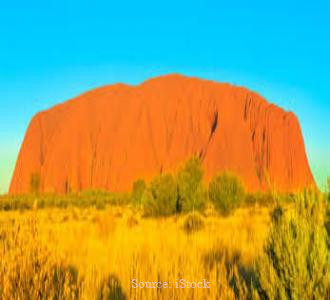
The classic and easiest way to see the wonder observing the incredible Uluru at any time, as regardless of the time of day you come to see it the towering and great rock will burn a unique shade of colours from Orange to Red to Purple – giving a glowing and illuminated appearance and making for incredible photos and a great sight as the great wonder towers in the middle of the Australian Outback.
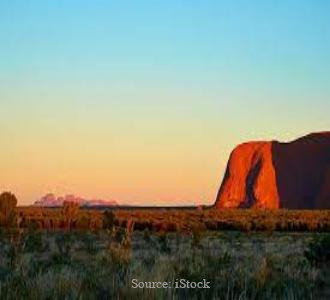
While you can easily stroll around the rock on a hike, there are a series of key viewpoints that give you the best viewing point for taking in its splendour – with the best times to witness the incredible glowing and transformation of the wonder undoubtedly being at ‘Happy Hour’ either sunrise or sunset when the famous Uluru changes from shades of almost Orange to Purple and descends into Darkness with the rising and setting of the sun.
Sunrise viewing spots:
While we’d strongly recommend giving yourself a full day to watch both the sunrise and sunset, and see how the rock changes colour over the course of the day, for those arriving at sunrise you’ll be treated to the incredible sight of the great Australian outback sun rising over the great wonder giving it life – with the great rock lighting up as Orange and Maroon for an awe-inspiring and spiritual experience.
While sunrise can be viewed from any spot around the Rock – we’d advise heading to the dedicated sunrise viewpoints for the absolute best views:
Talinguru Nyakunytjaku viewpoint:
The main viewpoint for sunrise – the Talinguru Nyakunytjaku viewpoint offers a straight on and incredible view of the rising with a series of elevated platforms for a truly incredible sight – if you’re lucky you’ll also be accompanied by a series of birds who will provide the backing track as you watch the incredible rock light up with the stunning sun and go through a range of shades of colour from dark brown to light orange.
Just be sure to get here early – well before sunrise – as this is a popular spot and you’ll find busloads of tours are dropped off here about 15 minutes before sunrise, so it’s worth getting there early to get a good spot.
Sunset viewing spot:
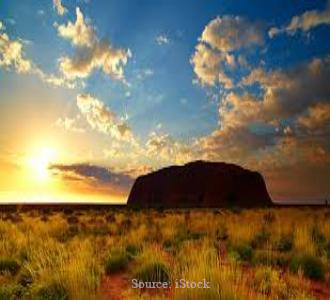
While the sunrise at Uluru is spectacular – sunset is truly something else, with Uluru quickly transforming through a range of colours and offering a spiritual and awe-inspiring sight as the sun descends over the wonder.
With the rock going from Orange, to Pink to Purple over the course of some half an hour it’s undoubtedly a popular attraction, and likewise you’ll find numerous people coming to witness the incredible spectacle of an Uluru Sunset – so be sure to get to one of the following viewing points well in advance and bring a quality camera with you so as not to miss the action:
Uluru Sunset Viewing Area
Incredibly well signposted (and well named) the Uluru Sunset Viewing area offers an incredible straight on view of the wonder at sunset – allowing you to see the classic changing of colour of the wonder and grab those picture-perfect postcard images of the illuminated wonder as it changes through a range of bright colours lighting up the outback.
While a popular spot – it also does not have capacity during the peak season to accommodate everyone, so for this reason we’d advise getting there early – or checking the time that your tour leaves – to ensure you get a good spot and can watch the incredible sunset over the immense wonder of Uluru.
Kata Tjuta sunset viewing area
For those who don’t like massive crowds – or arrive when the Uluru Sunset Viewing Area is simply too full, as a backup option we’d recommend the Kata Tjuta sunset viewing area – which will slightly further out gives a wider angle of the incredible sunset and again allows you to watch the incredible changing colour of the rock at sunset from an elevated area – giving you the best possible experience to snap some incredible photos and take in the immense natural beauty of the great Uluru Rock.
Sunset Dinner
For those with a bit more money and who fancy a romantic experience at the incredible wonder – while watching the sunset from the comfort of their own table, you have to option to indulge in a sunset dinner – with a private dining experience featuring a three course meal on option – with champagne served and an incredible up close view of the immense wonder at sunset.
Expect to pay a couple fo hundred dollars for the experience, but you’ll get to sampel a ragne of outback delicacies – including Kangaroo – before being taken after sunset to a series of unique viewing spots to sight the constellations and stars – for a truly incredible dinner in one of the worlds most romantic spots.

Waterfalls at Uluru
Alongside the changing colours of the rock at sunrise and sunset and throughout the course of the day, one further unique phenomenon to look out for at Uluru is the incredible waterfalls that cascade down the great rock during the wet season after an outback shower.
Commonly seen between November – May during the outback wet season the waterfalls are a truly unique sight – as the outback rain and the associated drop in temperature explodes the incredible outback desert into life, with the rainwater not only resulting in the rock of Uluru changing colour, but resulting in the water gathering and down heading down the various ridges of the rock creating a multiple waterfall rock around – a truly spectacular site and one very much worth seeing if you can time your visit for the season !
Field of Light
Alongside viewing the incredible sunset, there’s also an amazing permanent art exhibition at the base of Uluru that is truly spectacular and well worth a visit. Known as the field of light, the art design stretches for half a kilometre with 50,000 light antennas lighting up the vast desert before the great Uluru Rock.
While you’ll have to pay to enter – and have the option of having a bit of tea while looking out over the field — the light installation against the backdrop of the stunning night sky of the outback is truly spectacular, with the antennas creating a nerve like reach across the desert and a spectrum of multiple flower like violet blue and green colours for a truly stunning photo opportunity and experience.
Night viewing & Camping
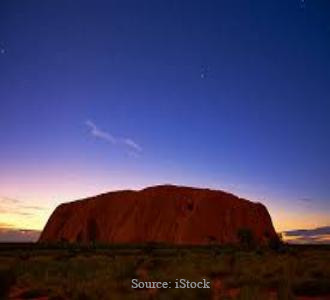
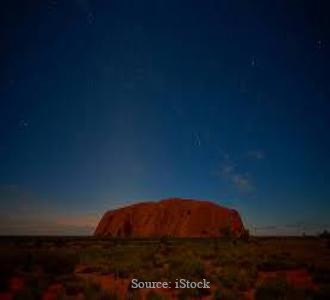
Another incredible experience at the Uluru–Kata Tjuta National Park is the amazing night sky – with the lack of pollution combined with Australia’s position giving you a truly incredible clear view of the outback sky and the chance to spot a varity of constellations., stars and planets in the Southern outback sky.
While we’d recommend coming quipped with a good camera and spending at least one night camping (complete with campfire and smores) to get to true effect – with the well found Ayers Rock Campground in particularly providing a range of options from self-tenting to cabins and caravan spots – and featuring a swimming pool, kitchen and laundry being our favourite – a chance to see the incredible Uluru rock against the backdrop of the amazing night stars of the outback is a truly breathless experience and one that will give you a night and a moment to remember forever.
Walks:
Uluru Base Walk:
Alongside viewing the rock both at sunrise, during the day and at night – and taking in the incredible waterfall and night sky that of the incredible outback, for a more up close and personal experience at Uluru you are able to take a walk around its outer base following a well defined track that offers not just a guided educational experience about different elements of the wonder – including its spiritual and importance to local Aboriginal people – but also gives you stunning views of this unique wonder.
The base walk will take around 4 hours to complete, and while relatively flat compromises 11 km of hiking in the oiutback heat, so be sure to come prepared with plenty of sunscreen, a good hat and plenty of water !. Divied into four sections the below is our advice on hiking the base walk at Uluru:
Lungkata
Starting from the Mala Carpark on the west of Uluru yyou’ll come to the starting section known as the Lungkata walk and you’ll straight away be greeted with an assortment of caves. You’ll also come up across a series of signs that detail the spirituality and history of the western part of the rock for the local Aboriginal people – including that of the famous blue-tonged lizard man who lived in the Lungkata Cave and of the legend of Lungkata who came unstuck while climbing the rock.
Kuniya Walk and Mutitjulu Waterhole -
Continuing your way round the incredible rock and taking in the many rock formations and caves on it’s side you’ll come to the next section of the Kuniya Walk and Mutitjulu Waterhole – which in our view is the most spectacular area of the rock being green and rich in life and a fantastic place to spot Kanaroos and wallabies who call the shelter and water from the rock as a home.
The area is again steeped in legend hosting the teaching cave, and the Kulpi Mutitjulu cave where previous aborofinal elders would pass down teachings to younger generations – with
the Mutitjulu Waterhole again being an incredibly beautiful spot as a permanent water spring that sits at the base of Uluru and gives life to the many animals and plants that spring up in the harsh outback – it’s a truly special and unique spot and one we’d recommend taking many photos of and taking your time while passing through it.
North-east face walk
Continuing round the Rock base and following the trail, you’ll enter the North-east face section of the rock – where you’ll see a series of signs informing you of the cultural significance of this area of the wonder – meaning photos are off limits as you head round this section.
Moving round the track you’ll pass further water holes and grasslands and the key spiritual sites of Kuniya Piti and Taputji – two unique spiritual sites as well as the Kantju Gorge where a boardwalk takes you to the actual face of the rock (where those with long arms can reach out and touch it) and where this section of the walk finishes – with this area being the longest stretch of the walk we’d advise to take your time and pace yourself and take in the many formations and informative signs that help explain to true beauty and significant of this section of the rock to explorers.
Mala Walk
The last bit of the walk starts from the stunning Kantju Gorge and takes you into a series of caves once used by the Anangu people , you’ll notice the rock face start the weave away from you as you make your way back to the starting point – but before you do you’ll also get to see a series of incredible and authentic Aboriginal art carved into the rock and which date back centuries – and which illuminate with the movement of the sun – for a further truly unique experience.
Once you’ve headed back to the starting point, we’d advise taking a few moments to look back on the rock and grab some more photos as you reflect on the last few hours spent walking round one of the most iconic, spitirual and awe-inspiring sights on the planet.
Camel Tour
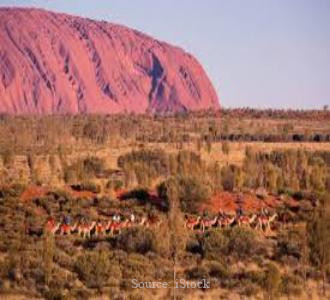
For those who don’t fancy the Uluru Base walk, there’s another option to get up close to the wonder – in the form of a camel tour. Stranding a top the bumpy camel you’ll cross the red sand dunes around the base of Uluru on a camel over the course of an hour – and get to view the incredible wonder from an elevated height – for those who want to take the came experience even further, you also have the option to take a camel tour at sunrise or sunset – giving you multiple different view of the wonder during its peak colour changing time – although we’re not sure if a camel trip first thing in the morning is the best idea !
Cultural Centre
Alongside taking in the base walk and learning of the great aboriginal culture and beliefs that surround Uluru, it’s also highly recommended to take a trip to the cultural centre that features two original aboriginal galleries and also a chance ot learn further about the Aboriginal culture and the importance of Uluru to its native people.
Featuring traditional wood carvings, painting and jewellery depicting traditional stories and that tell the tale of both the olgas and Uluru, a trip to the cultural centre is a great way to learn further about the unique wonder that is Uluru.
The Olgas:
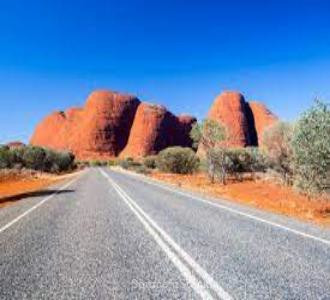
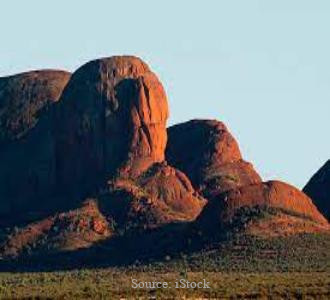
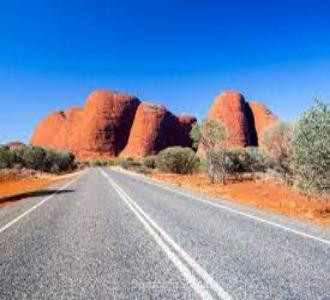
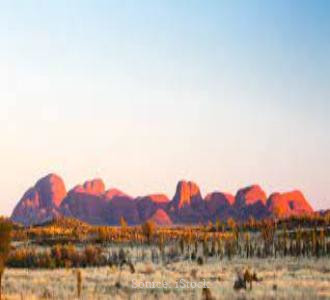
Exploring the Uluru-Kata Tjuta National Park further and 10 miles away from the rock you’ll find the famous Olgas – or Kata Tjuta – which are a series of 36 large protruding rock domes that are believed to date back more than half a billion in years.
These unique rock domes – which rise some 650 metres in height are truly incredible as they rise out of the outback’s red dirt sand and like Uluru change colour with the passing of the sun.
Making for an incredible stop off during the day at Uluru – while you wait for the incredible sunset, the best way to explore these incredible dome shaped rocks – nicknamed many heads by the Aboriginal People – is undoubtedly on foot – with our favourite walk around this wonder unquestionably being the ‘Valley of the Winds’ Walk:
The Olgas – the valley of the winds walk:
The stunning valley of the winds walk is 7.5 kilometre track that takes you through the incredible many head Olgas – passing some of the most incredible scenery of the outback and gives you a chance to get up close and personal to the incredible demos.
Home to the stunning Kru lookout and Karingana lookout, the valley of the winds trail stands off from the main carpark and take you down a sandy road with the rocks coming closer and closer into view – before you reach the incredible Karu lookout – where you will get incredible panoramic views of all the domes and the great outback.
While a number of trekkers choose to turn back after reaching this lookout – it really is worth continuing down the long path – as you’ll find yourself coming to an almost oasis like water hole in the middle of the outback – and near it a series of plants and faunas – with wallabies and kangaroos also known to be spotted drinking from it.
Moving further down the sand track, and you’ll come to more of the Domes themselves – and get the chance to stand at their base and touch them – although climbing is out of the question. IF you keep following the track round, you’ll be greeted by more stunning views and eventually climb up to the incredible lookout of Karingana – where you’ll get stunning view of the domes and a truly incredible panoramic view of this incredible sight.
Having taken as many shots as you can manage of the incredible view, you’ll be back on the track and follow it as it winds rounds up a creek and past some more lush greenery before dropping you off at the starting point.
While the walk truly is incredible and will undoubtedly be one of your highlights at the Uluru-Kata Tjuta National Park, just be sure to come prepared with lots of sunscreen and water – as it can be a bit exposed in the sun. It’s also important to remember that while this is an incredible walk, it’s also another sacred and special site for Aboriginals – with the rock formations believed to be created by spirit energy and being home to the Snake King Wanambi – so be sure to treat the area with respect as you hike this incredible trek.
Walpa Gorge
Lying in the shadow of Uluru, the Walpa Gorge is an equally stunning but often overlooked rock counterpart. While not reaching the same heights, the Walpa Gorge is stunning in that you can actually hike directly through the two tallest domes of the whole of the Kata Tjuta before reaching an incredible outback stream.
Clocking in at 2.6km, the Walpa Gorge hike is one well off the beaten track – in fact you will probably do the whole hike in silence such is the ambient atmosphere at the gorge and the rocky track that leads you to the stream is known for having an assortment of wallabies as well as colourful green flowers and plants – with the gorge offering a great chance to get up close and personal to some of the domes and take on one of the best hikes in the whole of the Uluru-Kata Tjuta National Park.
How long to stay:
Having got yourself to the Uluru–Kata Tjuta National Park we’d advise spending 3 days 2 nights – this will give you enough time to witness the incredible sunrise and sunset and the various kaleidoscopic changes of the wonder during the day – as well as take in the field of light, hike in the stunning Walpa Gorge and tour the Olgas – and giving you enough time take on a walk around the Uluru Rock.
For an added bonus as well, we’d advise spending at least one of the nights camping in the outback in the Uluru Campsite – it gives you a chance to see the stunning night sky lighting up the rock for an incredible and awe-inspiring view.
Top Tip:
The outback is hot ! – very very hot – so be sure to come with plenty of water before you enter the Uluru–Kata Tjuta National Park as it’s not available once you enter – we’d advise budgeting for at least 5 litres per person, as you will get through it.
Alongside this come prepared for hot conditions – shorts, tshirt, sunglasses, a good hat and plenty of sunscreen – as well as a good strong insect repellent.
We’d also advise if possible to make your trip there a self-drive tour – with a car with good air-conditioning as it will give you more freedom to explore the wonder at your own pace – and give you a better chance of securing a good spot at either the sunset view spot or the Talinguru Nyakunytjaku viewing point which can really make your photos or the more spectacular.
Cost:
While getting to the wonder can be a challenge – and depending on your route can cost anywhere from $150 — $3,000 AUD, once you get to the Uluru-Kata Tjuta National Park, you’ll find things pretty affordable – with entry to the park (which is available at https://parksaustralia.gov.au/uluru/plan/passes/) costing $25 AUD and allowing you to come and go as you please for 3 days – which is especially handy for those who wish to see the incredible sunrise and sunsets over multiple days.
For those not self-driving, having gotten yourself to Alice Springs you can expect half day tours – for either sunset or sunrise to come in from $70 AUD – and full day tours to double to $150 AUD – but the full day tours including free time to walk round the wonder and a trip to the Olgas – which make them a decent bargain – and you can expect to pay $40 AUD for the field of light trip as well for those who choose to spend the night camping.
For those who can’t face a walk – then the camel trips come in at $140 AUD on average but be sure to book in advance and time them for sunrise or sunset – otherwise you’ll find yourself on a bumpy camel going round the wonder in the harsh Australian outback heat – not a fun experience!
Finally, for those with a bit more money and who want a true and incredibly scenic adventure travelling to the wonder, you can get yourself a ticket from either Adelaide or Darwin on the Ghan train – and spend 2 days and 1 night on one of the worlds greatest train journeys across the immense Australian Outback – with tickets starting at $1,599.00 nd rising as high as $3500 – for a pricey but truly incredible way of seeing the great Uluru.
All in though and for those not taking the Ghan, we’d recommend budgeting $600 — $1,500 Aud for a trip to the incredible Uluru.

Fun Fact:
Although it took more than a century for the Australian Government to recognise it, the Aboriginal Australians known to themselves as Anangu have called Uluru home for at least 35,000 years – with the rock holding a special and sacred meaning in their culture and beliefs.
Best photo spot:
While the sheer size and beauty of Uluru is Stunning at any time of day – if you can time your daytime visit shortly after rainfall, which normally occurs during the Australian summer of November – May, you’ll get to witness the incredible waterfalls pouring down the wonder for a truly unique and incredible phenomenon – you may have to get up close to the Rock to truly snap it, but it’s well worth it.
But the undoubted beauty and highlight of a visit to Uluru is to witness it come alive with the changing of the suns, with the incredible glowing effect of both sunrise and sunset undoubtedly the time to grab shots of the wonder.
For sunrise we’d recommend heading to the Talinguru Nyakunytjaku viewing point, and getting a spot on one of the two viewing platforms a good hour or so before the sun rises – as you’ll find it fills up massively 15 mins before as tour groups arrive – and on clear day you’ll also be able to snap the Olgas in the distance.
For Sunset we’d recommend the aptly named Sunset viewing area – while very popular it gives you a direct line of sight to the wonder, and is undoubtedly the best place to watch the kaleidoscope of colours that the Uluru Rock reflects as the sun descends – it’s from here that the typical ‘postcard’ snaps of Uluru in all it’s illuminated glory are normally taken — just be sure to get here early as it does fill up.
Finally for those who are lucky enough to head to the wonder on a clear day we’d recommend staying up late and witnessing the incredible and clear night skies over Uluru as a bonus photo – you’ll need a good camera, but the chance to see the stunning outback night time stars and planets reflecting back down is a truly awe-inspiring experience, and a true way to see the incredible wonder of the world that is Uluru.