The 15 Best Places to witness the Aurora Borealis & Aurora Australis
The pinnacle of Bucket List Experiences, witnessing the aurora and magic of the Aurora Borealis (Northern Lights) or the Aurora Australis (Southern Lights) is a true dream come true, as you watch the sky above you light up and dance in a majestic kaleidoscopic performance in one of the most stunning phenomena on Earth.
Yet tracking down this elusive spectacle is an adventure in itself, which can take you from icy wilderness of Alaska and Canada to the remote beauty of Tasmania and New Zealand, with it requiring the right timing, and a bit of luck to gaze on these spectacular displays. So whether you’re chasing the vibrant greens and purples of the Aurora Borealis in the northern hemisphere or the elusive pink and orange hues of the Aurora Australis in the south, we’ve rounded out our top 15 places to witness the magic of the awe-inspiring lights — to help make your journey and experience of witnessing one of the world’s greatest phenomena as easy as possible:
Overview: Tromsø, often called the “Gateway to the Arctic,” is a prime destination for those wanting to experience the Aurora Borealis. Located 350 kilometers north of the Arctic Circle, Tromsø provides a mix of stunning natural landscapes, including fjords, mountains, and vast snowfields, along with the conveniences of a modern city. This vibrant Arctic town offers a range of experiences like dog sledding, whale watching, and Sami culture, making it a well-rounded destination for both adventure and aurora viewing. With an extended aurora season and excellent infrastructure, Tromsø is one of the most reliable and accessible places for seeing the Northern Lights.
Best Time to Go: September to April, with the clearest nights between December and January.
Getting There: Fly into Tromsø Airport (TOS) from Oslo or major European cities.
Expected Temperature: Winter temperatures range from -10°C to ‑1°C (14°F to 30°F).
Budget: Expect to spend $150–$300 per day, including accommodation and tours.
Best Photo Spot: The shores of Prestvannet Lake offer stunning reflections of the aurora over water.
Top Tip: Head to Kvaløya Island just outside Tromsø for less light pollution and wrap up warm, as temperatures can drop significantly at night.
2.) Fairbanks, Alaska, USA
Breath taking scenery
Overview: Fairbanks, Alaska, is one of the best places in the world to see the Northern Lights due to its location directly under the auroral oval. This lively frontier town provides a perfect base for aurora chasers, with a combination of natural beauty and various cold-weather activities such as snowmobiling, hot springs, and wildlife viewing. Fairbanks enjoys frequent aurora activity and offers clear skies for much of the aurora season, making it a top choice for travelers seeking a reliable aurora experience. The Chena Hot Springs is a particularly popular spot, where visitors can soak in warm waters while watching the lights dance overhead.
Best Time to Go: August to April, with peak sightings in December through March.
Getting There: Fly into Fairbanks International Airport (FAI), with direct flights from Anchorage or Seattle.
Expected Temperature: Winter temperatures range from ‑30°C to ‑15°C (-22°F to 5°F).
Budget: Plan for $100–$250 per day, including tours and accommodations.
Best Photo Spot:Murphy Dome offers panoramic views with minimal light pollution.
Top Tip: Stay warm by layering up, and consider staying up late as the best auroras often occur after midnight.
3.) Churchill, Canada
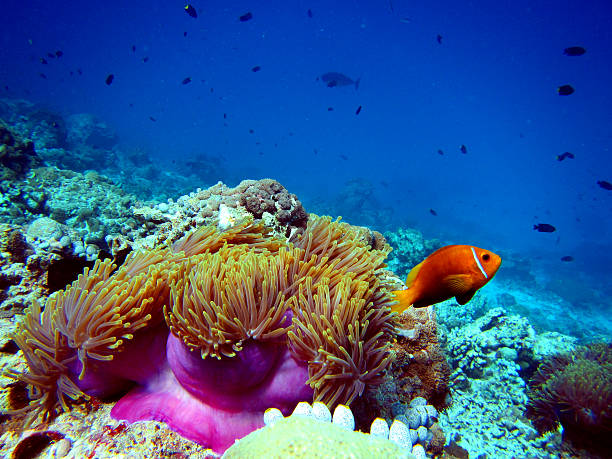
Clown Fish with Anemone
Overview: Famous for being the “Polar Bear Capital of the World,” Churchill, Canada, also offers incredible opportunities for Aurora Borealis viewing. Located in northern Manitoba along the Hudson Bay, Churchill’s remote setting provides dark skies with almost no light pollution, making it one of the best places in North America to experience vivid aurora displays. In addition to the Northern Lights, Churchill offers visitors unique wildlife encounters, including polar bear and beluga whale sightings. While getting to Churchill is part of the adventure, the combination of wildlife and aurora viewing makes it a bucket-list destination for travelers.
Best Time to Go: January to March, when the skies are darkest and clearest.
Getting There: Fly into Winnipeg and take a charter flight to Churchill.
Expected Temperature: Winter temperatures can dip to ‑30°C (-22°F) or lower.
Budget: Expect to spend $200–$400 per day, including accommodations and wildlife tours.
Best Photo Spot: The banks of the Churchill River offer stunning aurora reflections.
Top Tip: Bring extra camera batteries, as cold temperatures can drain them quickly.
4. Abisko National Park, Sweden
Overview: Abisko National Park, located in Swedish Lapland, is renowned for its crystal-clear skies and perfect conditions for viewing the Aurora Borealis. Thanks to a unique microclimate that creates unusually clear skies, Abisko has become one of the most consistent locations in the world for aurora sightings. It is home to the Aurora Sky Station, one of the best spots for Northern Lights enthusiasts, offering guided tours and breathtaking views of the night sky. Abisko’s rugged wilderness also offers opportunities for winter sports like cross-country skiing and snowshoeing, adding to the appeal for adventurers and nature lovers alike.
Best Time to Go: November to March, with consistent clear nights.
Getting There: Fly into Kiruna Airport and take a bus or train to Abisko.
Expected Temperature: Winter temperatures range from ‑20°C to ‑5°C (-4°F to 23°F).
Budget: Plan for $100–$200 per day, with higher costs for guided aurora tours.
Best Photo Spot: Aurora Sky Station on Mount Nuolja offers panoramic views.
Top Tip: Book a chairlift ride to the Aurora Sky Station for the best views, and dress in layers to stay warm in the cold mountain air.
5.) Yellowknife, Canada (Northwest Territories)
Overview: Often referred to as the “Aurora Capital of the World,” Yellowknife is one of the top destinations globally for seeing the Northern Lights. Situated on the shores of Great Slave Lake, this remote northern Canadian city offers clear, unpolluted skies and frequent aurora activity, making it a magnet for travelers looking for a reliable aurora experience. The flat landscape around Yellowknife provides unobstructed views of the night sky, while its cold and dry winters enhance the clarity of the aurora displays. Visitors can also enjoy Arctic experiences such as ice fishing, dog sledding, and snowmobiling, adding to the excitement of an aurora trip.
Best Time to Go:August to April, with peak visibility from November to March.
Getting There:For the easiest option Fly into Yellowknife Airport (YZF) from major Canadian cities like Edmonton or Calgary — or for those who fancy a longer journey, consider taking the incredible via rail train from Vancouver to Churchill over the course of 3 days for one of the greatest train journeys and adventures on the planet.
Expected Temperature: Winter temperatures range from ‑40°C to ‑15°C (-40°F to 5°F).
Budget: Plan for $150–$250 per day, including tours and accommodation.
Best Photo Spot: The shores of Great Slave Lake offer a perfect foreground for aurora photography.
Top Tip: Look for local aurora alerts and stay patient, as the best displays often occur in the early morning hours.
6.)Whitehorse, Canada (Yukon)
Overview: Whitehorse, the capital of Canada’s Yukon Territory, is an ideal location for witnessing the Aurora Borealis in a stunning wilderness setting. Nestled between mountain ranges and bordered by the Yukon River, Whitehorse offers a rugged, beautiful backdrop for aurora sightings. Far from the light pollution of big cities, the skies here are exceptionally dark, providing excellent visibility for the Northern Lights. Whitehorse also has a thriving arts and cultural scene, making it an appealing destination for travelers who want to combine aurora hunting with a rich cultural experience. It’s a quieter, less crowded alternative to other aurora hotspots in Canada.
Best Time to Go: August to April, with the best displays in February and March.
Getting There: Fly into Erik Nielsen Whitehorse International Airport (YXY) from Vancouver or Calgary and then hop on a tour from the city centre to the warm cabin viewing area.
Expected Temperature: Winter temperatures range from ‑25°C to ‑10°C (-13°F to 14°F).
Budget: Expect to spend $100–$200 per day.
Best Photo Spot: The shores of Miles Canyon offer beautiful framing for aurora photos — as to do the various viewing areas across the city. For a truly special experience, we recommend going with Yukon travel — who have not only a premium viewing spot on the edge of town, but a heated cabin to keep you warm during your viewing.
Top Tip: Join a guided tour for the best chance of spotting the lights, and dress warmly for long nights outdoors.
7.) Reykjavik, Iceland
Overview: Reykjavik, Iceland’s capital, is a convenient and scenic base for viewing the Northern Lights. The city itself offers occasional aurora sightings, but travelers can easily venture into the surrounding countryside for darker skies and more dramatic displays. Iceland’s unique landscape—complete with glaciers, volcanoes, waterfalls, and geysers—creates a spectacular backdrop for aurora watching. Nearby destinations like Thingvellir National Park and the Snaefellsnes Peninsula are popular spots for Northern Lights tours. In addition to aurora hunting, Reykjavik offers cultural experiences, geothermal hot springs, and a vibrant nightlife, making it a versatile destination for all types of travelers.
Best Time to Go: September to April, with longer nights in December and January.
Getting There: Fly into Keflavik International Airport (KEF), then drive or take a bus to Reykjavik.
Expected Temperature: Winter temperatures range from ‑3°C to 2°C (26°F to 36°F).
Budget: Expect to spend $150–$300 per day, with higher prices for tours and accommodations.
Best Photo Spot: Thingvellir National Park, just outside Reykjavik, offers perfect conditions for aurora photography.
Top Tip: Drive out of the city to escape light pollution, and bring a tripod for long-exposure shots of the aurora.
8.)Rovaniemi, Finland
Overview: Located in the heart of Finnish Lapland, Rovaniemi is famous not only as the official home of Santa Claus but also as an exceptional location for viewing the Northern Lights. Set against a backdrop of snow-covered forests and frozen rivers, Rovaniemi offers a fairy-tale-like setting for aurora viewing. It’s a popular destination for families and adventurers alike, with plenty of winter activities such as snowmobiling, reindeer sledding, and ice fishing. Visitors can also stay in glass igloos or cozy cabins for an immersive Northern Lights experience, where they can enjoy the aurora from the comfort of their accommodation.
Best Time to Go: September to March, with peak viewing in December and January.
Getting There: Fly into Rovaniemi Airport (RVN) from Helsinki or other major European cities.
Expected Temperature: Winter temperatures range from ‑20°C to ‑10°C (-4°F to 14°F).
Budget: Expect to spend $150–$250 per day.
Best Photo Spot: The snow-covered forests near Ounasvaara Hill provide a perfect backdrop for aurora photography.
Top Tip: Stay in a glass igloo for a unique aurora viewing experience from the comfort of your bed.
9.) Murmansk, Russia
Overview: Murmansk is the largest city above the Arctic Circle, making it a surprisingly accessible location for those seeking the Aurora Borealis. Despite being a bustling city, Murmansk offers several nearby wilderness areas where the aurora can be seen with little light pollution. In addition to Northern Lights viewing, Murmansk offers travelers a chance to explore the Russian Arctic, with experiences such as icebreaker tours and visits to Soviet-era monuments. For those seeking an off-the-beaten-path adventure in the Arctic, Murmansk provides both urban convenience and stunning natural beauty.
Best Time to Go: November to February.
Getting There: Fly into Murmansk Airport (MMK) from Moscow or Saint Petersburg.
Expected Temperature: Winter temperatures range from ‑20°C to ‑5°C (-4°F to 23°F).
Budget: Plan for $100–$200 per day.
Best Photo Spot: The hills surrounding Lake Semyonovskoye offer panoramic views of the aurora.
Top Tip: Dress warmly, as Arctic winds can make it feel much colder than the temperature suggests.
10.) Kiruna, Sweden
Overview: Kiruna is Sweden’s northernmost town and a renowned destination for Northern Lights enthusiasts. Located within Swedish Lapland, Kiruna offers pristine Arctic wilderness, including the world-famous Icehotel, where visitors can stay in a structure made entirely of ice and snow. With its remote location and dark skies, Kiruna offers excellent conditions for aurora viewing, particularly in the surrounding wilderness areas. In addition to Northern Lights, travelers can enjoy unique experiences such as snowmobiling, dog sledding, and exploring Sweden’s indigenous Sami culture. It’s a perfect destination for those seeking a mix of adventure and luxury in the Arctic.
Best Time to Go: September to March, with clear skies often in February and March.
Getting There: Fly into Kiruna Airport (KRN) from Stockholm.
Expected Temperature: Winter temperatures range from ‑20°C to ‑10°C (-4°F to 14°F).
Budget: Expect to spend $150–$300 per day, especially if staying at the Icehotel.
Best Photo Spot: The Icehotel grounds provide incredible photo opportunities with the aurora lighting up the sky above.
Top Tip: Take advantage of guided snowmobile tours to reach remote locations with no light pollution.
Aurora Australis
11.) Tasmania, Australia
Overview: Tasmania is one of the few places in Australia where you can experience the Aurora Australis, or Southern Lights. This southern island state is known for its rugged landscapes, pristine wilderness, and clear night skies, making it an ideal spot for aurora hunters. The island’s southern latitude enhances the chances of seeing the Southern Lights, especially during solar activity peaks. Visitors can enjoy Tasmania’s abundant natural beauty, including mountains, forests, and beaches, while waiting for the lights to appear. Popular viewing locations include Mount Wellington, Bruny Island, and South Arm Peninsula, where the aurora can illuminate Tasmania’s iconic landscapes.
Best Time to Go: May to August, when the nights are longest and the skies are darkest.
Getting There: Fly into Hobart International Airport (HBA) from mainland Australia, then drive to key viewing locations like Mount Wellington or Bruny Island.
Expected Temperature: Winter temperatures range from 0°C to 10°C (32°F to 50°F).
Budget: Expect to spend $100–$250 per day, depending on accommodation and travel costs.
Best Photo Spot: The summit of Mount Wellington offers panoramic views of Hobart and beyond, with minimal light pollution.
Top Tip: Check local aurora alerts and head out on clear, cloudless nights. Bring a tripod for long-exposure photography, as the aurora can appear faint compared to the Northern Lights.
12.)Stewart Island (Rakiura), New Zealand
Overview: Stewart Island, or Rakiura, is New Zealand’s southernmost island and a fantastic spot for viewing the Aurora Australis. With its dark skies, remote location, and little light pollution, Stewart Island offers optimal conditions for seeing the Southern Lights. Known for its rich biodiversity and tranquil beauty, the island is a haven for nature lovers. Beyond aurora hunting, visitors can explore the island’s rugged coastline, native forests, and wildlife, including the kiwi bird. With hiking, boating, and stargazing opportunities, Stewart Island offers an unforgettable Southern Hemisphere adventure.
Best Time to Go: March to September, with peak viewing in the winter months of June to August.
Getting There: Fly to Invercargill or Dunedin, then take a ferry or flight to Stewart Island.
Expected Temperature: Winter temperatures range from 3°C to 10°C (37°F to 50°F).
Budget: Expect to spend $100–$200 per day, depending on accommodations and activities.
Best Photo Spot: Rakiura National Park offers unobstructed views of the Southern Lights with minimal light interference.
Top Tip: Be prepared for changing weather conditions and bring warm clothing. Use a long exposure for capturing the faint lights against the island’s landscapes.
13.) Falkland Islands
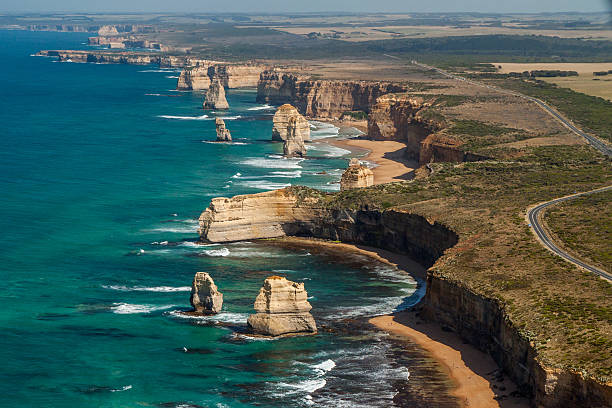
Aerial view of the Twelve Apostles, Great Ocean Road, Victoria, Australia.
Overview: The Falkland Islands, a remote archipelago in the South Atlantic, are not only known for their abundant wildlife but also for their excellent Aurora Australis viewing opportunities. With vast open skies and minimal human habitation, the Falklands provide an unspoiled and tranquil environment for aurora hunting. The islands are home to a variety of penguins, sea lions, and other wildlife, offering a unique backdrop for those waiting for the Southern Lights to appear. The Falklands’ isolation makes it a fantastic off-the-beaten-path destination for adventurers and nature enthusiasts looking for an unforgettable Southern Hemisphere aurora experience.
Best Time to Go: April to August, with the best chances during the southern winter.
Getting There: Fly to Mount Pleasant Airport (MPN) via weekly flights from Santiago, Chile, or the UK.
Expected Temperature: Winter temperatures range from 0°C to 5°C (32°F to 41°F).
Budget: Expect to spend $150–$300 per day, including flights, accommodation, and tours.
Best Photo Spot: The coastline near Gypsy Cove offers incredible views with dramatic landscapes.
Top Tip: Pack layers, as the weather can be unpredictable and windy. Check for local aurora forecasts before heading out for optimal viewing conditions.
14.)South Georgia Island (Southern Ocean)
Aerial view of the Daintree Rainforest sweeping down to meet the Great Barrier Reef in Cape Tribulation, QLD
Overview: South Georgia Island, a remote sub-Antarctic island located in the Southern Ocean, offers a once-in-a-lifetime opportunity to witness the Aurora Australis in a truly pristine environment. The island is known for its dramatic landscapes, towering glaciers, and vast wildlife, including massive colonies of king penguins and elephant seals. Though it’s primarily accessible via expedition cruises, the isolation and lack of light pollution make South Georgia an ideal spot for viewing the Southern Lights. The rugged, icy surroundings provide an awe-inspiring foreground for aurora photography, making this a dream destination for adventurers.
Best Time to Go: March to September, with the clearest skies during the southern winter.
Getting There: Accessible via Antarctic expedition cruises from Ushuaia, Argentina, or other parts of South America.
Expected Temperature: Winter temperatures range from ‑5°C to 0°C (23°F to 32°F).
Budget: Expedition cruises can cost between $5,000–$12,000, depending on the itinerary and duration.
Best Photo Spot: The bays around Stromness or Grytviken offer stunning views with the mountains and glaciers in the background.
Top Tip: Dress in multiple layers and bring insulated, waterproof clothing. Viewing opportunities are often enhanced by cold, clear nights after sunset.
15.)Antarctica
Overview: Antarctica is the most extreme and remote place on Earth, offering unparalleled views of the Aurora Australis. With its pitch-black skies during the southern winter and complete isolation from light pollution, Antarctica provides a near-perfect environment for witnessing the Southern Lights. While visiting Antarctica is a significant logistical challenge, travelers who embark on Antarctic expeditions during the winter months may witness awe-inspiring displays of the aurora over glaciers, icebergs, and vast, frozen landscapes. The sheer remoteness and unspoiled nature of Antarctica make it a once-in-a-lifetime destination for adventurers seeking the ultimate Southern Lights experience.
Best Time to Go: March to September, with the darkest skies during the Antarctic winter.
Getting There: Accessible via expedition cruises departing from Ushuaia, Argentina, or through scientific research stations.
Expected Temperature: Winter temperatures can drop to ‑60°C (-76°F), but more commonly around ‑20°C to ‑30°C (-4°F to ‑22°F) during the southern aurora season.
Budget: Expedition costs range from $8,000 to $20,000, depending on the duration and inclusions of the trip.
Best Photo Spot: Deception Island or the Ross Ice Shelf provides surreal backdrops with icebergs and glaciers illuminated by the Southern Lights.
Top Tip: Prepare for extreme cold by investing in top-quality thermal gear. The aurora may appear faint but can be enhanced with long-exposure photography.
Safe travels and may your journey to witness the magic of the Aurora Borealis & Aurora Australis be as awe-inspiring, beautiful and enjoyable as the stunning lights themselves!