Yellowstone
Overview:
Sitting atop the largest super volcano in North America, the serene and stunningly beautiful Yellowstone National Park is the largest active geyser field in the world – and a hub for rare and endangered wildlife, stunning mountain peaks, bubbling mud pools, it’s own grand canyon, colourful hot springs, rolling rivers, and lush green hills, valleys and woodlands, which combine to form the stunning scenery of Yellowstone National Park and make it a natural nature wonderland and a true wonder of the world.
Declared a national park in 1872 – the first established int the world, the great beauty of Yellowstone stretches across the three north west states of Idaho, Montana and Wyoming and stretches for more than 3, thousand square miles of pristine land – and thanks to the southern park of the park sitting across the continent divide and the super volcano the park sits atop, Yellowstone is home to more than half of the world’s geothermal features – including more than 300 stunning geysers – including the iconic Old Faithful and the incredible Steamboat Geyser – which when conditions are right is known to send soaring steam into the heavens more than 300 foot above.
Alongside the stunning geysers, you’ll also thousands of stunning hot springs – which appear in a kaleidoscope of colours, as well as some incredible rivers including the Snake river which flows to the Pacific Ocean and the Yellowstone river – which heads to the pacific giving you a true scope of the vastness of this wonder.
There’s also plenty of chances to scale the incredible snow covered peaks in the park – with the Bunsen Park or the incredibly well named Electric park both easily scalable – as well as the trail of Mount Washburn – one of the most famous hikes in the USA that offers incredible stunning views of the beautiful valley below.
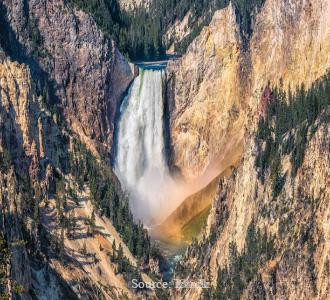
You’ll also have you pick of waterfalls — with their being more than 300 dotted around the park — including the Lower Falls Waterfall that clocks in at more than 300 feet making it deeper than Niagara Falls and which is one of the highlights of the incredible Yellowstone Grand Canyon – a vast stunning canyon who’s rock based walls stretch on for almost 20 miles.
Alongside the incredible natural wonders that dot Yellowstone, you’ll also find multiple rare and endangered animals who call the park home – including elk, wolves and Grizzly bears, and with the park being explore through more than 900 miles of amazing hiking trails from which the wonders within the park can be explored, and one of the greatest drives on the planet – the stunning 142 mile Grand Loop Road that takes you past the main highlights of the stunning park – as well as by bike, canoe, on skis and even by snowmobile, the incredible natural wonders that dot the stunning and vast Yellowstone National Park make it not just a geo-thermal paradise but a true wonder of the world.
Where:
Stretching for more than three thousand Square Miles, Yellowstone National Park is found in the North West of America – with 96% of the National park being found in the great state of Wyoming, 3 % in Montana and 1% in the state of Idaho.
Getting there:
By air:
While Yellowstone stretches for thousands of miles, it’s far from any major airports so for those outside the US who want to fly as close as possible to Yellowstone to being exploring the closest airport is West Yellowstone in Montana – which you can only reach from the airports of either Denver in Colorado or Salt Lake City in Utah and for which you can expect to pay a high far given it’s a specialist craft on an unpopular route.
So the best advice for getting to Yellowstone National Park by air is to fly to Denver or Salt Lake City and then hire a Car to reach the park.
By Car
Having got yourself to the States, the easiest way to get to and explore the wonder of Yellowstone is undoubtedly by Car, and given its vast size and the fact it crosses three states you have the luxury of 5 entrances from which you can enter the stunning park based on where you’re approaching from:
The North Entrance (Montana) – found by taking US Route 89 the North Entrance is the only entrance open year round and is the entrance of choice for those approaching Yellowstone from the mid-west – with the North Entrance taking you through the Roosevelt arch and onto the Grand Loop and being only a couple of kilometres away from the stunning Mammoth hot springs – for a great place to start your journey through Yellowstone.
The North East Entrance (Montana) – Heading from billings Montana and the North East is one of the most scenic routes into the Park – passing through the great Beartooth highway along US Route 212 and leading you into the base of the Lamar Valley – where wildlife viewings are on constant offer. Just be warned that this route is likely closed between October – March.
The East Entrance (Wyoming) – Dropping you off by the stunning Yellowstone Lake, the East Entrance into Yellowstone is a great entrance for those who want to get right into the main geo-thermal highlights of Yellowstone and have quick and easy access to both Old Faithful and the Yellowstone Grand Canyon. Taking you through the town Cody in Wyoming – which is a great place to base yourself – you’ll travel down Route 14 or 16, just be sure to do so between summer – Autumn as the east route is frequently closed by snowfall.
The South Entrance (Wyoming & Idaho) – a good entrance for those who are skiers – as the South Route hosts the nearby Jackson Hole Sky route , the south route also lets you take in the great Grand Teton National Park – a further stunning natural place of beauty as you travel down Route 89 or 191 into Yellowstone – with this route again being closed between November – May.
The West Entrance – The easiest gate for those who fly into Yellowstone West airport, the West Entrance is the busiest of the park – but for good reason as you’ll find yourself within driving distance o the Norris Geyser basin, as well as the famous Firehole Lake Drive area – expect this route ‑whci you can reach from US Route 20 or 191 — to be crowded and feature multiple traffic jams when curious Elk wonder onto the main road.
By Bus
For those without access to cars, you have the option to also arrive at the Park by Bus, with the famous Greyhound Service offering coach journeys to the surrounding towns that border Yellowstone. While we’d definitely recommend self-driving if possible – for those without cars the best towns to head to are Jackson Hole, Cody or Gardiner all of which will can get you into the park to begin your journey around this stunning wonder.
Getting Around
(By Car) Once in the park you have a range of options for getting around – with the easiest unquestionably being by self-driving around the Park, with the popular Grand Loop taking you on a 142 mile incredible scenic journey around the park to the best of the Natural Highlights.
Alongside the loop, you’ll find the roads within Yellowstone well guided and signposted – although often crowded, both as a result of the wonders popularity and as a result of the maky traffic jams that can build up as a result of animal crossings and the occasional bear jam ! – so be sure to budget a lot of time to traverse Yellowstone by car and watch for the occasional pull out, with many of the drivers in Yellowstone likely to be from foreign countries unfamiliar with the US road system.
If going by self-drive – and we’d recommend it as there’s no public transport in the park, you’ll get your pick of highlights and be on you own schedule – so long as you avoid the winter months between November – May where a umber of the roads close on account of heavy snowfall.
Yet despite the traffic jams and the need to time your journey for the seasons, exploring Yellowstone by Car – and in particularly taking on the Grand Loop is an incredible experience and ultimately the best way to get around this vast wonder of the world.
By bus – While there’s no public transport available within Yellowstone, for those without cars and who want to get around the park you can get yourself on a bus trip – that will take you round the grand loop and drop you off at the major highlights of the park.
While a little awkward as you’ll have one eye on the bus schedule and as the bus tours only run in the summer, for those without a car or bike – this is undoubtedly the best option to take in all the highlights of Yellowstone as easily as possible.
By bike – A more freeing option for those without Cars, a bike journey through Yellowstone is a great way to get up close to the beautiful nature and experience the full natural beauty of the park. There’s no cycle roads, so you’ll be cycling along the same roads as drivers – and potentially be more at risk for animal encounters, but for those the time, planning skills and stamina to take on Yellowstone this is one of the most rewarding ways to see the increidble park.
By foot – While not a travelling route recommended to get around – for those going round the park by Car, Bike or Bus Yellowstone is home to some of the worlds greatest outdoor hikes – with there being more than 900 miles of hiking tracks within the park that can really get you up close and personal to the many highlights within the park and take you to some stunning observation and viewpoints.
While some of the treks can take you as far as 10,000 feet in elevation or requiring you to camp in the grounds of the park – there’s also gentle day hikes and descending staircases – with the hikes offering a range of options to get close to Geysers, Waterfalls and of course the great Yellowstone Grand Canyon.
While proper gear and planning is of course required, the chance to hike in this incredible park is a truly awe-inspiring experience offering some of the best views on the planet of this stunning natural wonder. For more on the best hikes in Yellowstone see the section below.
Best time to Visit:
While Yellowstone is accessible all year round, the open hikes and roads vary with the seasons – with the major roads and hiking points being closed between November and May due to the heavy snowfall and increased danger of traversing on the roads.
While there’s no doubt the scenery in Yellowstone is stunning during the winter months, for a warm, easily accessible and likely more enjoyable experience we’d recommend visiting between the months of May – November – where the warmer temperatures will give a better experience and more accessibility.
However given the popularity of Yellowstone we’d advise avoiding the months of June – August, where roads can grind to a halt due to traffic and the hiking trails can become too crowded, so for the best experience at Yellowstone we’d advise visiting in either May or between the months of September – October where you can enjoy the full beauty of the park with comfortable temperatures and when crowds will be at a minimum.
Explore:
Stretching from Wyoming and into the lush states of Idaho to Montana, the 3,500 miles stunning and natural park that makes up Yellowstone is truly breath-taking, with the park being not only the home of endangered and threatened species – including grizzly bears wolves, bison and elk – but, thanks to the fact it sits atop the largest super volcano in America, also featuring incredible glaciers, mud pools and hot springs that make up the more than 11,000 unique geothermal features of this incredible wonder.
While the stunning Old Faithful Geyser, combined with the Grand Canyon of Yellowstone and the incredible Yellowstone Lake are undoubted highlights, the sheer size of the park means there’s truly something for everyone – with the park explorable on foot, by road and by bike providing plenty of chances to get around this incredible natural beauty.
While the park is often divided into Eight major areas to aid explorers, the below is our top picks to see, hike and explore when visiting the incredible wonder of the world that is Yellowstone National Park:
Sights:
Yellowstone is a truly awe-inspiring and natural beauty, that covers more than 3,500 miles and would no doubt take years to fully explore, it has a series of natural stunning highlights – including towering peaks, bubbling hot springs, and erupting Glaciers that have helped cement the Parks reputation as a true natural wonder – and in our view are not to be missed on any exploration of this incredible wonder.
While you’ll need to time your visit with the seasons to make sure you get there when the highlights are both open and viewable, and you can – given their immense beauty expect crowds at these highlights, the below sights are the true pinnacles of both the wonder of Yellowstone and Nature in both the USA and the planet.
So in no particular order, the below are our 14 top picks to see, witness and explore when visiting the incredible Yellowstone National Park:
Geysers:
As a combination of being sat on largest Super volcano in North America and it’s Geo-logical make-up, Yellowstone is home to the largest geyser field in the world – with the multiple incredible geysers producing an incredible scene in which clouds of steam erupt into the incredible Yellowstone sky every hour.
These eruptions, which can reach 300 feet, are truly stunning and one of the main attractions of Yellowstone, with the Geysers divided into 3 areas as well as two stunning individual glaciers, with the below being the undoubted top 5 Geysers or Geyser areas to see within the park:
1 Old Faithful – The iconic Old Faithful Geyser is arguably the highlight of Yellowstone and is undoubtedly one of the most famous sights in the wonder. Erupting every 30 to 90 minutes the Old Faithful is easily viewed from the boardwalk that surrounds it with the great clouds of steam reaching as high as 190 feet on each eruption – making for a popular spot and an incredible great spot to snap some iconic photos.
For those who feel the crowds are too much, you can also hike to the top of Observation Point for a great view of the iconic glacier – or take in the iconic old faither from the nearby old faithful inn – a cabin dating back to 1903 where you can put your feet up in a traditional setting with a warm cup of cocoa and a roaring fire – as you watch one of the most famous and incredible natural displays in the world.
2 Upper Basin Geysers– Home to the highest elevated Geysers in the world, the Upper Geyser Basin is a combination of beautiful geysers packed into one, taking you past Old Faithful along a two hour trek on a stunning boardwalk you’ll be taken through an incredible series of Geysers including the well named Beehive Geyser, Grotto Geyser and Grand Geyser – with the Upper Basin Geyser area normally being incredibly packed – although we’d advise seeing it in the summer – as the area see’s heavy snowfall in the winter and you’ll need a bond like snowmobile to reach the upper area.
Alongside the Geysers, the Upper Basin Geyser area is home to the stunning Morning Glory Pool – a stunningly beautiful pool that seems to reflect a kaleidoscope of colours that makes for a further stunning natural beauty within Yellowstone and that reflect to true beauty of the wonder.
3 Midway Basin Geyser Area: A further stunning selection of Geysers, the midway Basin Geyer area is home to a stunning Geysers — the Excelsior Geyser and our favourite hot spring in the whole of Yellowstone — the Grand Prismatic Spring.
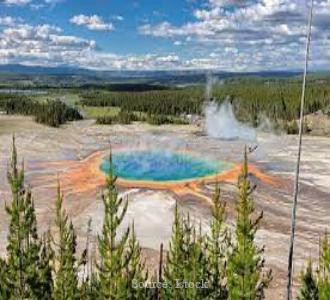
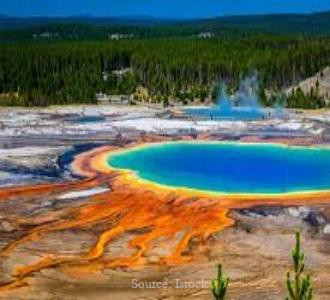
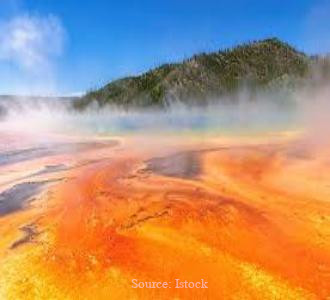
Accessible by a well-developed boardwalk, the stroll along the midway Baisin Geyser area will see you get stunning photos and view the Excelsior Geyser – which fires litres of boiling water into the below Firehole river and the Grand Prismatic Spring – a 350-foot-wide natural spring, which thanks to the incredible steams above and the great kaleidoscope reflections of the algae below making this Grand Prismatic Spring a colourful and beautiful natural sight – and one not to miss.
4 Lower Basin Geyser Area: Home to the Firehole Lake Drive and the stunning Great Fountain Geyser which has been known to blast steam higher than 200 feet the lower basin Geyser area is the place to go to see frequent roaring steam eruption from Geysers – with the great Fountain Geyser offering one of the most stunning eruptions and natural sights in the whole of the park.
A tourist hotspot, we’d advise to get here early – and if you have the time head to the bubbling mud flats of paint pots which are just next door giving you incredible contrasting natural beauties that reflect the best of Yellowstone.
5 Norris Basin Geyser Area – The most active area for Geysers in Yellowstone, the Norris Basin Geyser Area offers a different experience that simply walking along a boardwalk to see the wonders of Yellowstone – as you can walk through great wooded fields to reach the incredible back basin, as well as take in the Porcelain Basin with it’s famous vinegar like aroma.
But the highlight of the Norris basin is undoubtedly the world record setting Echinus Geyser – which holds the record for being the largest acid water Geyser (don’t put your fingers in it) and the incredible Steamboat Geyser – the largest geyser in the world that can when the conditions are right sending soaring steam into the heavens more than 300 foot high – a truly stunning spectacle.

Grand Canyon
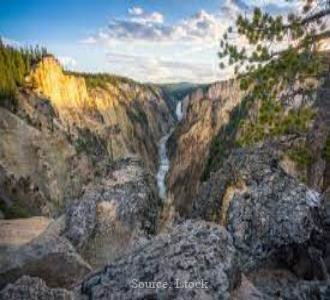
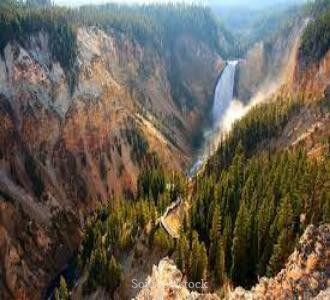
A stunning natural wonder, the Grand Canyon of Yellowstone is a truly awe-inspiring sight, stretching more than 20 miles in length and offering depths of more than a thousand feet the Canyon features a series of incredible water falls – including the stunning upper and lower falls and offers one of the most serene, hike able and stunning spots in the whole of Yellowstone.
Viewable from a series of observation points, that give you truly incredible views of the canyon, the canyon was formed by thousands of years of gradual geological erosion with the river within it believed to flow for more than 650 miles – making it the longest river in the whole of the USA – with the stunning cliff edges that twinkle gold and orange in the morning sun offering not just clues of the evolution of Yellowstone but containing marked areas of Geysers and dried up waterfalls that mark the constantly evolving state of the Canyon.
Featuring a North and South Rim, the Canyon is also a key stop on the Grand circuit tour, and features one of the best campsites in the whole of the park, with the canyon being easily hike able and explore – making it one of the best stops and sights in the whole of the wonder.
Upper and Lower Falls of the Grand Canyon:
While the canyon itself is truly stunning it contains two jewels worthy of exploration on their own – the upper and lower waterfalls of the Grand Canyon.
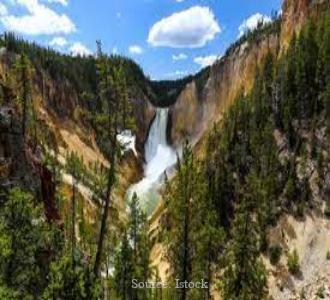
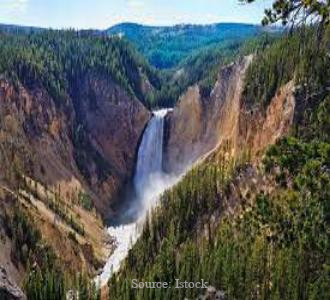
The Lower Falls is undoubtedly the most popular of the falls as you can take the easy staircase down on the lower falls trek and witness this incredible waterfall plunging 308 foot down deep into the canyon below – and for those who dare feel the incredible plunging water splash against your face as you hear the roar of this powerful and beautiful waterfall.
Twice as big as the wonder of Niagara Falls the lower falls is also viewable up close on the south rim trail – with the best photo shots in our view coming from lookout point, Red Rok point – or the incredible Artist point.
For the Upper falls that clock in at 110 feet to the base of the Canyon, while not as big they are much more accessible and offer again stunning views of this incredible waterfall, with the Upper falls being easily accessed and viewed by one of our favourite hikes in the park – the Uncle Toms Trail – for a truly incredible wonder within Yellowstone.
Wildlife
Alongside the stunning natural wonders of Yellowstone, the park is actually a paradise for wild, rare and endangered animals – who freely roam the great grasslands of the park and are always curious about visitors and help make Yellowstone one of the biggest areas in North America where you can spot such animals in their natural habitat.
While you’ll likely see Elk, Moose, wolves and eagles on your travels through Yellowstone, the icon and famous natives are the large packs of grizzly bears that roam the nature of the park – while we’d encourage you to take precautions and be safe when spotting bears – the chance to see this stunning creatures in their natural habitat is a true privilege and something that makes Yellowstone not just a natural wonder, but an important animals preservation spot and a chance to have unique encounters with endangered animals.
The Lamar Valley
For those who truly want to see wildlife, the best spot in our book is the stunning Lamar Valley – known to feature herds of Grizzlies as well as Bisons, elk and wolves who will freely hunt and roam on the wide valley grassland – and for those taking on the grand loop will have no problem stopping traffic and approaching your car for a true safari experience.
Found on the North side of the park, the Lamar Valley is a wide open field featuring incredible grasslands and stunning forests – and is also home to the famous Roosevelt Lodge – a cabin named after the president who declared Yellowstone a national park, as well as the incredible Tower Falls – another top sight within Yellowstone.
Tower Falls
Another stunning waterfall within Yellowstone – and the second most popular behind lower falls, Tower falls clocks in at an incredible 132 foot plunge as the cascading water barrels down to the valley floor below in an incredible display of the raw power and sheer beauty found within Yellowstone.
Although over crowding and erosion means a hike to the bottom of the falls is now off limits, you can still grab incredible photos of the falls and witness them in their glory from a series of viewpoints from the Tower Falls lookout – a gently but stunning hike that gives you an incredible vantage point to witness the beauty of the Tower Falls waterfall.
Mammoth Hot Springs
Another stunning example of the incredible Geo-thermal wonders in Yellowstone National Park, the Mammoth Hot Springs are a collection of more than 60 stunning hot springs that sit just below the peak of the 8,000-foot-high Terrace Mountain.
Formed out of Limestone, which give an important geo-logical link to the origins of Yellowstone, the various hot springs offer not just a warm spot (they vary between 60 – 150 degress) but also an incredible photo opportunity with the various hot springs known to turn an incredible share of different colours, creating an almost Kaleidoscope of colours that shine against the backdrop of Yellowstone forest and the great American sky for a truly stunning sight.
Mount Washburn
Alongside being one of the greatest hikes in both Yellowstone and argubuly the world, Mount Washburn is a truly spectacular sight on it’s own, representing the absolute best of Yellowstone and giving you truly incredible views of the splendour of Yellowstone below.
Rising to 10,240 foot (don’t worry you don’t hike it all) Mount Washburn is the centre point of the Washburn range mountains that tower of Yellowstone and give it it’s spectacular scenic background, with the mountain also being home to some incredible flora and some of the best wildlife in the whole of the National Park – making Mount Washburn one of the absolute must see top sights in Yellowstone to grab incredible photos and drink in the full beauty of this wonder of the world.
Hayden Valley
Found in the dead centre of Yellowstone, the Hayden valley offers stunning views of rolling fields, large grasslands and the lush Yellowstone river – with the valley being an incredibly popular spot to spot the many wildlife that call Yellowstone home and being a great spot on the famous grand loop as you enter into the real Yellowstone area with plenty of wildlife company.
Known to have large concentrations of bears, bison and wolves, the Hayden valley is also an incredible spot to witness sunrise in Yellowstone – with the shining sun not only illuminating the incredible animal life, but reflecting off the lush green meadows and sweeping hills and mountains for an incredible start to a day exploring the wonder of Yellowstone.
Yellowstone Lake
A stunning lake found in the heart of Yellowstone, the Yellowstone lake is not only the start of a series of stunning treks but is a unique wonder in itself with the vast lake offering stunning water scenery and having the honour of being the largest highest altitude lake in the whole of North America.
Featuring an almost highlight reel of Yellowstone – including mini Geysers, Mud pools and hot springs, the lake is incredible scenic with its clear water being home to numerous aquatic life – and seen as a fisherman’s paradise, the lake is a focal point for campsites and motels nearby and makes for a great base point from which to explore Yellowstone, with the evening sunset illuminating the very best of both the lake and Yellowstone and allowing you to capture the full beauty of both the lake and this stunning wonder.
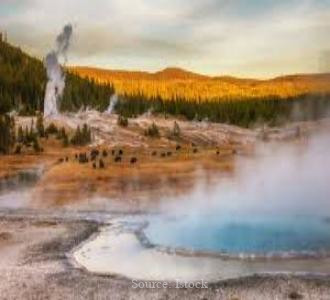
Hiking in Yellowstone:
While the Circle tour and the natural highlights of Yellowstone are truly incredible wonders, the best way to traverse this incredible natural paradise is undoubtedly on foot – with Yellowstone offering not just some of the best nature hikes in America but on the planet.
Given the vast 2.2 million of acres of wilderness that make up the incredible wonder, the hiking trails are dispersed across the great park and cross the boundaries of all three of the states (Idaho, Montana and Wyoming) in which the park sits, with there being a range of day hikes and multi day hikes to suit all explores schedules and give you a more intimate experience and allowing you to explore the incredible natural beauty, hit springs, Geysers, lush green fields, rivers, lakes, canyon and wilderness detailed above of this incredible wonder.
Before you set off, we’d of course advise you come prepared with appropriate gear, water bottles, a GPS on your phone, and bring appropriate protection and be aware of some of the stunning wildlife you’ll likely encounter on your hike – including wolves, Bears, Elk, Bison and Eagles – who all while being stunning animals have been known to interact with hikers.
While there are some 1,300 dedicated miles of defined hiking tracks in the park – our recommendation would be for explorers to take on a couple of day hikes over a series of days – giving you a chance to take in the beauty of the park from different angles whilst also have a secure and safe nights sleep. In no particular order the below are our top picks to explore the incredible Yellowstone Natural Park,
1 Bunsen Peak Hike
Distance: 4.3 miles round trip.
Time: 4 hours
Difficulty: Easy.
The incredible Bunsen Peak hike is one of the best day trips in Yellowstone – and takes you to some incredible views of the towering Washburn mountains and the geological formations of Cathedral Rock – as well as the immaculate Bunsen Peak., while letting you see the devastation caused by the 1988 forest fires that tore through the wonder.
Beginning near rustic falls, you can expect to traverse over forests, grasslands and encounter the occasional ascending rocky series of steps, with the trail beginning down a dirt road and taking you to an incredible look out point of the mammoth hot springs and the great cathedral rock ‑that makes for stunning and unique photographs.
Continuing onwards through the scenic grasslands of Yellowstone and through a couple of switchbacks, you’ll begin to spot the snow-capped Gallatin Mountain Range in the distance – and come upon the scenic swan lake flats, before arriving at the Norris Geyser Basin – where you can watch the great steam ascending into the heavens and marvel at the ecological and geological wonder of one of Yellowstone’s best Geysers.
Moving further down the trail you’ll pass through new grasslands and open clearings – a throwback to the unfortunate fires of 1988 and a stark reminder of the devastation that raging fire can have an natural beauty. Moving down the trail further you’ll come to the picturesque and famous Yellowstone River before arriving ascending up the Bunsen Peak view top where you can take in incredible panoramic views of the Golden Gate Canyon and the stunning waving fields, lakes and beauty of Yellowstone National Park below you.
While we’d advise doing the Bunsen Peak Hike early in the morning – as not only will it be quieter but you’ve or more chance of spotting wildlife, the incredible trail is in our view the trail to start with in Yellowstone, offering stunning views being moderately easier and giving you both a flavour and the best of the natural beauty of this incredible wonder.
2 Electric Peak Hike
Distance: 20.6 miles
Time: 12 hours – or 2 days.
Difficulty: Moderate
A true full day hike that takes you through and across the absolute best of Yellowstone, allowing you to explore the wonder in depth, the Electric Peak hike see’s you not only ascend to the incredibly well named Electric Peak at 11,000 feet for stunning panoramic views of the wonder of Yellowstone park – but also see’s you cross state lines – with the hike beginning in Wyoming and ending in Montana – a truly unique experience !
Offering some of the best scenery – including lush green grasslands, forests, meadows – and yes the occasional ascent up the mountains, the hike begins near the Kingman Pass and takes you along the stunning Glen Creek through the best natural scenery in the national Park and heading 10 miles along the well-marked electric peak walkway – with there being rivers, lakes and geysers in the valley below.
Continuing along the Electric Peak trail you’ll go through Forest and a series of switchbacks with stunning views on either side before you find yourself above the treelines and it’s time to begin the ascent up the top of Electric Peak. As you ascend upwards, you’ll find that the path begins to disappear a little – and it’ll be a case of scrambling up some steep rock, but after a good scramble you’ll eventually come to the well-marked 11,000 foot summit of – where you can enjoy incredible panoramic 360 degree views in every direction that stretch across the beauty of Yellowstone Park – for a truly unique and awe-inspiring (and probably breathless after the ascent) view!
While the summit offers one of the best and most scenic views in the entire national Park – do be sure to come prepared for the ascent with appropriate footwear and be on your guard for Bears and Wolves who are known to follow hikers along the trail – as well as the occasional thunderstorm which cannot only make you a bit wet – but take the edge off the view at the summit, so time your journey well.
For those who don’t fancy going up and back in one day – which is a total distance of 10 miles, the Electric Peak is often combined with camping in the national park, to break the trip into a more manageable 2 days, with their being multiple camp sites available including directly on the trail at the Gardiner River – which gives you a good chance to rest before taking on the ascent with the sunrise the following day.
3 Avalanche Peak.
Distance: 4.2 miles
Time: 3–4 hours
Difficulty: Tough
A tough ascent up some 2000 feet in as little as 2 miles Avalanche peak is not for the faint hearted and will certainly test you hiking ability – but for those who manage to summit the peaj you’ll be rewarded with incredible scenery and stunning photo opportunities of the greatest peaks in the whole of Yellowstone.
Beginning at the east entrance, the hike begins as it goes on – by being steep – and you can expect snow and a large contingent of bears to be on the trail (avoid hiking the trail in November – March for this reason) with the trail taking you through thick forest and arriving at the base of the peak after a mile – with the following three miles taking you higher above the tree line and the next two seeing you ascend to the top of the 10,568 foot peak – leaving you both breathless and in awe of the incredible views below you.
While the summit itself is not picturesque the views below you certainly are – as you’ll have an incredible sweeping view of both the great Yellowstone lake below you and the other peaks of Yellowstone above – for a challenging but truly rewarding climb that lets you take in the absolute best of the unique wonder and beauty of Yellowstone.
4 Mount Washburn (via Chittenden Road trailhead or Dunraven Pass)
Distance: 6 miles – Dunraven pass 5 miles Chittenden Road
Time: 5 — 6 hours
Difficulty: Moderate
The most popular hiking spot in Yellowstone – and for good reason, the Mount Washburn hike and summit offers stunning sweeping views of the Grand Canyon of Yellowstone, the Hayden Valley, and Grand Teton – as well as the famous Old Faithful Geyser – the icon of Yellowstone.
Hikeable from either the Chittenden Road trailhead or the Dunraven Pass, the hike up Mount Washburn is challenging, but you’ll find yourself beginning by strolling through wildflowers if you take on the trek in the summer, and see’s you ascend up 1,500 feet through an old 20th century wide road, brining you to a series of switchbacks which give you great panoramic views of the valley below and the famous Yellowstone lake in the distance.
Continuing further – and you’ll spot a fire tower on the summit which is the summit of your hike, with the tower being continuously staffed to ward off the events of fire – a lasting reminder of the impact and preparedness following the great fire in 1988 that tore through the wonder. Ascending higher and you’ll go from one stunning view to the next eventually coming to scenic panoramic view of the Hayden Valley and the grand Teton – as well as eventually reaching the great lookout point for the Grand Canyon.
As you climb higher, you’ll eventually reach the top of Munt Washburn sitting at 3,116 m – where you’ll have truly incredible views from the lookout point – with the lush green valleys, iconic Old Faithful, snow-capped peaks and the incredible beauty of Yellowstone National Park laid out before you – leaving you breathless!
Having taken as many snaps as you can manage it’s time to head back down, passing no doubts crowds of explorers who’ll be making the same ascent. While the Trek up Mount Washburn is challenging we’d advise taking it on early doors as you’ll find the crowds reduced and you’ll be able to skip the morning sun – just be sure though regardless of the time you ascend to look out for bears and pace yourself as while the trek up does provide incredible views – the six mile round trip can be challenging.
5 Brink of the Lower Falls Trail
Distance: 1 mile
Time: 1 hour
Difficulty: Moderate
The shortest main trail at Yellowstone, the Brink of the lower Falls trail offers stunning and a close up view of the tallest and most beautiful waterfalls in Yellowstone – the lower falls.
Found on the North rim, the lower falls see’s thousands of Gallons of Yellowstone Glacial water go crashing down into the 300 foot deep canyon below, and you can get up close and personal to it on this hike beginning on the North Rim (look for the well named Lower Brink Falls Parking lot) the hike begins with a short trek through Forest and takes you through multiple switchbacks – with each one giving you a better view of the falls – until you descend to the base of the falls and to an observation deck – where you can get stunning views of the incredible falls.
While the route back up will test you – with you having to ascend up 250 foot to get back to ground level, the chance to see the power and beauty of the falls up close is truly stunning and gives you a great chance to see, feel and photograph one of the most scenic spots in the whole of Yellowstone national park.
6 Fairy Falls Trail
Distance: 6 miles (Round Trip)
Time: 3 hours
Difficulty: Easy
Taking you to the stunning Imperial and Spray Geysers (which in our view easily rival old faithful) and to the majestic Fairy Falls –, the Fairy Falls Trail is a gentle easy hike along a well defined trail that will take you through beautiful lush greenladsn and forest and to a series of incredible vantage points – before letting you come face to face with the 200 foot tally Fairy Falls.
Beginning at the Fairy Falls Trailhead Parking Lot near the Midway Geyser Basin, the trek begins with a gentle stroll over flat terrain and after taking on half and hours trek you’ll come to the an overlook of the largest hot spring in America – the Grand Prismatic Spring – where you can snap some truly incredible photos of the kaleidoscope and rainbow colours that lie above this natural wonder – and of course take on the 360 boardwalk experience which gives you a truly unique chance to observe the spring from every angle.
Carrying on you’ll go through pine woodland – until you begin to hear the rushing sound of the falls, and eventually come upon them whewre you can marbel at their power and beauty as the 200 foot falls cascade down into the valley below you – where you’ll likely spy bears looking for a snack. Having taken time to take in the beauty of the Fairy falls – we’d advise continuing on for another 20 minutes where you can come to the incredible Spray and Imperial geysers – which rival Old Faithful herself and where if you’re lucky you’ll spot the steam ascending high into the sky – as one of the best thermal features in the park stands before you.
7 Uncle Tom’s Trail
Distance: 328 steps
Time: 30 mins
Difficulty: Easy (very)
Descending 500 vertical feet – the 328 steps of Uncle Tom’s Trail takes you from the top of the incredible Grand Canyon of Yellowstone all to the way to base of the incredible 300 foot Lower Falls below you – giving you the stunning views of the Canyon combined with the immense power and stunning beauty of the lower falls.
More of a staircase than a trek, the Uncle Tom’s Trail begins on the mid-way point of the artist Point Road – and you can easily park up in the Artist Point Parking spot before following the signs for the Uncle Toms trail – where you can get great views of the canyon before taking on the steps down to the lower falls.
While you’ll want to grab as many photos as possible, you’ll also find that the easy trip down – means you have to then make the ascent up – which is where the duration of your journey will come in, so we’d advise heading straight down to the base before coming back up while stopping at various benches and look out points on the way back up to give yourself both a breather and a chance to snap great photos of the top of the Canyon and the falls below.
8 The Beaver Ponds Trail
Distance: 5.5 miles
Time: 2 — 4 hours
Difficulty: Easy
A gentle trail, the beaver ponds trail takes you to one of the best ponds in the whole of the national park on a loop circuit – but best of all it gives great wildlife opportunities and lets you take in the serene beauty of Yellowstone in a quiet environment – with this loop being relatively unknown and off the tourist route.
Beginning at the stunning Mammoth hot springs you’ll find yourself facing a steep ascent upwards at the beginning before the trail relaxes into a more gentle even terrain and carries you gently to the beaver ponds – a series of stunning and wildlife full ponds that give you a chance to spot some of the lesser seen wildlife at Yellowstone and take in the quaint and picturesque ponds‑a another stunning natural feature of Yellowstone.
Having spend some time at the ponds, had a trail snack and grabbed some beautiful and stunning photos – you can enjoy the rest of the looped trail in relative peace with a small taste of the wilderness and quietness of raw Yellowstone absent fellow explorers, before retuning back to the hustle and bustle of the Mammoth hot springs and exploring the wonder of Yellowstone further.
9. The Sky Rim Loop
Distance: 21 miles
Time: 14 hours
Difficulty: Hard
A tough day trip, the Sky rim trail offers incredible views as you trace the link between Yellowstone and the neighbouring Gallatin National Forest and get into the wilderness of the real Yellowstone.
Hike able as a day trip in a loop, the Sky rim loop, see’s you start from the Daily Creek Car park and take on the Daly pass before heading onto a soft trail where you get incredible views of the 9,900 Horn Peak – as well as the Electric Peak, Madison Range and if you are there on a clear day and your eyesight is strong enough views of the Tetons – for a truly stunning panoramic photo shot.
Moving onwards you’ll walk through lush green fields, the Yellowstone wilderness and pass lakes and rivers – all of which will help you immerse yourself in the nature and terrain of Yellowstone before you come to the stunning sight of the Northern Range mountains. From here you’ll find yourself looping back round – again through incredible forest, trees and wilderness before you return not doubt exhausted but accomplished back to the Daily Creek Car park for a well earned rest and American meal.
While a tough hike, the Sky rim loop gives you incredible and truly off the beaten track views and is one for those who want to get truly in touch with the heart and wilderness of Yellowstone.
10. The Upper Yellowstone River & South Boundary Trail
Distance: 70 miles
Time: 4 Days
Difficulty: Hard
The greatest hike in the park and one of the greatest hikes in America the Upper Yellowstone River & South Boundary Trails offers you the absolute best of Yellowstone – taking you by the stunning Yellowstone river, past incredible Geysers, the stunning peaks of the Madison Range and deep into the spiritual heart of the incredible terrain of Yellowstone.
You’ll need to break this hike up into at least 4 days, and you’ll begin on the shores of the incredible yellow stone lake – where having taken a series of photos of this incredible Yellowstone attraction you can make you can follow the lake down towards its source and hike along the incredible Absaroka Mountain range – giving you a view of some of the most stunning mountain ranges in Wyoming and the whole of the USA.
Having spent the night camping under the shadow of the mountains, your path will then connect with the Stunning south boundary trail where you’ll find yourself trekking in forest with multiple types of beautiful Flora and some stunning grasslands and scenery before your route takes you to the snake river – which you’ll ultimately have to cross – before you reach the big game ridge where you’ll find a large population of bears with the road winding inwards to the south entrance to Yellowstone – where the track ends.
A tough trek and one that will require you to spend some nights camping in the wilderness, be sure to come prepared for the Upper Yellowstone River & South Boundary Trail with appropriate camping gear and adequate food and water supplies – and be on your guard for bears that call this wilderness home.
Still offering stunning views, a chance to really connect to Yellowstone and the opportunity to immerse and experience the wild and incredible terrain of this wonder of the world, the Upper Yellowstone River & South Boundary Trail is an absolutely fantastic hike and one we’d really recommend for those who want to go beyond the typical experience of Yellowstone.
Therefore, regardless of your schedule or hiking ability the range of hiking options within Yellowstone offer something for everyone, with a chance to explore the incredible highlights and nature that this stunning wonder of the world holds – whether it be by ascending to the majestic Lower falls, hiking to the stunning views offered by the Electric or Avalanche peak or taking on a multi-day trek to really explore and understand the wild terrain and beauty of Yellowstone, the incredible and multiple hiking trails offer not just stunning views but help make the Yellowstone National Park an easily explorable and truly beautiful wonder of the world.

Driving Yellowstone:
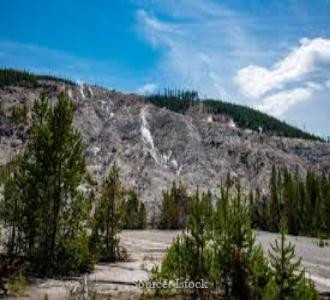
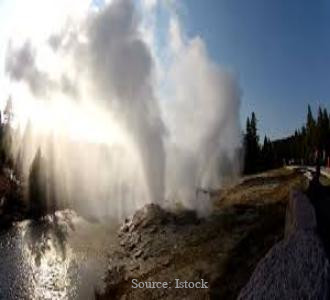
For those who want to hit the highlights of Yellowstone and of course make it practical to et around the 3,500 miles of the National Park, there are fortunately 251 miles of gorgeous and incredible scenic roads that help explorers get around Yellowstone in what has to be considered one of the greatest drives on the planet.
While the opening of roads does vary based on the season – you’ll need snow tyres to hand – the North Entrance in Montana remains always open – with the other roads when open having no closures – allowing travellers to come and go at night if required – with it being strongly advised to check the state of roads before you set off on your exploration.
Giving easy access to the highlights of the park, driving Yellowstone is undoubtedly one of the best ways to discover and cover this wonder – even if the traffic does build up in the summer – with the many roads able to take you to the numerous stunning sights within the park, however for a truly incredible drive we’d strongly recommend taking on the great Grand loop road – a stunning 142 mile figure eight road that takes you to the absolute best of Yellowstone.
The Grand Loop
Undoubtedly one of the best drives on the planet, the 142 mile Grand loop – that is in the form of figure 8 – takes you right into the heart of Yellowsonte and to some of the most incredible natural wonders, including old faithful, the Yellowstone lake and the Grand Canyon – and gives you truly stunning views of this incredible wonder from the comfort of your car.
Built in 1915, the loop officially starts a the North Entrance Road — and will take you straight to the bubbling Mammoth Hot Springs before taking you to see the icnreidble Golden Gate Canyon – where you can easily take on the lower falls trail and hike along the rim – before ascending almost 7,000 feet across the Kingman pass where you can stop and take in the Bunsen Peak – or for those who wish to stretch their legs you can easily summit this sunning peak.
Following the loop further round you’ll head into the stunning Gardner valley – with it’s incredible and immense grasslands, before taking in more cliffs and mountain peaks, before spotting Obsidian Cliff – and then the stunning Norris Geyser Basin, where it really is worth exiting the car to watch the ascending steam reach the heavens.
If the Norris Geyser Basin wasn’t enough, if you enter into the second loop at Madison Junction, you’ll then come to the great Geysers of Lower Geyser, Midway Geyser and the Upper Geyser – before arriving at Old Faithful herself — where you’ll want to watch the stunning and truly iconic ascending steams of the most famous spot of Yellowstone.
Moving on from Geyser’s you’ll ascend up the great Craig’s pass – before you come to the stunning Yellowstone lake – again another picturesque and truly stunning spot – and one that the road loops and follows round giving you a truly beautiful drive (just make sure you’re on the left hand side for the best views) as the great loop winds round taking you back to the Canyon and allowing you to take in the upper falls – before you cross the mighty Dunraven pass at almost 8,900 foot – you’re highest point on the loop and get to the base starting point to take on the incredible Mount Washburn hike – for perhaps the best hike in the whole of the park – with truly stunning and scenic views.
Continuing back on the loop and you’ll notice the road bends back down as you slowly begin to come to the end of the loop passing the Mammoth Hot Springs once more and complete what is one of the greatest and scenic car drives in the world.
While the grand loop is stunning and offers truly unique and incredible views of this immense wonder, it’s also good to know it gets crowded in the summer – so it’s best to start off at sunrise if you’re there during peak season. IT’s also not one for nervous or inexperienced drivers, as the road winds round and cutbacks often – and you can expect a series of steep ascents as well as ascents that will test your clutch and handbrake starts.
Yet for those who do take on the loop you can expect a stunning drive – that will likely take you all day – as you encounter not only the incredible wildlife – who will no doubt approach you or block your path on the road, but also as you wind road some truly stunning roads and stop at the well maintained viewpoints and stunning natural beauties of Yellowstone that the Grand Loop takes you on – with this 143 mile loop being our pick for the way to explore Yellowstone and being one of the greatest drives on the planet and giving you a truly stunning way of exploring the incredible wonder that is Yellowstone national park.
Camping
To get truly in touch with the beauty of Yellowstone – and for those taking on a trekking challenge the chance to camp inside the national park and take in the incredible night time stars above you is an experience not to be missed as you spend a night in the serene nature and tranquil setting of Yellowstone.
While many travellers opt to stay in a rented campervan, or book a reservation in onf of the many hotels or travel lodges — all bookable online – for a camping experience you’ll find multiple camp sites along the trail and at the entrances of the park – with the top 5 that we’ve stayed out in the National Park being:
The Canyon Campsite — An incredibly popular camping site, the Canyon campsite lets you actually camp close to the Canyon – with their being multiple camp sites (over 250) and giving an authentic and real feel for camping in the wilderness — with there being cooking facilities, toilets and no running electricity – for a true nature experience.
The Madison Campsite – A popular spot for RVs and Trailers, the Madison Campsite is close to the Madison River and features occasional Bear Sightings, with there being easy access from this campsite to the stunning Lower, Midway and Upper Geysers – which are particularly stunning at night. With a range of facilities, the camp is well equipped to give you an authentic camping experience at the park.
Norris Campsite – A spot without bookings, the Norris Campsite is extremely popular with families and children as the well developed and stocked campground see’s evening activities and campfires songs arranged for families and campers – with the site also known to having electricity and flushing toilets – something that will make those evening with Kids all the more easier.
Mammoth Springs Campsite – The campsite for any occasion, the Mammoth Springs campsite – found at the start of the Grand Loop is open year-round – although we wouldn’t advice camping in the winter. Devoid of electricity but featuring flushable toilets, the campsite is limited in number compared to the other sites – the Mammoth springs campsite does have one amazing feature – it’s close to the Mammoth Hot Springs which can offer a great spot to warm your bones after a long day hiking.
Tower Falls Campsite – Our favourite campsite, the Tower Falls offers incredible scenic views – as after a tough climb up a hill you find yourself camping with a view over the incredible Lamar Valley and Tower Creek – waking up to a truly stunning Sunrise.
Limited in size (the campsite has only 30 spots) that adds to its charm, the Tower Falls campsite offers a truly raw and natural experience – with it being a great place to kick back with stunning scenery and lie back in your tent with the beauty of Yellowstone below you.
..
While any of the above camping spots are idyllic and offer a real raw experience to connect to nature and take in the stunning night sky of Yosemite – just remember to come equipped with decent camping gear, water and food (you can pick this up in the park) as well as getting backpacking permits in advance from the official Yellowstone website and booking in advance to ensure you don’t get turned away from your campsite.
For those who don’t fancy camping – or who are going to the wonder in winter – we’d recommend a Travelodge inside the park – or in one of the classic cabins that dot the park, with there also being cheaper and easily accessible accommodation in the town of Gardiner for those on a budget.
Regardless of where you stay – making your trip an overnight experience is a truly special experience and gives you a chance to take in the stunning constellations, stars and night time scenery of Yellowstone.
Yellowstone at Night
As well as being a true natural paradise during the day, the views in Yellowstone at night are truly stunning, with the night sky – illuminated thanks to the parks geo-location and due to the minimal pollution – being incredibly clear and offering stunning views of the stars, constellations and on truly special nights the Galaxies and Aurea Boils are visible.
Best seen away from the campsites, with the Mammoth Hot Springs, Grand Canyon – and for those who dare take on the trek in the evening – Mount Electric and Mount Washburn being some of the best spots to go Stargazing in Yellowstone – the chance to see the incredible night sky lit up in Yellowstone is a truly awe-inspiring and romantic site, with those bringing binoculars and night-time cameras in particularly in for a treat – with the incredible night time sky marking a perfect end to an incredible day spent exploring the natural beauty and wonder that is Yellowstone Natural Park.
How long to stay:
While the grand loop makes it possible to see the highlights of Yellowstone in a day – we’d advise spending at least four days in the incredible park. This will give you enough time to complete the entire loop, while also taking on some of the incredible hiking treks that the park offers, and getting the incredible experience of camping in the park underneath the incredible night sky.
Of course for those with more time and a hefty budget there’s no reason why you couldn’t spend weeks traversing, exploring and getting off the beaten path of the incredible wonder of Yellowstone National Park.


Top Tip:
While Yellowstone is an undoubted wonder of the world, it is also a natural and raw wonder, so there’s a series of top tips you need to be aware of before entering the park of taking on a hiking challenge within the park:
- Firstly be sure to come prepared with the right clothing – even in the summer months storms and rain bursts are known so come with a change of clothes, an umbrella and some waterproof clothes – especially for those camping when the temperature at night can drop.
- Also as elementary as it may sound, be sure to come prepared with some solid pair of walking shoes for those taking on hikes, even those taking on the shorter hikes, Yellowstone is a wild environment so you need to be prepared for wild fauna, river crossings and even animals testing the sturdiness of your footwear.
- For those taking on the summiting of the mountains and in particularly the feat of Eagle Peak that towers more than 11,000 feet above ground level, it’s a good idea to come prepared with some altitude experience and some medicine to cope with the effects, especially bearing in mind this peak is higher than one of the seven summits.
- Come prepared for the wildlife, while this means investing not only in mosquito repellent and bug bites, but also being conscious of the animals that call Yellowstone home – while the Grizzly bears won’t normally approach humans it’s still a good idea to tread carefully around them – being sure to avoid direct eye contact, slowly back away and not to threaten or provoke them.
- Finally be sure to plan your trip well in advance, especially for those who don’t want to encounter the tough wintery conditions and who don’t want to risk turning up at the park only to find the entrances closed – so we’d advise to have a decent plan as to what sites you want to see and be sure to head to the park in either May or September – October when the fully beauty of Yellowstone will be on display.
Cost:
Although Yellowstone is a national park trips to it can be expensive, so it’s advised to budget in advance before setting off.
For those within the United States you can expect to pay $300 Usd for a flight to Salt Lake City and then have a choice of between $25 Usd — $250 Usd per day for your car rental – depending on the level of luxury and comfort you require.
Once you get to the national park, you’ll need to pay an entry fee of $25 Usd per car – or $12 usd if you’re on foot or cycling, which will cover you for 7 days within the park.
From here, you’ll need to factor in accommodation, which can cost between $15 Usd — $45 Usd per night if camping or start from $100 Usd — $800 Usd for a B & B or nearby hotel.
You’ll then have your hiking gear – which we’d advise to budget $100 usd for, and your food costs and daily expenses which normally average between $150 usd — $200 Usd per day – as you’ll find food and drink costs are a little more expensive in Yellowstone and the surrounding towns.
So per person you can average a trip to Yellowstone at Around $800 Usd as a base price for a single day trip, with each extra day likely to cost $350 Usd – making a four day trip come in at around $1850 – which can be reduced if you plan ahead and time your visit for May or October – September.
While the cost of visiting Yellowstone can add-up and be a little on the expensive side, spending a little extra to give yourself a nicer experience self-driving and in the evening is well worth it to explore the incredible wonder of Yellowstone at a comfortable pace.
Fun Fact:
Before Yellowstone was made a national park in 1872, it was without a name – so on account of it’s incredible beauty and main unique natural wonders the locals named it ‘Wonderland’ – which given the stunning sights is a well deserved title that Yellowstone continues to earn to this day.
Best photo spot:
Given Yellowstone’s vast size and multiple scenic and natural beauties there’s a range of incredible observation points and photo spots that offer incredible and stunning views.
While it’s hard to narrow down one particularly wonder or scenic spot that stands out – as it is very much subjective – the below are in our view the top eight observation points and scenic wonders to grab a shot off that truly demonstrate the incredible beauty and wonder of Yellowstone:
Artist Point (sunrise)
The aptly named artist point sits on the South Rim on the Grand canyon with an incredible view of the wonderful Yellowstone Grand Canyon, with sunrise in particularly being magnificent here – as the rising sun lights up the cliff faces and makes the stunning lower falls twinkle as it rushes down into the great river below – offering truly stunning views of one of the greatest spots in the whole of Yellowstone park.
Summit of electric peak
While it may be a challenging hike up to the top of the 11,000 foot high summit of electric peak – the views from the top are breath-taking, with their being incredible panoramic views of the full beauty of Yellowstone – with the incredible lush green hills, valleys and forests below stretching for as far as the eye can see !
A hike that takes you across state lines, the Electric peak hike will also take you along the scenic Kingsman pass – where further incredible photo shoots await for you, with the stunning mountains, accompanying geysers and immense natural beauty of Yellowstone that the summit affords making this one of our favourite photo spots.
Grand Prismatic Overlook
A great way to see one of the wonders of Yellowstone without getting covered in Steam ! – the Grand Prismatic overlook takes you on a short hike to a stunning observation point where you can look out over one of the worlds Greatest Geysers and witness the incredible Kaleidoscopic hot spring in all its glory – for a truly stunning shot we’d advise getting there around sunset to see the beauty of the sun reflecting back off the many hot springs.
Mount Washburn Summit viewpoint
A popular hike, the incredible route up Mount Washburn offers not just a series of stunning observation points on the journey up, but also one of the best panoramic viewpoints at the top of the Mountain where you can look out over the incredible mountain peaks, lush green valleys and rolling hills below – it’s one of the iconic photo spots in all of Yellowstone and well worth the steep hike up for the stunning views.
Mammoth Hot Springs at Sunrise
While the multi coloured mammoth hot springs offer stunning photos at any time of day, there’s something magical about them if you arrive at sunrise, where the morning sun which peaks over the mountain peaks giving warmth and colour to these incredible springs for a truly beautiful and iconic shot ‑just be sure to wrap up warm if visiting at sunrise as despite the name it does take a while for the heat to reach the surrounding areas.
Yellowstone Lake
The water highlight of Yellowstone National Park, the great Lake is an incredible beautiful spot at sunrise and one that Is very much accessible with the great Grand Loop taking travellers to multiple different observation points – and with the lake facing the sun it gets exceptionally beautiful at both sunrise and sunset where the beautiful sun lights up one of the majaor natural beauty spots in Yellowstone for an incredible shot.
Great Fountain Geyser at sunset
Alongside being one of the best Geysers on the planet, the great fountain Geyser is out pick for sunset photos of the incredible wonders at Yellowstone, as thanks to its unique position you can see the sun setting behind this Geyser – which makes the steam eruptions that cascade out of the Geyser truly beautiful as the setting sun illuminates them – making for a truly beautiful sunset photo.
Old Faithful
Finally no trip to Yellowstone would be complete without a visit to and a photo of the incredible Old Faithful Glacier – who’s incredible steam shoots into the great Yellowstone Sky making for a truly special natural wonder. While a photo at its base is always special for those who want a truly unique photo and wish to capture this icon in all its glory we’d advise heading up to the top of the Old Faithful observation point – a roughly mile climb – where you can sit on one of the cliff edges and watch this incredible and famous wonder erupt against the backdrop of the stunning Yellowstone National Park.
..
While these are out top eight picks – and sights that we’d advise you definitely don’t miss out on for stunning photos that capture the best of Yellowstone, there’s no doubt that there are many further incredibly scenic wonder spots across the whole of Yellowstone that will leave you breathless and inspired, as you explore and journey through the incredible wonder of the world that is Yellowstone National Park.