Zion National Park and Bryce canyon
Overview:
Two wonders for the price of one – the majestic neighbours of Bryce Canyon and Zion National park — who lie just an hour away from each other – are both stunningly beautiful and yet individualistic in the unique scenery, landscape and experiences they offer. With the iconic million old distinctive golden orange hoodoos of Bryce Canyon being other-worldly in nature, and the towering sandstone cliffs, rolling deep canyons and breath-taking nature and wildlife found in Zion park, combining to make Bryce Canyon and Zion National park not only the best of Utah’s ‘Mighty Five’ but together they comprise one truly special wonder of the world.
With the two parks being explorable on a day-trip – or as part of an epic multi-day adventure – the stark and special contrast in the two parks is evident on arrival, with explorers getting to sample Bryce Canyon at 9,000 feet and Zion at a lowly 4,000 feet – with the different altitude adding not only to the different climates you’ll experience when exploring each park, but also the dramatic scenery, as you move from the colder climate and high-desert experience of Bryce canyon into the warmer and desert like climate of Zion.
It is this change in climate which also affects the experiences and scenery in each park – with Zion being alive with desert plants and charming trees – which lend themselves to nature trails, exploration and the best of the worlds wilderness, where as within Bryce you’ll find deeper forests, pine trees and bushes – which reflects it’s more high desert and colder environment.
Yet while the parks may differ in climate and their appearance – which combine to make their exploration so special – you’ll also find similarities across both parks, with the terrain, beauty and overlooks in both parks making them a hiker’s dream – with their close proximity also making them a photographer’s dream.
Alongside this, for those less inclined on long hikes you’ll find the infrastructure in both parks is world-class, with both parks easily reachable from Salt Lake City or Las Vegas, and both being served by a frequent and comfortable Shuttle Buses. For the more adventurous you’ll find the opportunity to rock-climb, snow-mobile, ski and fish as well in both parks.
Travellers can of course also tailor the length of time in each park to their needs and desires, with those who fancy solitude – particularly during high season and want to truly connect with wilderness, able to camp and explore the high-desert terrain and stunning cliff formations of Bryce Canyon, whereas those looking for wildlife, hiking and breath-taking scenery able to spend their days traversing the beauty of Zion National Park.

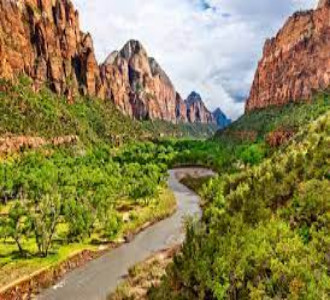
Bryce Canyon: However travellers opt to explore these stunning parks – and for however long – their proximity not just to each other, but to the great – and tourist towns of Las Vegas and Salt Lake City, will see most travellers heading to Bryce Canyon first, before travelling onwards to Zion.
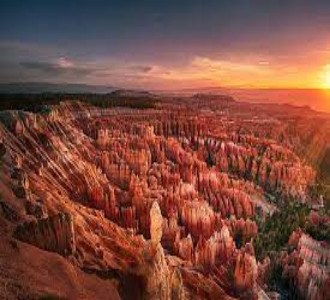
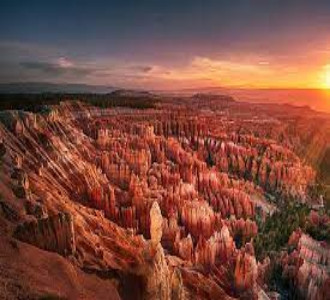
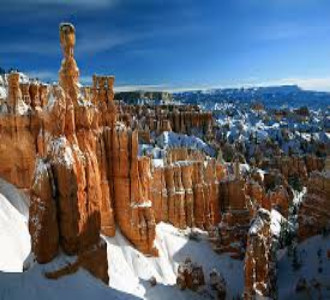
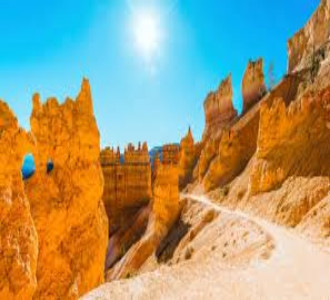
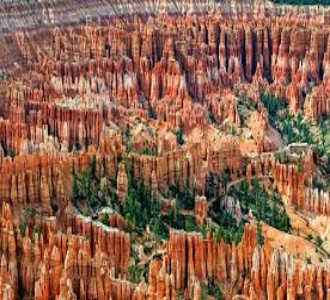
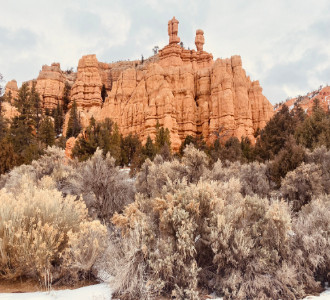
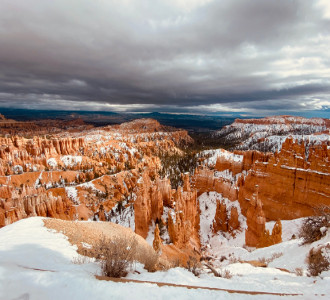
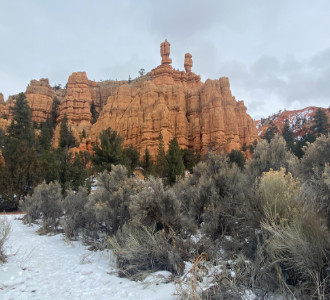
It is within Bryce, that you’ll find year-round incredible scenery – thanks in short part to the stunning rock-faced hoodoos – with these towering cliffs, which are easily seen and photographed from a series of viewpoints, turning deep golden as they reflect the rising sun in Summer, and being coated in glistening snow in the winter.
Named after Ebenezer Bryce – a Mormon who settled within the park – the beauty of Bryce Canyon, which is actually not a canyon at all – has been carved over millions of years of erosion and climate changes – and it’s earned a reputation as being not only one of the great places to walk through evolving history, but thanks to the clear skies and amphitheatre nature of the hoodoos – one of the best places in the United States, and even the world, to stargaze and spot the Milky Way.
A true privilege to witness, undoubtedly star-gazing at Bryce Canyon is a spiritual experience, and for those staying for multiple days and camping you’ll get to enjoy not only this incredible spectacle, but also a truly magical sunrise and sunset as the golden hoodoo’s lit up in a kaleidoscopic performance that brings to valley below to life.
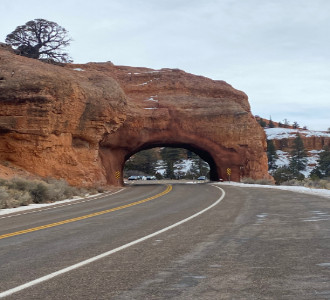
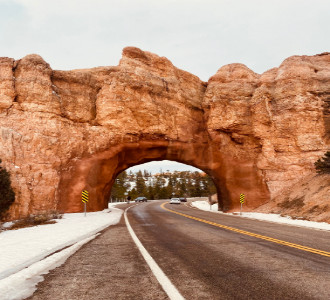
Bryce Canyon is also unique, in that for those who don’t fancy long hikes, but want to see this incredible park in all its glory you’ll find a series of incredible overlooks easily accessible by a year-round shuttle. With those who are driving able to take on the scenic number 12 or 15 highway, that cuts across Bryce Canyon Park – stopping at 15 scenic highways – including the famed arch canyon highway where you can drive your car through a mountain – before heading deeper into the park or to one of the parks many campsites.
Bryce Canyon is also blessed with more than 160 bird species and more than 60 species of mammals – including the photogenic Mule Deer – and undoubtedly the best way to encounter some of these wildlife, as well as explore the depths of Bryce Canyon, is by taking on one of the 15 hikes across the Canyon.
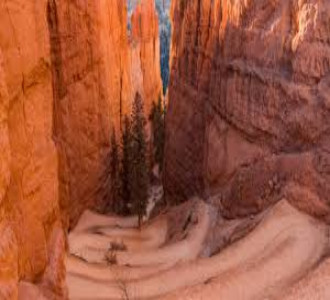
All accessible by the 5.5 mile Rim Trail – which is one of the truly great hikes in Bryce, and which the name suggests takes explorers across the Rim of Bruce for a series of different but truly photogenic viewpoints out over this magnificent vista – for those wanting to dive deeper into the Canyon, we’d suggest taking on one or more of the Swamp Canyon Trailhead – where you’ll pass through two small creeks – which are known to be home to wildlife, the Twin Bridges Trail – which is a challenging 3 mile route over a series of switchbacks, the Navajo Loop which takes you from sunset point to viewpoint and through a narrow canyon slot as you came face-to-face with the Canyon Walls – of the Fairyland loop, a challenging 8 mile descent into the heart of the Hoodoo’s and Bryce Canyon, where a sprinkle of Magic awaits you.
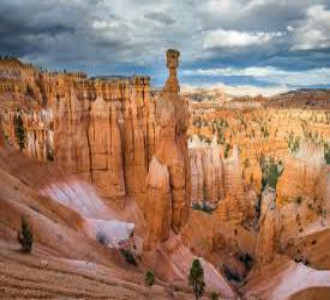
It’s through these trails – or by taking on the Rim Trail by Road, that the iconic images and views of Bryce Canyon can be captured, with this national park being famed for its multiple viewpoints – that are a photographers and explorer’s dream. Chief among these is the well named Sunset Point – which gives incredible views of a Hoodoo known as Thor’s Hammer, and which of course is the premier point for Sunset watching.
You’ll also find incredible views out over the Canyon at Fairview point, where Grey (Kaiparowits Plateau), White (Molly’s Nipple) and (Aquarius Plateau) cliffs are on view, as well as the Navajo Mountains, and at the Yovimpa Point – where an incredible view of the natural limestone Grand Staircase-Escalante National Monument awaits you. A true icon of Bryce, this stunning staircase includes not just views of the three multi-coloured steps seen from Fairview – but also deep views into the heart of the Canyon and its surrounding cliffs, for a stunning – of somewhat overcrowded viewpoint.
Combine these stunning viewpoints, with the Canyon lookouts of Agua and Ponderosa – both of which stare deep into the heart of Bryce Canyon and offer incredible views of this stunning natural park, and its easy to understand why this spectacular other-worldly park, with its incredible sunsets, star-gazing opportunities, hiking trails and viewpoints is a true wonder of the world. With those lucky enough to spend time exploring this spectacular paradise of nature then in for a further treat as they travel south towards the ‘Jewel of America’s Natural Parks’ in Zion.
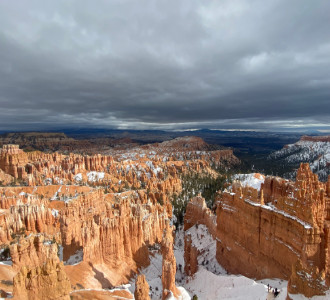
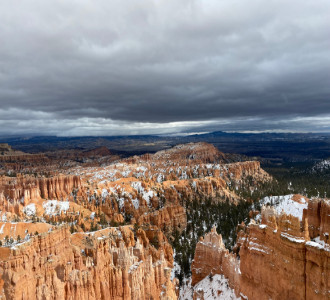
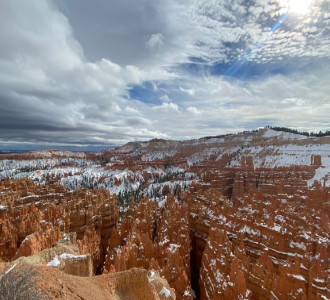
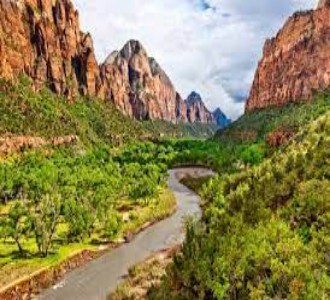
Zion National Park: The ‘Oasis within the Desert’ Zion national park is blessed with the deep Virgin River that winds across the park and which gives life to stunning sandstone cliffs, wild roaming forests and a deep Canyon – which combine to make this incredible park a kaleidoscope of natural beauty and a truly awe-inspiring spot to visit.
A park whose enjoyment will be defined by time of year you opt to visit and your ability to withstand crowds – Zion is officially the fourth most visited park in America attracting , and with its popularity comes masses of visitors – over 4 million a year, so much so that queuing to access the highlights of the park – particularly in peak season is common.
In an effort to address this visitors are banned through three seasons of the year from driving their own vehicles along Zion’s scenic drive and instead you’ll have to take the free shuttle bus to reach the most scenic spots within the park. Chief among these highlights is undoubtedly Zion Parks giant Canyon – that averages more than 2,000 feet deep – and within whom you’ll find not only the opportunity to take on one of many hiking trails to explore its 20 foot floor, but the chance to swim in its soothing waters, for a surreal and truly immersive natural experience.
A towering Canyon that is close towards a town known of Springdale – which makes for a great place to stay the night or grab a bite to eat, Zion Canyon is also of the four main hiking areas within Zion Park, alongside the areas of East Rim, Kolob Terrace, and the Southwest Desert.
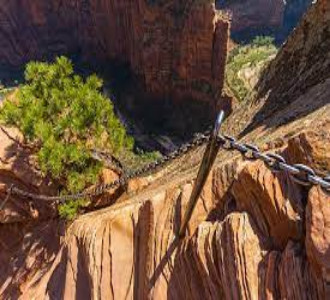
While each area is unique in its own way – and takes travellers through stunning nature, natural scenery and the chance to spot wildlife, Zion Canyon is the focal point for the trails, with it being here that the two must hike trails, Angels Landing and the Narrows lie. Taking on Angels Landing first – and this 5.4 mile ascent to the top of the Canyon overlook is a true test of both your cardio and your nerves, with this trail – which has led to travellers sadly falling to their deaths, seeing you ascent more than a thousand feet up to canyon using a somewhat unstable chain 2.7 miles to the top of the Canyon where a breath-taking panoramic view of the highlight and heart of Zion National Park awaits you.
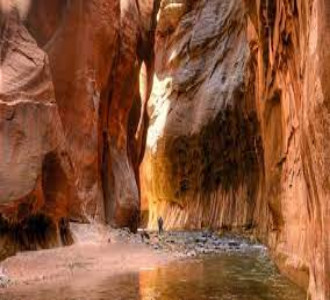
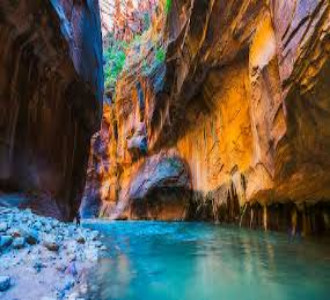
For those who think that such a hike is a walk in the (Zion) park – the challenging 9.4 mile Narrows trek may be more up your street. With this hike which again offers incredible views of the cliffs and valleys of Zion seeing you wade through the Virgin River itself in waterproof gear to trace the path and carvings of the Zion Canyon. A hike only to be made in safe conditions, the narrows is a true test for any traveller, with the risk of thunderstorms, landslide and crowds all adding to the potentially life-threating dangers on this hike.
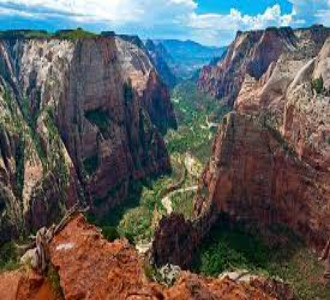
While Angels Landing and the Narrows are both truly stunning and immense hikes, they can be overcrowded, so for those seeking solitude or wanting to explore deeper into Zion Canyon then the off-the-beaten track hike of Observation Point – which offers fantastic views of Zion Canyon may be more up your street. As too will the hike of Lower Emerald Pools – which at just over a mile, is ideal for those wanting a view of some of the stunning pools of Zion, on a gentle walk with minimal elevation gain.
Alongside the hikes, you’ll also find a series of stunning overlooks across Zion – that offer truly incredibly photogenic stops and wide-ranging views over the best of this magnificent park. With our two favourites undoubtedly being Canyon Overlook – which lies outside the main part of the park, but from where you can get picture perfect views of the Canyon of Zion, and Weeping Rock- where thanks to a water flow that cuts through the Sandstone Rock an illusion of a crying rock presents itself to explorers – reflecting the magic and beauty of this truly glorious park.

Alongside the hikes and viewpoints, you’ll find Zion a fantastic place for cycling – with there being a series of dedicated routes that cut through the best of the park – including the Zion Scenic Drive – which is well work doing. With biking making for a great way to explore the park for those who don’t fancy taking the shuttle bus.
Those travellers who fancy a true adventure are also able to find incredible rock climbing – which includes routes up to the side of towering canyons, and from where you look down at the rolling valley below – as well as a series of famed arches, which offer some fantastic exploration on both foot and bike. Chief among these is to photogenic Kolob Arch, for which you’ll need to dedicate a full day to explore – as the route to its summit requires a strenuous 14 mile hike across rivers, forests and up cliff face edges, for a truly channelling but rewarding route.
For those fortunate enough to be staying overnight – either in one of the great lodges in the nearby town of Springdale, or in one of the three Zion campsites, then you’ll be treated not only to glorious sunrises and sunsets – which like Bryce Canyon, make the stunning forests, the virgin river – and in particularly the towering Zion Canyon come to life in a range of deep rouge colours – but some of the best stargazing on the planet.
So immense is the stargazing around Zion, thanks to the clear skies, Springdale has earned the nickname of the ‘International Dark Sky Park’ – with the absence of air pollution and the clear night skies being truly beautiful, with those fortunate enough to be within the park able to witness shooting stars, planets and even the Milky Way from the Kolob Canyon Viewpoint – which represents a spiritual and undoubtedly the best of the stunning Zion National Park.
Two stunning wonders, visiting the contrasting yet equally beautiful national parks of Zion and Bryce can offer one of the most adventurous and scenically stunning days of your life – or for those lucky enough a thrilling multi-day road trip. As travellers traverse and explore two stunning parks – with Bryce Canyon offering a series of awe-inspiring views with other-worldly grand scenery under the gaze of orange hoodoos, arches and cliffs, and Zion National Park offering nature at it’s absolute best, with its striking canyon, free-flowing virgin river and thousands of kilometres of endless hikes and viewpoints being a true dream for any nature loving explorer. Couple this with awe-inspiring sunrises and multi-coloured sunsets, as well as some of the planet’s most spiritual and clear stargazing – with views across the galaxy – and there’s no doubt that together the twin parks of Bryce Canyon and Zion National Park are scenic, adventure and a simply stunning wonder of the world.

Where:
Found just 62 miles apart – and connected by two highways – the twin wonders of Bryce Canyon and Zion National Park lie within the great state of Utah within the United State of America.
Officially within the countries southwest, the proximity of southern Utah to Arizona – and the tourist hotspot of Las Vegas – means that the towns of Salt Lake City within Utah and ‘SinCity’ Las Vegas within Arizona serve as perfect base and arrival cities from which explorers can depart. With those spending multiple days within the parks able to find both accommodation and food within the park cities of Springdale and St. George, which lie in the shadows of the mighty canyons and hoodoo’s of Bryce and Zion.
Two incredibly accessible wonders of the world – that are accessible and equally stunning year round, visiting Bryce Canyon and Zion National park offers travellers a chance to explore some of the world’s greatest natural scenery and take on some of the most awe-inspiring hikes – and you’ll find there’s a range of options, to suit every travellers requirements, when it comes to getting to these immense wonders of the world.
Getting There:
Two interlinked wonders – that offer diverse and yet equally stunning landscapes, experiences and scenery – while both Bryce and Zion are the peak of serene national parks that are not only close neighbours – the parks also lie just a stone’s throw away from some of the United States most notorious and accessible cities (Las Vegas and Salt Lake City) – as well as Zion being served by a series of gateway and entrance cities.
So regardless of where you find yourself in the world – your first port of call when heading to the twin wonders of Bryce Canyon and Zion National park will be to get yourself to either Las Vegas’s McCarran International Airport – which lies 170 miles away from the parks or Salt Lake Cities International Airport which lies within the state of Utah some 300 miles away from the parks.
With both airports being served by a range of domestic carriers – and for those heading to the twin wonders from outside America by a series of international carriers, reaching your starting point for your journey into the great wide open of the best of Utah should be a simple matter of choosing your starting city – based on cost and availability – and boarding the airport to begin your adventure.
Once you’ve landed in either Las Vegas or Salt Lake city, you’ll then need to decide on your method of getting to the parks themselves – and there are three main options; through self-drive, by tour or by public transport.
To Bryce & Zion by Self-Drive Car:
For those who feel comfortable driving abroad – hiring a car is undoubtedly the best to get to and explore both Bryce Canyon and Zion National Park, with the road from Vegas being particularly stunning into the parks and taking you on a scenic tour of Utah over the course of two hours – and the road from Salt Lake City getting you to the parks in three hours and again giving you incredible view of the best of America’s stunning natural wonders.
For those who take the option of self-driving do be warned that you cannot take your car on Zion’s scenic panoramic drive (you’ll need to use the shuttle – see below) but outside of that the route along Highway 9 and through the Mt Caramel highway that span the lengths of both parks are truly stunning.
For those leaving from Salt Lake City it can be a simple manner of following the interstate 15 south and then dropping onto interstate 20 and 12 to connect with Bryce Canyon park for your first national park. If you opt to head this way we’d advise to head direct towards Bryce and make some time for some photo stops as you enter the parks grounds – as a shot of a car driving through the open Hoodoo and arch being a fan favourite at this park.
Once within Bryce you’ll then have all the time in the world to explore this stunning park, including taking in the different views from the rim Trail, taking on one of the many trails that lead into the canyon, and for those lucky enough sticking around to witness a glorious sunset and the night stars, which are particularly magical within Bryce.
Having explored the park fully you can then proceed to drive back along interstate 12 and connect to 89 – which will take you all the way, on a stunningly scenic drive to the heart of Zion and the town of Springdale, from which you can explore this incredible ‘Oasis within the desert.’
For those setting off from Las Vegas – we’d recommend driving to Bryce Canyon first and then heading to Zion in a circular route which will return you to Las Vegas – where a bit of down time will be well earned. For those departing from Las Vegas on a self-drive expedition you can opt to take a direct route to Bryce along interstate 15 and then connect to route 89 to reach Bryce or you can take a more scenic route – which affords you a route across stunning landscapes on your way to the twin wonders of Bryce and Zion.
First up from leaving Las Vegas we’d advise taking Interstate 15 north, navigating the city traffic and then coming upon the grand Jurassic era Valley of Fire Park 50 miles after departure.
A park that lives up to its name – as at sunrise and sunset the red rock geo-logical marvels found within the park create the illusion of the park being on Fire – The Valley of Fire Park is an often overlooked – but truly incredible stop for some stunning sunrise or sunset photography.
It also marks your final stop before passing the Arizona State Line (another photo worthy stop) but not before you are treated to incredible views of the Virgin River Gorge that serves not just as a companion to your journey, but also is the same Virgin River that breaks through and into Zion – offering a great preview of the beauty of this river that’s to come.
Having then entered Utah and passed into the State Line, you can make a quick stop at the St. George Dinosaur Discovery Site – where a museum featuring fossils, dinosaur skeletons and an outside footprint of a 200-million-year-old dinosaur footprint awaits you – for a true throwback to the Jurassic era.
After stepping back in town you can continue north on the interstate 15 – and we’d encourage you to make a stop at either the town of Hurricane or Rock Rosters – two stunning towns that lie in the shadow of scenically stunning towering mountains – and which represent a great place to stock up on food, snacks and water before ascending to the amphitheatre and wonder of Bryce Canyon – where your exploration of these twin wonders will then begin.
Self-driving from Bryce to Zion:
After a scenic journey self-driving from Salt Lake City of Las Vegas to Bryce Canyon – and taking to take on some of the incredible viewpoints – witness a kaleidoscopic sunrise and sunset, marvel at the many hoodoo’s and cliffs from the observation points and rim trail and marvel at the magical night time stars, constellations and the milky way – it will be time to leave Bryce Canyon behind – and head down to the oasis in the desert and scenic paradise of Zion National Park.
Thankfully – owing to the incredible infrastructure and parks service within the United States the 72 mile drive that separates these parks can be achieved bt taking the route 89 down south to enter the east gate of Zion and connecting to the picturesque Zion-Mt Carmel highway – that will take you past a series of stunning turnoffs and photo spots before making your way towards the south of Zion – and, for those stopping overnight, to the charming and scenic town of Springdale – where serves as a great base to explore Zion.
Las Vegas to Bryce Canyon & Zion National Park by Tour:
While Self-Driving to the twin wonders of Bryce Canyon and Zion National Park is the best way to explore the parks with total freedom – for those travellers short on time, who don’t fancy driving or who want to take the hassle out of planning their trip but still want to see the highlights of Bryce and Zion – then a day or multi-day tour is a great option.
With most tours leaving from Las Vegas, you’ll need to get yourself to Sin City ahead of the departure and you can then select from a range of tour companies that offer tours in both executive high end vans or in classic minibuses to explore the parks.
Typically the tours will depart Vegas and head straight to Bryce Canyon and then to Zion – and for those departing on a day trip, you can expect an early departure around 6 – 7am and then proceed to Bryce – making a few photo stops along the way before arriving at the Canyon. Within Bryce you’ll then get the chance to walk the Rim Trail and take in some stunning viewpoints – before heading to Zion, where you’ll enjoy the parks highlights – including views of the Zion Canyon and the virgin river before departing back to Vegas.
A great option for the budget and time conscious traveller – while day trips will give you a highlight reel of the two parks – they won’t see you get the opportunity to fully explore the parks, in particularly Zion where treks along the famed Narrows or Angels Landing will fall outside the time limits of a day tour.
So for those seeking an intimate and full exploration of these incredible national parks – we’d highly recommend taking a multi-day tour, that will give you an opportunity to explore both wonders to their full potential, and afford you with stunning views and experiences that will undoubtedly last a life-time.
By Public Transport:
The last option to get to the wonders is by Public Transport – but be warned that this method is not suitable in the winter or for those seeking to head to Bryce Canyon as well as Zion in one go.
An option that may be suitable for travellers seeking to explore Zion at their own place and who don’t fancy driving, getting the public bus to Zion can be done – but is a little complicated. First up you’ll need to get yourself to Vegas and then from there it’s a case of either hopping on the National Park Express to Zion national park or taking the Greyhound from Vegas to St George in Utah – and then getting to St George shuttle bus to Zion Visitor centre to begin your exploration.
A route and method that is achievable (despite what you may read elsewhere) the bus from Vegas to the national parks will take a full-day to arrive, but should hopefully have a couple of toilet breaks and (if you’re lucky) plenty of free Wi-Fi along the way to make your journey enjoyable. But do be warned to experience and explore both parks you may have to spend a day returning from Zion to Vegas and then another day from Vegas to Bryce – instead of being able to explore both wonders in one round trip – which can take the edge of the magic of the wonders of the world that are Bryce Canyon and Zion National Park.
Getting around Bryce Canyon and Zion National Park:
Given the fast size of both parks – Bryce Canyon clocks in at more than 8.5 km² and Zion clocks in at a mammoth 590 km² — navigating the parks to get to the stunning viewpoints and the trailheads can be something of a challenge for those who are heading to Bryce and Zion absent a tour guide or a self-drive car – or for those who arrive with a self-drive car in peak season who will be unable to drive
In consideration of this – and owing to the vast size and to manage crowds – you’ll find that during the Spring — Autumn season between March – November both parks offer a free shuttle bus that departs and stops at a series of conveniently placed locations around the park – and will take visitors the scenic panoramic road within Zion for some of the most stunning scenery and best photo stops on the planet.
A great way to get around, those staying longer can also consider making use of cycling through the parks if you want to test your cardio and feel the breeze of nature upon your face – but for those arriving at Zion or Bryce absent a car or tour – we’d highly recommend making use of the shuttle bus to get around – which will help you get the absolute best out of and explore the twin wonders of the world that are Bryce Canyon and Zion National Park.

Best time to Visit:
With stunning scenery, thousands of acres of hikes – and glorious astronomy opportunities – not to mention awe-inspiring sunsets and sunrises – both Bryce Canyon and Zion National Park are open year-round – and there is truly no bad time to visit these twin wonders.
In fact, given that the wonder of the park changes with the seasons – with winter seeing the hoodoo’s and amphitheatre and the towering canyon covered in soft snow for a magical experience, spring bringing with it blooming wildflowers and nature, summer seeing the park bustling with crowds and warm temperatures and autumn seeing the parks natural scenery and the leaves and forests within the parks turn into a kaleidoscope of colours that is a photographers dream – we’d advise deciding on your time to visit based on your preference for crowds, weather and activities – as well as your budget and time.
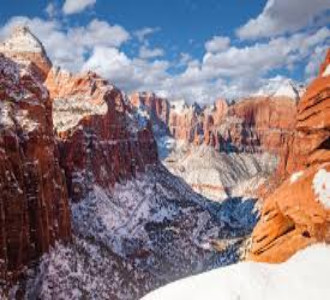
So for those who are seeking to avoid crowds within both Bryce and Zion – and who just want to see the highlights of Bryce and Zion – we’d advise visiting in the winter or early spring and late Autumn. While visiting during this period will come with colder temperatures and you’ll need to wrap up warm – you’ll find that areas of both parks are completely absent crowds giving you a more intimate experience with the parks. On top of this visiting in the winter months – between Late November to March is the best time for those self-driving who want to both avoid traffic and drive the scenic road within Zion by themselves – as it being during this period that the shuttle buses do not operate. Yet given that the shuttle buses do not operate and the hikes within the parks are either dangerous or closed during this period, visiting during winter is not recommended for those using public transport to reach the parks – and instead we’d suggest that this period is absolutely ideal for those on a day tour and with limited time within the parks — – where you can enjoy the many snow-covered hoodoo’s within Bryce and the snow topped canyon within Zion – with the soft snow creating a true feeling of magic during your visit.
For those who are okay with– and even enjoy the hustle and bustle of – crowds, and who want to experience the parks with warm weather and guaranteed gorgeous sunsets and sunrises, as well as take on the trails – the visiting in the summer is for you. A time when the trails within both parks will be guaranteed to be open, but that you’ll need to get permits for, visiting in the summer of Bryce and Zion required advanced planning – but brings with it clear blue skies where the best of both parks are on display. An option ideal for solo travellers – as you’re guaranteed to never be without company, visiting during the summer will likely bring with it extended waiting time and queues, so we’d encourage anyone visiting during this period to budget at least four days – if not longer to explore the best of these parks.
Yet for those seeking the joint best of Bryce Canyon and Zion – including taking on the hikes in moderate temperatures, with minimal crowds and reduced prices – then the best time to visit Bryce and Canyon is in the Spring or Autumn – with the months of April to May or September to October being ideal. A period where you will still need to plan in advance – visiting during early spring or late autumn will see the peak summer crowds absent from the parks – but still the shuttle bus running and the trails opening – giving you a chance to enjoy the absolute best of these two stunning wonders in a perfect setting.
Therefore, whilst there’s no bad time to visit the wonders of Bryce Canyon and Zion National Park – and each trip is guaranteed to give travellers a unique exploration and opportunity to enjoy these truly worldclass and stunning beautiful wonders – we’d advise tailoring the time of your trip to your own personal preference (crowds, hikes, duration) – with our recommendation being – for those who are seeking to fully explore the parks with comfortable weather, minimal crowds and with the highlights of the parks and the trails open – that the best time to visit is between the months of April to May and September to October.
How long to stay & Suggest Itinerary:
Two incredible wonders, that truly offer the absolute best of natural beauty, adventure and some of the most incredible sunrises, sunsets and stargazing on the planet – thanks to the interconnectivity and close proximity of Bryce Canyon and Zion National Park — a journey to these twin wonders can truly be defined by the travellers. With those on a budget and short of time able to cover both parks in a single day, whereas those who wish to truly explore the depths of this work – and take on the incredible treks within both parks – able to spends days – and even weeks exploring their beauty.
One Day: For those on a strict budget and short timetable – the easiest option will undoubtedly be to book a one-day group tour that leaves from Las Vegas – that will take you to the main highlights of Bryce Canyon – including the multiple look-out points along the Rim Trail and then into Zion National Park to marvel at the Canyon – ride the scenic rail and glimpse a kaleidoscopic sunset before departing back to Sin City – with the highlights and a taste of these incredible parks behind you.
Three to four days: Yet for those with more time our recommend would be to budget at least four days days to see both of both Bryce Canyon and Zion National Park. Across these four days you can plan for an action packed adventure – beginning at Bryce Canyon where you can check out the different viewpoints along the Rim Trail and at inspiration point and take on the one of the Swamp Canyon or Loop Trail before enjoying the glorious sunset from sunset point. After the lights go out – and you’ve enjoyed a bit of dinner we’d then suggest finding a good spot along the Rim Trail to watch as the amphitheatre and hoodoos lit up under the night star – and the planets, constellations and milky way appears before you in a dazzling and awe-inspiring display.
After getting a good night’s rest, we’d suggest getting up early to witness the sunrise over Bryce Canyon’s amphitheatre and taking on the almost 70 mile across the Zion-Mr Carmel highway towards Zion National Park. Arriving around mid-day you’ll have plenty of time to check out Observation Point – and park your car before taking the shuttle along the scenic highway. Having returned to your car and found your lodging we’d then advise heading to Kolob Canyon at dusk to witness both an incredibly sunset – and for those with enough energy – take advantage of the stunning astrophotography opportunities available – as the constellations and milky way once again before you.
Having got a good nights sleep, you can then beat the crowds and the sun and spend day three taking on the challenging Angels Landing trek – with this two a half mile trek requiring you to conquer thousands of feet of elevation and scramble and pull yourself up to the viewpoint at Angels Landing – where a stunning view of the Zion Canyon and the Virgin Riverbed await you. A potentially full-day trip, it’s essential to start as early when taking on the Angel’s Landing trip – and for those who finish before sunset – and still have energy left we’d advise heading to weeping rock and the towers of the virgin to tackle another one of Zion’s famous hikes before calling it a day.
Waking up on your last day and another of the park’s incredible hikes will await you – this time the Narrows, a potentially nine mile trek across the Virgin Riverbed – that will see you wade your way through the river while taking in incredible views of the iconic of Zion – the Zion Canyon. One of the most scenic – and unique hikes on the planet – the Narrows will require plenty of stamina and makes for a fitting end to any exploration of these twin wonders – with the scenery and photo shots along this hike representing some of the most and most scenic on the planet.
Having made time for one last sunset at Kolob Canyon – and having explored the best of Zion and Bryce Canyon, you can then begin to make your way onwards from your journey – with two of the best national parks behind you.
While a four day, three night exploration is our recommended itinerary for those heading to twin wonders of Bryce Canyon and National Park – for those who are more fortunate it’s possible to spend longer in each park – making time to take on additional trails within Zion – including Observation Point and the Subway – and spending longer exploring the depths of the Canyon at Bryce.
Therefore with trip durations to suit every traveller – from one day for the highlight – to weeks on end, our recommendation would be to budget four days and three night to explore these stunning twin wonders – but there’s no doubt that any trip to the of Bryce Canyon and Zion National park will leave you breathless and inspired by the stunning scenery and nature within these two wonders of the world.

Top Tip:
Two stunning National Parks – Bryce Canyon and Zion National Park are an adventurers, photographers and naturists dream – with their close proximity, stunning beauty and the differing landscapes truly offering something for everyone to explore, get lost within and re-discover themselves.
Yet while the twin wonders are truly magnificent, it’s essential for explorers to understand and respect the environments into which they are entering – if they are both to stay safe and enjoy their time exploring these national parks. With the differing climates, changing seasons, death-defying trails and wildlife all posing potential problems to explorers.
Combine this with the increasingly popularity and crowds within the parks – which see’s road closures and the requirement for permits to access parts of the parks and treks, as well as needing to know the best time to visit and the potentially life-saving equipment and supplies you’ll need within the park – and an exploration to these twin wonders can become a complicated and complex undertaking.
Therefore, to make any journey to both Bryce Canyon and Zion National Park as enjoyable and stress-free as possible – and to ensure you get the absolute best out of these increidble parks while staying safe, we’ve rounded out our top tips when visiting the wonders of the world that are Bryce Canyon and Zion National Park:
Come Prepared for the Conditions & Season:
First up, and in our view the most important when visiting both Bryce Canyon and Zion National Park, is to bring the relevant clothing and equipment for the season in which you are visiting and the differing climate within each park.
Particularly essential for those visiting during the winter season, where temperatures can drop to minus –25 centigrade – well past freezing, we’d recommend that any traveller comes to Bryce and Zion with plenty of layers – including a warm fleece jacket, Gloves and a warm bobbly hat – noting that temperatures can rapidly change and are particularly known to be cold at night. With those bringing the extra layers able to stay warm and enjoy world-class star and constellation spotting in both parks in comfort.
In addition, both parks – regardless of the season can see sudden and intense rainfall – which can be particularly treacherous for those undertaking hikes within the parks. For this reason, we strongly recommend that every traveller bring with them a solid rain jacket, poncho and even an umbrella to guard against any rainstorms that may occur.
As well as coming with plenty of wet and cold weather supplies, those taking on one of the hikes in either park – and particularly for those taking on Angels Landing or the Narrows within Zion National Park, it’s essential that you come prepared with the hiking essentials – including solid and worn in but comfortable hiking shoes, plenty of water, good quality wool socks, plenty of snacks, a first aid kit, a torch – and plenty of snacks – to get you through the hike.
Further, regardless of whether you take on a trek within either national park or the season you are heading to these twin wonders, it’s essential that you take a good quality Hat and plenty of sunscreen with you — to protect against the strong sun that you’ll experience in the parks.
Finally, in consideration of the stunning landscapes, incredible treks, kaleidoscopic sunrise and sunsets, and the starlit nights that make both Bryce Canyon and Zion National Park a true photographers dream – we’d recommend coming with and investing in a top quality camera, with a high DLR and that is capable of capturing star and night shots – to allow you to preserve and re-life the stunning scenery and beauty of these two stunning wonders of the world.
Be prepared for the Hikes and Treks:
So much of the wonder and beauty of both Bryce canyon and Zion Nation park are found in the incredible hikes – from the Rim Walk and Navajo Loop Trail within Bryce to Angel’s Landing and the Narrows within Zion.
Yet to get the best out of these trails, it’s essential that you follow a series of safety recommendations – including coming prepared for the tricky conditions that you’ll find on the trails with the correct gear (mentioned above), plenty of water and a thorough understanding of the route ahead of you – with this being particularly essential for those taking on the narrows – where deep trekking through the Virgin River can be extended.
For those taking on the more popular hikes within Zion – including the narrows and Angels Landing – be warned that you’ll need to apply for permits in advance to take on these treks – owing to their popularity and to ensure the safety of hikers on the trail.
Still despite the introduction of permits on these trails, those taking on the Angels’ Landing trail need to prepare for delays and queues when you reach the summit part of the trail, specifically where you reach the chains up the boulders that lead to the Angel’s Landing viewpoint. This section – which does feature a series of drop-offs – frequently see’s people getting frozen or stuck on the trails, and it’s essential regardless of how you may feel that you do not seek to overtake or rush anyone on the chains – as it can and has resulted in loss of life before.
In consideration of the potential traffic queues that can build on the trails, as well as the extended time that some hikes can take – as well to ensure you get to enjoy the full beauty of these stunning national parks – we’d highly recommend that you start your hikes as early as possible. Starting your hikes early will not only give you a heads start on the crowds that will follow later, but will give you more time to enjoy the stunning views – and for those who start incredibly early give you a chance to witness a stunning sunrise – which can truly be one of the best moments of your time exploring these wonders.
Finally while the hiking within both Bryce and Zion can – and likely will — be one of the most incredible and awe-inspiring parts of your trip, there’s no doubt that the challenging nature of the hikes – particularly for those taking on Angel’s Landing can take their toll on your cardio levels and your legs – leaving you in a situation where you’re unable to take on a further hike later and enjoy your reaming days within the wonders. For this reason, it’s absolutely essential that you recover well and rest between hikes – being sure to put your feet up after hikes, take on plenty of stretching – and treat yourself to a hearty meal so as to ensure you can ensure your days within the parks are as action-packed and enjoyable as possible.
Getting Around:
Given the vast size of both national parks – as well the volume of stunning trails and sights to explore, getting around both Bryce Canyon and Zion National Park can be one of the most challenging aspects of your adventure – and one that certainly has the potential to make or break your exploration and adventure of this stunning park.
While our getting there section covers this in more detail – and this likely won’t be a concern for those travelling to both national parks on a guided tour. For those who are self-driving or making an independent way to both parks, it’s essential to know how to get around, particularly during the high seasons in summer – where crowds and traffic are constant across the park.
So for those self-driving, it’s essential that you come to both parks with a full tank of fuel – noting that while the drive between each parks is just over 60 miles, exploring the parks themselves can drain your fuel, and there are no service stations within the parks themselves.
For those visiting Zion National Park, there’s no doubt that the parks Scenic Drive will be one of the highlights, with every turn and stop-off brining it with stunning viewpoints and lookouts that truly showcases the absolute best of this incredible natural wonder. However, for those self-driving and for those seeking to explore the incredible scenic drive, it’s essential to know that access to the Zion Canyon Scenic Drive is only by Shuttle Bus between the months of March – end of November. For this reason, it is essential that anyone self-driving refrains from entering this scenic drive during this time – or else you risk a fine, a telling off by park rangers and a series of unhappy explorers.
In compliment to this, while the Zion Canyon Scenic Drive is the only official road that self-drives cannot drive within Zion national park, we’d encourage anyone visiting during the high periods of Spring – August, to refrain from driving within the park, and instead take the Shuttle Service – which runs from March to November to get around.
From a self-driving perspective, it’s incredibly easy to leave your car in the town of Springdale nearby and then get a shuttle service into the park – with those then within Zion or Bryce Canyon then able to board a free, regular and efficient Shuttle Service that will drop you off at or close by the many highlights of the park.

Book in advance:
Given the stunning natural beauty of both Bryce Canyon and Zion national park, and their twin status as a true wonder of the world, not only can you not drive you car across Zion National Park, but you’ll find that within both parks accommodation and those hiking trails within Zion that require a permit are booked up fast, so for this reason we’d strongly advise Booking your trip to both parks in advance.
Under this top tip there are two main aspects to consider, the first of which is to book your accommodation early. Especially relevant during peak visiting seasons, given the incredible sunrise, sunset and night time vistas that you’ll find in both parks, as well as the high cost of accommodation – you’ll find that campgrounds, park lodges and in particularly around Zion and hotels within Springdale will book up – sometimes 12 months in advance – so for this reason it’s absolutely essential that you book early.
The second main consideration – particularly for those visiting Zion is the permits required for hiking trails, with our advice being to book hiking trails at least 6 months in advance if possible. Particularly relevant for those seeking to take on the incredible hike of Angel’s Landing, the popularity of the hikes within Zion are legendary — and for good reason with the stunning and challenging hikes truly affording the best views across the whole of this incredible park – so in order to ensure you get the chance to experience this truly bucket list experience, be sure to get and book your permit well in advance.
Come Early:
Finally, as a result of both the volume of immense beauty there is to explore across both Bryce Canyon and Zion national park – but most importantly as a result of the crowds, it’s essential to give yourself a head start against other explorers and begin your day and exploration as early as possible.
Essential for those taking on one of the hikes in either park – particularly during the peak summer periods – being first on the shuttle bus to the trailheads is essential, as by 9am you can expect long queues to form at the shuttle lines, which can result in you either missing your experience on a trail, or even worse, undertaking a trail within the park after dusk – when conditions can be truly dangerous.
We’d also strongly advise you to start your day early to minimise entrance lines at visitor centres, entrance gates and for those travelling from further out than Springdale – traffic queues on the highway.
While arriving early can be daunting and will require a strong-will to get up before the sun, it will not only mean that you get to fully enjoy the absolute best of these stunning National Parks, but also get a head start on the trails and the chance to enjoy them without significant crowds. But best of all you’ll get to enjoy- hopefully in relevant solitude – sunrise over the stunningly beautiful parks of Bryce Canyon and Zion national Park – with a chance to witness the deep kaleidoscopic sunrise bringing the park and your road ahead to life being undoubtedly one of the great experiences within these twin wonders of the world.
Cost:
Whilst Bryce Canyon and Zion national park are twin wonders, visiting these increidble natural icons (thankfully !) don’t carry with them the cost of visiting two wonders – with both parks – thanks in large to the natural element of them and the increidble work done by the parks and recreations team within both parks – being available for exploration by explorers on all budgets.
In fact, while there are entrance fees at both parks, the majority of cost in visiting both Bryce Canyon and Zion National park will come in the form of your ‘getting there’ costs and in any extras you need to support yourself (gear, food and essentials) when exploring these increidble wonders.
Getting there: For getting there, the easiest option will be to fly into either Las Vegas or Salt Lake City – and use either city of as base from which to begin your exploration into Bryce Canyon and Zion national Park. So for international travellers based within Asia and Australasia, we’d encourage you to budget between $1100 -$1500 Usd for return flights into either city — and we’d also recommend that given you’ve travelled such a long way combining your trip with some of the other wonders within North America.
For those based within Europe and South America, you can expect your cost of flights to slightly reduce – clocking in at between $750 — $1200 Usd , with those based within North America able to catch cheap international or domestic flights for between $300 — $650 Usd on average to reach Las Vegas or Salt Lake City.
Once you’re at your base for exploration, the next cost of your trip will be decided upon the method of travel you take to reach Bryce and Zion National Park, with the budget option being to go by public transport and camp, the medium range option by Self-Drive and in nicer lodgings – and for those with a healthier budget or who are short on time able to travel to Bryce canyon and Zion on a tour.
By Tour: For those taking on a tour, which can be either private or in a group, this is a great option for those who don’t fancy driving to Zion and Bryce and who are short on time, the cost of a tour will vary based largely on its duration – with a shared one day tour from Las Vegas that offers a whistle-stop tour of the highlights of both wonders likely to come in at around $150 Usd, where as a private multi-day tour which includes an extended time to explore both wonders and includes accommodation and food likely to begin from $550 Usd.
With prices to suit most budgets, taking a tour can be a relaxed and stress-free way to explore both wonders, and while you will be travelling on a fixed schedule, for those seeking a flat rate cost to explore these wonders, a tour can be a great way to get to and explore these parks – just be sure to do your research before booking.
Yet for those seeking to delve further into both Bryce Canyon and Zion national park, and take on some of the incredible hiking treks including the Navajo Loop Trail in Bryce and the Angel’s Landing and Narrows treks within Zion – then arriving at both parks by yourself is the only-realistic option, and arriving by either public transport or through self-drive are both fantastic options for this.
By bus: Starting with the cheaper option first, to get to Bryce and Zion by bus, the easiest option is to depart during the summer months and hop onto either the direct buses that run from Vegas to Zion during these months – which can cost $30 Usd one way, or for a cheaper option take the greyhound bus from Las Vegas to St George in Utah – and then grab a St George shuttle bus to Zion Visitor centre to begin your exploration ($15 Usd) — with you then being able to use the free shuttle bus within Zion to get around and reach Springdale for those staying overnight.
A much cheaper option then a tour, and one that affords you more freedom to take on the trails – do be warned that depending on bus routes and where you stay, you may have to explore both parks in separate sittings (retuning to Las Vegas or taking a bus north into Utah and making your way towards Bryce Canyon from any of the smaller towns there) when travelling by public transport – which will likely double your cost for the overall travel when exploring Bryce Canyon and Zion National Park by public transportation.
Entrance fee: Additionally when it comes to budgeting for entering either park by public transport – do note you’ll get charged for entering on foot or by bicycle at the entrance gate to both parks – which will cost $20 at each park and which is payable on arrival – adding an extra $40 USD to your total cost.
While arriving by public transport will likely be the cheapest option – it is, in all honesty, not the most convenient – with travellers being dependent on bus schedules to get around and being limited to the supplies they can carry with them – with the public transport route also likely to add at least three extra days on your trip, cutting into the time you have to explore these two incredible wonders of the world.
Self-drive: For this reason, our recommendation when seeking to explore the twin wonders of Bryce Canyon and Zion National Park is to self-drive to the base cities of Salt Lake city or Las Vegas and then head firstly to Bryce Canyon and then to Zion National Park. To do this you’ll need to get your hands on a rental car – which is easily done within both base cities and at each airport.
Unless you’re travelling in winter – where snow tires may be required – a standard car (sedan’s are always recommended) will suffice for those on a budget, where as those who fancy including in an American Road-trip to the wonders able to indulge and stretch their budget towards an SUV or similar more comfortable vehicle.
Ensuring that your rental car comes with insurance and a GPS (which are standard inclusions with most rentals) you can budget between $30 USD — $75 Usd a day for car rental (not including petrol) which given the freedom and comfort a rental car affords is well worth it.
For those self-driving we’d advise to budget an extra $100 USD for petrol for those staying for a couple of days, and do bear in mind that you cannot access Zion’s Scenic Drive during the months of March – November when self-driving, with taking the shuttle to get around Zion and leaving your car in springdale being one of our top tips when visiting.
Alongside the cost of rental and petrol, you may need to budget $35 Usd for entry fees for both parks if self-driving ($70 Usd in total) — however in complement to our top-tips for budgeting for a trip to Bryce and Zion – and applicable for those arriving into both wonders by either public transport we’d advise that rather than pay the $40 Usd for walking or biking into the park or the $70 Usd for Bryce and Zion if self-driving – that you instead invest in the America the Beautiful National Park Pass which is an $80 Usd pass valid for 12 months that grants you access to more than 2,000 National Parks – including the twin wonders of Bryce and Zion. With this pass being perfect for the budget conscious traveller who’s looking to expand their visit to America with the other stunning National park wonders.
Aside from those taking on a tour to explore the twin wonders – where your price will be fixed in advance – those self-travelling using either public transport or Self-driving will also need to account for the cost of food and accommodation.
Food & Accomodation: With those on a budget encouraged to purchase their food in advance and able to get through a day on around $10 Usd. Where as those who fancy to indulge and a hearty meal after taking on one of the walks within either Bryce or Zion advised to increase their food budget up to $20 Usd a day on stock up on plenty of carbs and protein ahead of time. For those who don’t manage to get food in advance – or who eat through their supplies – the best place to stock up for both Bryce and Zion is within Springdale – but you can expect prices there to be higher and we’d encourage you to budget as much as $30 Usd a day for your meals – if not higher.
For those self-transporting, you’ll also need to account and budget for accommodation – with the sooner you book in advance the cheaper your cost likely to be — with campsites, lodges and hotels likely to be booked up more than a year in advance. Whilst this makes forward planning essential – if you’re luck enough to get a spot to stay within the parks, you can expect the nightly cost for a campsite to come in at around $30 Usd, a lodge to be $50 — $75 Usd and a hotel or B & B within Springdale to start at $100 Usd and rise to as much as $250 depending on the season and your luxury.
Factoring in a little bit of money for hiking supplies ($100 Usd) and souvenirs ($25 Usd) – and excluding flights you can expect a self-guided public transport tour to Bryce and Zion to cost $220 as a base and then increase by at least $40 Usd for each additional day, a self-drive tour to start with a base of at least $220 as a base, and then increase by an extra $70 Usd — $150 Usd based on food and accommodation – and a guided tour to cost a minimum of a flat rate of $150 Usd for a day trip to both parks – and increase by an extra $200 Usd for each additional day.
Therefore, with a range of options to both get to Bryce Canyon and Zion National Park – which afford travellers to chance to explore these twin wonders regardless of your budget — the beauty of the twin wonders of Bryce Canyon and Zion National Park are found not just in the stunning scenery and glorious sunrises, sunsets and stargazing – but in the accessibility and availability to each and every explorer to travel and enjoy these incredible national parks.
Top Sights, Hikes & Best Photo Spots:
Twin wonders, Bryce and Zion National Parks offer some of the world’s most stunning natural viewpoints and scenic photography opportunities.
Thanks to the differing altitude within each park (Bryce Canyon stands at 9,000 feet, while Zion clocks in at 4,000 feet) you’ll find a stunning yet contrasting climate and landscape within each park that affords stunning snaps. Particularly within Bryce you’ll be greeted by photogenic and towering canyons and Hoodoo’s arranged in an amphitheatre of wonder that is easily explorable through viewpoints and gentle hikes, whereas Zion is a true ‘Oasis within the Desert’ offering the stunning Virgin River that brings to life the parks hills and meadows that lead towards the imposing and deep Zion Canyon – whose best photography shots lie at the end of challenging and testing trails.
Yet while the two parks may contrast in altitude and landscapes, you’ll find similarities between them when it comes to photography – most notably that both Bryce and Zion offer some of the most incredible sunrise, sunset and night-time astronomy photography – including shots of the milky way – on the planet.
Both parks are also awash with hundreds of species of animals – who against the stunning backdrops of both park can make for incredible wildlife shots. You’ll also find that both parks are blessed with year-round stunning scenery – with the winter season seeing the canyons in Zion and Bryce being covered in a soft blanket of snow – making for beautiful (if cold) winter snaps, and the spring, summer and autumn seasons bringing out the best of the wildlife and shining natural beauty in both parks – meaning there is truly no bad time to visit and photograph Bryce and Zion national parks.
Such is the stunning nature of the scenery within both parks, those visiting on smaller day trips and not stopping overnight will have no problem snapping stunning shots on something as basic as a high-quality camera phone – where as those stopping overnight and photographing the sunrise, sunsets and particularly the twinkling night skies through astrophotography required to come with advanced equipment – including a sturdy tripod, a powerful DSLR camera – and plenty of snacks as you wait for that perfect shot to arrive.
Truly majestic, the close proximity of Bryce and Zion canyon affords travellers and photographers a unique opportunity to capture contrasting yet equally stunning landscapes that are undoubtedly among the best in the world. Yet given the vast size of the parks, the short span of trips to each park and the many differing viewpoints available, it can be a challenge to make sure you get the picture-perfect shot within each park and capture the full beauty of these twin wonders.
So to make your life – and trip – as easy and special as possible, we’ve rounded out our top photography picks at the incredible wonders of the world of both Bryce Canyon and Zion National Parks.
Bryce Canyon:
Inspiration Point (Lower, Upper and Inspiration Point)
Towering Hoodoos, majestic natural arches and stunning vistas that stretch into the horizon – Bryce Canyon is a true photographers dream – and no more can the iconic shot of this stunning natural park be captured than at the three inspiration point lookouts within the park.
Found on the rim trail, just off the main road for the canyon, so stunning are the views from these lookouts, that they have been divided into three different shots – lower – where you’ll get a direct look into the amphitheatre and the stunning canyons, upper – where a view of the top of the hoodoo’s awaits you – and the Inspiration point itself, which combines the best of lower and upper for a stunning 180 degree panoramic viewpoint out over the whole of this majestic canyon.
Officially the most popular photography spot within the park, Inspiration Point is an incredible spot for sunrise photography – as not only do you miss the daytime and day tour crowds, but you get the thrilling and emotive shot of watching the sun rise and light up the orange cliff faces in a golden kaleidoscopic display, that truly brings this stunning national park to life.
Moreover, it’s from both upper inspiration point and inspiration point itself that you can observe some of the icons of Bryce Canyon, that make this park so special, including the natural bridge – one of the most prominent and awe-inspiring arches across the whole of the park, and the canyons of the hunter – one of the most imposing and tallest canyons within Bryce, as well as the ‘Rabbit’ Canyon – both of which give a scale of the sheer size of this canyon – and of course views stretching to the horizon of a million Hoodoos set against green ponderosa pines – for a truly majestic shot.
A truly special place, anyone of the three Inspiration points will live up to its name and we’d encourage you to get here early and budget plenty of time to snap what are sure to be some iconic and truly memorable photos of the stunning beauty of Bryce Canyon.

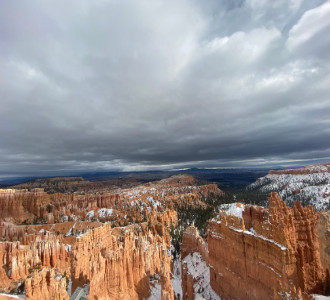
Bryce Point – sunrise & Sunset & nighttime:
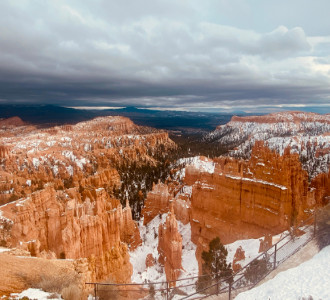
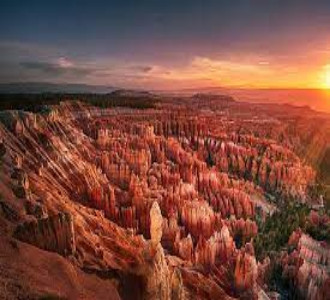
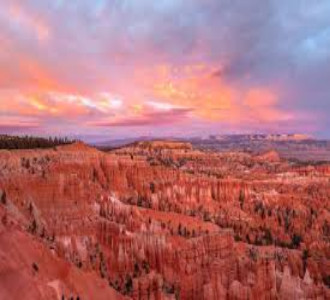
Moving from inspiration to iconic, the photo stop of Bryce Point is truly awe-inspiring – with the views from this lookout offering explorers a truly stunning panoramic view over the full length of the iconic hoodoo Ampitheater – for a photo and memory that truly encapsulates the absolute best of this stunning wonder of the world.
Offering sweeping views out over the golden and rouge-coloured Hoodoos and outwards the horizon, the level of detail and view from Bryce Canyon is truly stunning during the day – but gets even better at both sunrise and sunset — where the rising or descending sun lights up the whole of the canyon in a kaleidoscopic display for an immense and special photo.
Particularly special on a winter’s day – where a blanket of snow gives a magical feel to the Hoodoo’s, and rocks, for those fortunate enough to visit Bryce Canyon on a clear day be sure to point your camera in the way of the peak of Boat Mesa – which lies on the fairyland Loop – allowing you to photograph a true icon of the immense Bryce Canyon.
A fantastic place also for night-time photography – where you’ll find the wide-ranging and panoramic views, combined with the clear skies and absence of air-pollution give you a fantastic view of the stars, constellations, planets and even the Milky Way – Bryce Point is a truly special place and one that we’d recommend all explorers venture too in both the day and night for awe-inspiring photos of the best of Bryce Canyon.
Paria View:
For those at Bryce Point, there’s another smaller but less crowded viewpoint that you’ll find just a short way away from Bryce Point known as Paria view – where the views are equally stunning – particularly for sunset and night-time – but where the crowds are at a minimum.
Offering wide-ranging views out over the western part of Bryce Canyon – with stunning views of the Hoodoo’s that stretch to the horizon, Paria View is an equal rival to the great views at Bryce Point – with both the sunrise, sunset and night-time views here being some of the best on over across the whole of Bryce Canyon.
A spot for those seeking solitude and who want to take their time and photograph the beauty of Bryce Canyon, Paria View offers a quieter and calmer view compared to Bryce Point and is one of our top picks to visit at night for incredible silent views out over the beauty of Bryce Canyon, illuminated by the moon, stars and Milky Way.
Yovimpa Point:
As well as snapping the classic and iconic panoramic 180-degree views of Bryce Canyon, the beauty of this stunning national park can also be found in its unique geo-logical formations and rock layers, none more so than the photogenic and towering Grand staircase, which is easily photographed from the stop of Yovimpa Point.
A viewpoint lying some 9,100 feet – officially the highest point within Bryce Canyon – Yovimpa Point – offers incredible views south-west over the steps and peak of the Grand staircase – and is an fantastic point for photographers to zoom in and take in the full detail of these towering steps.
For those making the ascent to Yovimpa Point, and taking in the Grand staircase be sure to look for some of the well named and famed points on the staircase – including Mollys Nipple, which belongs to the red stone based white cliffs to your south, the Vermilion Cliffs which are a deeper rouge beside them and the towering Choclate Cliffs that lie on the North Rim of the Canyon.
A truly special place, that allows photographers to go deeper into exploring the magic of Bryce Canyon, a photo stop at Yovimpa Point to take in the immense views of the Giant Staircase and beyond is a must for anyone seeking to capture the full geological beauty of this stunning park.
Farview Point:
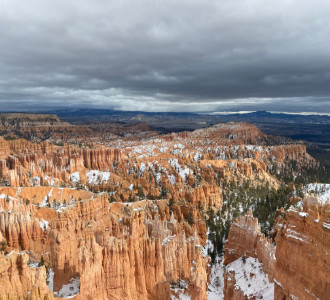
Offering similar views to Yovimpa Point, Farview point lives up to its name – offering less focused but more inclusive views of the hoodoos’s of Bryce Canyon, the ponderosa trees and the geo-logical features – including the Grand staircase and grey and white cliffs.
A viewpoint that can be particularly special in the winter – where the soft snow creates a mirage across the whole of the Canyon bringing it to life, the view from Farview offers a more serene and nature focused shot, with the cluster of green trees that lie at its heart helping to underline the forestsy and life that swells within Bryce canyon – that can sometimes get lost beneath the shadow of the Hoodoo’s.
An alternative as well to Yovimpa Point for those seeking geo-logical shots, with views out over the Kaibab Plateau and – on a clear day – the Navajo Mountain – Farview point stands as an off-the-beaten and underrated spot, where for those who venture here you may be able to snap one of the best shots across the whole of Bryce Canyon.
Swamp Canyon Trailhead:
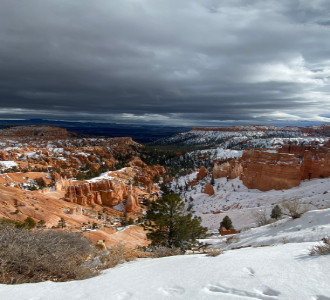
Moving from lookout points to exploring the park itself, and Bryce Canyon is blessed with a series of gentle hiking trails that can take explorers into the park itself – where you can not only wonder amongst the Hoodoo’s but the stunning nature and wildlife found within it – where a series of glorious and intimate shots await you.
Chief among these trails is the Swamp Canyon loop – which takes explorers into the valley itself and from where you can grab incredible close-up photos of the hoodoo’s on an individual basis – for fantastic landscape shots that display the uniqueness of this stunning park.
Moving further through the Swamp Canyon Trail and you’ll come to two small creeks – where, if you’re fortunate you’ll encounter a series of wildlife – including Elk, Deer and if you’re truly lucky bears – all of which can make for great photos against the backdrop of the stunning hoodoo’s.
A fantastic trail – and one that is easily tread, Swamp Canyon can offer incredible up-close views of Bryce Canyon, and given that so many travellers stay on the rim trail and don’t venture into the Canyon, for those seeking unique and personal shots, the Swamp Canyon trail is one of the most special and underrated photography spots within Bruce Canyon.
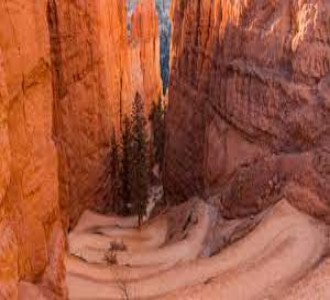
A gentle 1.5 mile trail that starts and ends at sunset point (see below) the Navajo Loop Trail is a fantastic place for capturing shots deep within the canyon inside the iconic hoodoo formations – with the photography shots found within here being truly special as you come eye to eye with and enter the iconic Bryce canyon.
A great place to be during start of afternoon – where you can avoid both the tourists arriving at the viewpoints above and – for those travelling in summer – the harsh Utah heat overhead, the Navajo loop offers a series of great shots deep within the canyon, with out favourite being on the downward approach at the start of the trail where you’ll find yourself hiking down along with Hoodoo’s and into the valley of Canyons which is a great shot – and one that we’d encourage you to use the panoramic feature on your phone at a 90 degree angle to capture a really special shot.
For those who take on the whole loop be sure to take a few moments on your ascent – not just to catch your breath as you navigate the switchbacks – but to snap a great panoramic view at Hoodoos level out over the rest of the Canyon and to the horizon of this incredible national park, for one of the world’s most scenic short walks that offers stunning photo opportunities.
Fairyland Point and Loop Trail:
The longest of our recommended hikes within Bryce Canyon, the Fairyland Loop trails takes you deep into the heart of Bryce Canyon for a chance to snap photos truly off the beaten track and capture the best – and most unique memories of this incredible park.
A track that will take a good half-day to complete the Fairyland Loop trail see’s explorers descent some 950 feet and then ascent to connect with parts of the rim trail before descending into the Canyon once more – before finishing at the incredible look-out of Fairyland point, where you’ll be able to capture incredible panoramic views over Bryce Canyon – from a unique and less visited viewpoint, for truly special photos.
A loop that will require you to set out with plenty of snacks – and for those taking it on in summer – sunscreen, the views along the trail are equally as impressive as those at the Fairyland loop, with the descent on the trail taking you alongside and even through the iconic Hoodoo’s – where you can snap up close and panoramic shots of the Hoodoo’s and across the amphitheatre of glorious stone – before summiting to Fairyland Point – for what is guaranteed to be one of the most photogenic trails and experiences on your exploration of the wonder of Bryce Canyon.

Highway 12:
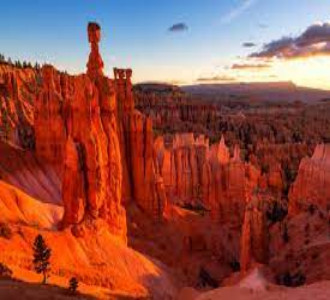
From Canyon to highway, the scenic Highway 12 is not just a route connecting the twin wonders of Zion and Bryce – but is itself a scenic wonder and one truly worthy of a series of photo stops.
Offering incredible shots of one of the greatest and most panoramic roads on the planet, Highway 12 winds its way through the north of Bryce Canyon, with each pull-out offering special and unique vantage points out over the Canyon and the hoodoo’s. Chief among these pull-outs and a fantastic photo stop is the cave of Mossy – which offers explorers a bird’s eye of rich green ponderosas backed by the Hoodoo’s in the summer – or in the winter a chance to explore and photograph a mystical ice cave.
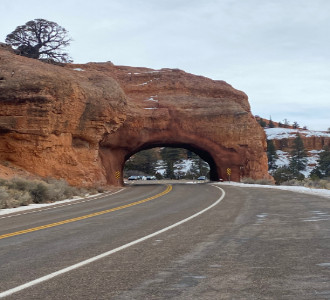
Moreover it’s on highway 12 that you’ll find a series of unique shots as well, including the iconic chance to photo yourself and your car driving through a hoodoo, underneath a cave and perched atop the rim of Bryce Canyon – where the amphitheatre below provides a stunning background.
Stretching for 120 miles across some of the scenic highlights of Utah, we’d encourage every traveller to take a ride on highway 12 – where you’ll find incredible scenery, unique shots and the best of Bryce Canyon awaits you.
Sunset Point:
No photography or exploration of Bryce Canyon would be complete without taking in one of the parks stunning sunsets – and undoubtedly the best place across the whole of the park for sunset views and photography is the aptly named Sunset Point.
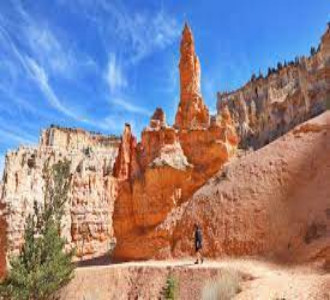
Offering simply breath-taking views out over the main amphitheatre and hoodoos of Bryce Canyon, Sunset point sits 8,000 feet above sea level – and offers not only access to and the finale of the Navajo Loop Trail – but views of the true geo-logical highlights of Bryce Canyon – including the picturesque thor’s hammer and Grand Staircase – which come to life with the descending sun as the valley below you turns a deep shade of rouge and gold as the Hoodoo’s reflect the descending sun.
Easily accessible by the Bryce Canyon shuttle, the view from sunset point is simply stunning – and we’d encourage you to get here a good hour before sunset to ensure you get a good position and can position your camera for a stunning shot. Then, once in position, you can marvel at the stunning natural light show on the Canyon and Ampitheatre below you – that brings this incredible wonder to life and provides stunning, illuminated photos of the true wonder of the world that is Bryce Canyon.
Zion National Park:
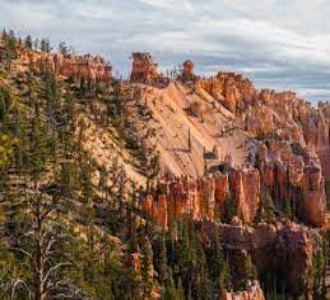
An oasis within the Desert – Zion National Park is awash with stunning multi-coloured natural scenery – the hallmarks of which are undoubtedly the towering Zion Canyon and the blessed Virgin River – with this stunningly scenic national park being a photographers paradise that offer some of the best and stunning photo opportunities on the planet.
Yet given the challenging Altitude across the parks – it begins at 4,000 feet and yet the canyon see’s adventurous plummet 2,000 feet down to its floor, the natural rock arches and the challenging terrain – unlike Bryce Canyon where some of the best viewpoints can be found on easily accessible overlooks – to snap iconic and special expansive shots across Zion, explorers will be required to take on some challenging – and in some instances day long treks.
Officially divided into five main hiking areas (Kolob Canyons, Kolob Terrace, East Rim, Southwest Desert and Zion Canyon) the views from each of the Hikes and areas are truly stunning and each area contains the possibility of witnessing and snapping truly glorious sunrises and sunsets – as well as multiple astrophotography opportunities.
While each of the more than 100 trails within Zion offer fantastic shots, we’ve rounded out the top hikes and trails that offer, in our view, the most spectaular and magical shots within the wonder of Zion National Park.
Angel’s Landing:
One of the most spectacular photography opportunities across both Zion national park and across any National Park on the planet, the views from Angel’s landing are truly stunning – with the view from atop this hike offering an increidble 360 panoramic view of the icon of Zion – the Grand Canyon – as well as views of the surrounding nature, cliffs and riverbed that stretch to the horizon.
A stunning view – reaching this incredible spot will require a challenging trail – and require you to get a permit to undertake it in advance. With those taking on the Angel Trail that leads to the viewpoint having to conquer sheer and step drops, ascend more than 1,500 feet over dusty trails and make the final ascent using bolted chains to drag yourself to the summit – where the incredible view awaits you.
A trail not to be undertaken lightly – with a person falling to their death on the Angel Trail ever 2 years – and not suitable for those with a fear of heights – the route to Angel’s landing will take a good half day and see you conquer more than 2.5 miles of terrain – adventurers taking on the hike and seeking that picture perfect shot are advised to leave at 6am and ensure they are making their descent by at least 2pm – with any ascent up the final chains and at the Angels Landing viewpoint also likely to see explorers encounter queues to reach the summit and viewpoint.
Yet while the hike may be tough – and will undoubtedly test your cardio – the view from the top is undoubtedly worth it, as you stare and capture the full beauty of Zion park in one of the most incredible and breath-taking photos out over the canyon, nature, cliffs and rivers of the true wonder of the world of Zion National Park.
The Narrows Trail:
Equally as popular and stunning as the views from Angels Landing, the narrows trail encapsulates the full beauty of Zion national park – and allows explorers to step and trek within the Virgin River – taking incredible shots of the 1,000 metre tall Canyon walls and the river as they take on a 9.5 mile upstream trek to a viewpoint that allows incredible views and photo opportunities back over the Canyon and outwards the horizon.
While the photo opportunities are truly spectacular, explorers will need to again come prepared for the trail – noting that they will likely find themselves wading within the Virgin river along the trail, coming with a change of clothes, waterproof shoes and a walking stick is essential – as is ensuring that conditions upon the river are safe before you set out.
While the hike can take a full day – for those setting off early and who travel at a good walking pace – we’d also recommend making a brief photo stop at the Temple of Sinawava – that lies at the entrance of the narrows trail – which makes for a fantastic opening hike before beginning the incredible trail.
Once upon the narrows trail – and trekking through the Virgin river – one camera trick and photo shot we’d reccomend is to switch your camera to panoramic mode and then hold it vertically while taking a photo – which can give you an incredible shot of the towering thousand feet canyon walls – for a truly special photo.
A simply stunning hike – and one that offers both unique experience and the chance to grab some mesmerising photos, explorers should prepare to get a little wet when hiking through the narrows – but it’s a price well worth paying to capture up close photos of this towering canyon and one of the icons of Zion National Park.
Observation Point:
A place of truly immense beauty that offers an incredible shot out over the whole of Zion Park – the view from observation point gives explores the chance to photograph the full set of icons of Zion park – from the grand canyon, to the Zion riverbed and across the green scenic nature in the flatbeds below – with views that stretch to the clear horizon – for what is undoubtedly one of the must snap and simply stunning shots in this incredible wonder.
Often billed as the less crowded but tougher alternative to Angels Landing, Observation point is a Zion highlight in its own right, and to snap the incredible view explorers will have to take on a half day 6.5 mile round trip – that will take you 1,000 feet above Angels landing – and 2,200 feet from your starting point up to one of the highest lookouts and photography points within this national park.
A hike that we would again reccomend taking on early – to avoid both the heat and (hopefully!) the crowds, travellers with more time can take a slight detour to the photographic point of Hidden Canyon – which represents one of our favourtie spots within the Observation Point trail, before continuing along the trail and exploring the canyon.
While the trail at Observation point is undoubtedly longer than that of angels Landing, the drop-offs and danger at Observation Point are less severe – and as such for those seeking a truly panoramic shot of sunrise and sunset – and who are comfortable and equipped to hike in the dark – Observation Point makes for a fantastic place to begin or end your day at Zion – as you watch the whole of the Canyon come to life in an illuminated deep rouge kaleidoscopic performance that lends itself to a truly marvellous photo of this stunning national park.
The Subway:
An immense and unique spot within Zion – that so often gets overlooked when it comes to photo spots, The Subway is an 8‑mile round hiking trip that leads hikers on a different path from typical spots within Zion – and instead takes you through an underground canyon tunnel (hence the hikes name) — where stunning emerald pools, enclosed caves and deep views of both the inside of the Zion Canyon – and the surrounding scenery of this national park await you.
A trek that you will need to obtain a permit for – be sure to apply no later than a few weeks in advance – and one that will likely take all day for those who set off just before sunrise, those taking on the subway trail will need to ensure they come prepared with plenty of food, water, waterproof clothing and a headlamp – if they are to safely make their way across and return from this trail.
Yet for those who two – the subway is one of the most photographic spots across the whole of Zion – with the views inside the canyon offering not just scenic views seldom photographed, but a whole series of unique personal shots withtin the park – which when captured cna back for truly stunning memories – that will stay with you forever.
The Canyon Overlook:
Stepping outside of the main Zion national Park walking zone – and certainly decreasing the volume of hiking time but in no way diminishing the stunning views – the Canyon Overlook lies at the end of a short but steep and challenging 1 mile hike – but the overlook providing awe-inspiring views out over the Zion Canyon to the grassy ponderosas below and up towards the horizon, where the stunning canyon and virgin riverbed stretches too.
A trail that can only realistically be reached by car, the stunning scenery at Canyon Overlook undoubtedly lends itself to stunning photography of two of the main icons of Zion National Park – however photographers and explorers should note that while the trail is shorter than previous trails – it is no less challenging – with steep drop-offs, multiple ascending stairs and unprotected pathways all posing – and being responsible for – explorer accidents.
For those who are set on snapping this incredible view – we’d highly recommend being at the Canyon Overlook at either sunrise or dusk – where not only can you get incredible shots of the deep Utah sun lighting up the Canyon – but also where you’ll (hopefully!) be able to avoid glare on your photos – as the overlook stares directly at the sun.
A special – if challenging to reach photo stop – Canyon Overlook is undoubtedly off the beaten track within Zion, and for those who venture here during sunrise or sunset you can expect not only minimal crowds but some of the best views across the stunning Zion Canyon.
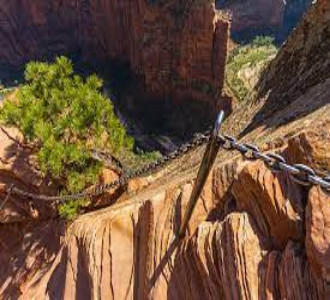
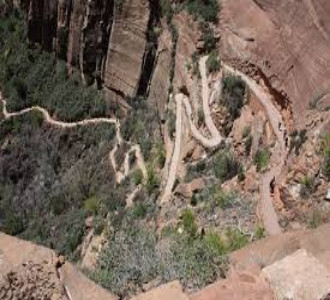
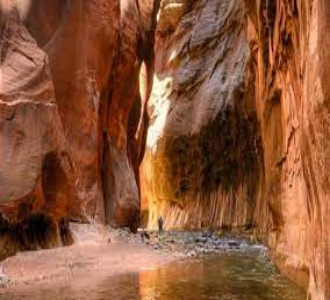
Emerald Pools (Lower, Middle and Upper):
Moving from challening hikes to a gentler family friendly hike – which still offers incredible shots of the natural beauty of Zion – the Emerald Pools hike is three hikes combined as one, which takes travellers and photographers to either the lower (1.2 mile roundtrip), middle (2 mile roundtrip) or upper (3 mile round trip) falls on a 200 foot ascent – where a series of incredible emerald transparent pools await you.
Fed by a series of photogenic waterfalls that are fully viewable and snappable on the hike up and to which you’ll stand on the edge of thier cascades if you head to the middle and upper falls — the reflective nature of the Emerald Pools, combined with their unique shapes (the heart shaped pool is a particularly popular spot) make for a series of stunning photography shots that allow you to capture one of the most naturally stunning parts of Zion – and which can be enjoyed and photographed by hikers and non-hikers alike.
Towers of the Virgin:
A true icon of Zion, the Towers of the Virgin are a collection of towering peaks that lie within one of the most accessible and easily reached spots within Zion – at the visitor and Human history museum.
Yet while the peaks may be hard to miss – what can be challenging and difficult is capturing the towers of the virgin in all their glory, as arrive at the towers of the virgin during the middle of the day on a cloud day and you may feel a little overwhelmed – as the bare shrubbery leads to an overcast and inhibited collection of mountains surrounded by human infrastructure – which can mask the beauty of these mountains.
However, arrive at the Towers of the Virgin at sunrise – and photograph the Towers from the left of the Human history museum – and the landscape and photo opportunity transform from one of emptiness to one of light. As the ascending sun lights up the towering mountain peaks – and the horizon behind it – creating a stunning mirage of light, nature and scenic beauty – that offers one of the most impressive and awe-inspiring shots across the whole of Zion national park.
Weeping Rock viewpoint:
The perfect spot for those who don’t fancy a hike, but still want to take in and photograph one of the most unique spots and the beauty of Zion national Park – the Weeping Rock viewpoint lies at the end of a mercifully short 0.2 mile walk and is one of the most special places across Zion.
Named after the curved crying rock illusion that the viewpoint looks out over and into is created by a soft layer of water that runs through a gap in the rock base and sandstone and then softly protrudes down an impassable rock layer – to create a dry tear effect, and one of the most recognizable spots across the whole of Zion.
While the weeping rock by itself would be undoubtedly photo-worthy, the unique presence of water within the rock has helped to allow life to flourish – with the weeping rock now surrounded by flourishing plant and even wildlife – which adds further beauty and makes this unique spot even more special and picture perfect for explorers.
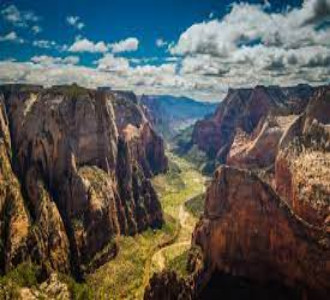
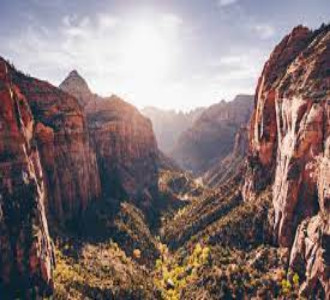
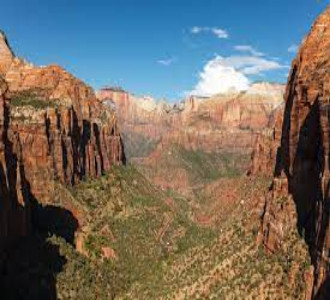
Canyon Junction Bridge – Sunset Spot:
Offering an incredible view of the Virgin river and the towering peak of the watchman – the Canyon Junction bridge has become synonymous with sunset within Zion national park – and for good reason, as it’s from here where the best of the natural beauty of Zion comes together during the Golden hour to light up – as the descending sun brings the rouge mountains to life and reflects off the shining virgin river for a truly unforgettable performance and a deeply iconic and beautiful photography opportunity.
A sunset performance that is moving and warm, the Canyon Junction bridge is found at the intersection of Zion-Mount Carmel Highway and the Valley Road – however parking is extremely limited, so we’d reccomend setting off along the scenic Pa’rus Trail that provides an incredible build to the crescendo of the view from Canyon Junction Bridge.
Owing to its extreme beauty and the iconic status that sunset at Canyon Junction Bridge has rightfully earned – the bridge can get incredibly crowded at sunset – and don’t be surprised if spaces on its forefront are occupied and reserved by budding photographers tripod stands. So, for this reason, we’d highly reccomend getting to the bridge at least an hour before sunset – to ensure your view and photos are as special and direct as possible.
A truly special place, for those with more time – and plenty of snacks – it’s also worth sticking around Canyon Junction bridge if the skies are clear for stunning view of the Milky Way and constellations above you – but undoubtedly when it comes to sunset views of stunning nature and especially the Virgin River and glorious watchman peak – it is hard to rival the majestic and awe-inspiring sunset view that you’ll find at Canyon Junction Bridge.
Kolob Canyon – Astrophotography:
While the star, constellation and Milky Way views at Canyon Junction Bridge are truly stunning – they are eclipsed by the night-time and star views you’ll find within the area of Kolob Canyon – where on a clear night the beauty of galaxies await you.
Best snapped in our view at either Taylor Creek or Kolob Canyons Viewpoint – which are both deep within Zion and far from noise and light pollution – on a clear night you can expect not only the stars and planets to come alive for you – but also the milky way and galaxy for awe-inspiring – and literally other world views and photo opportunities.
Such is the beauty of the night skies within Zion – we’d highly encourage anyone seeking to take on any Astrophotography within the park to come with a specialised camera – including a camera equipped with a high ISO – as well as a decent tripod, and plenty of snacks for the long night ahead snapping the incredible beauty of the night-time constellations.
Starry views to rival anywhere on the planet – there is something truly special and magical about stargazing amidst and within the stunning scenery of Zion national park – and for those fortunate enough to have clear skies and a clear view you can expect some of the most enthralling and simply beautiful photos before you – as the night sky comes alive to bring Zion National Park, the skies and the galaxy to life – which will leave any traveller in no doubt of the beauty and uniqueness of the true wonder of the world that is Zion National Park.